Pasta Filata Cheeses
Pasta-filata cheeses originated primarily in the greater northern Mediterranean regions of Italy, Greece, the Balkans, Turkey, and Eastern Europe. The term pasta-filata, which is derived from an Italian phrase that literally means “spun paste” or “stretched curd”, refers to a unique plasticization and stretching process shared by all pasta-filata cheeses that provides this diverse group with a common identity. This stretching process gives these cheeses a characteristically stringy, stretchy quality.
The cheesemaking process for pasta filata–type cheeses begins with the customary steps: The milk is curdled, the curds are cut into pieces, and the whey is drained off. Here’s where it gets fun. The next stage is the filatura (spinning). Curds are steeped in a bath of very hot whey or water. When they begin to float, it’s time to drain off the liquid. The curds are then mixed and kneaded until they achieve a soft, stringy texture. The mass is then divided into smaller cheeses, often by forming balls or pulling out a thick strand and chopping it, much like a taffy pull.
Some cheeses, such as provolone or caciocavallo, will undergo further processing via aging, brining, or smoking. In the case of mozzarella or burrata, it’s ready to eat right away—if possible, the cheese should be eaten within five days, the sooner the tastier.
The most famous pasta filata cheese is mozzarella. Other cheeses belonging to this group include Burrata, Provolone, Caciocavallo, Scamorza, and Queso Oaxaca. Fresher variants, such as Mozzarella and Burrata, are meant to be eaten within roughly five days of their manufacture. Scamorza tends to fall in the semifirm range, aged for about two weeks or so. Provolone and Caciocavallo can range from semifirm to hard, aging for a few weeks to well over a year. It is common to find smoked versions of Mozzarella, Scamorza, Caciocavallo, and Provolone. Braided mozzarellas and scamorzas are also not out of the ordinary.
|
Mozzarella
(Italy)
|
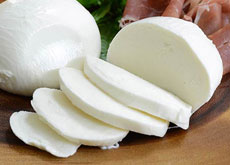
Mozzarella is as decadent as butter but far less rich, and it’s essentially the starting point for many other filata cheeses. Made from cow’s or buffalo’s milk, mozzarella is a specialty of Campania, Italy, but there are many great producers right here in the U.S. If purchasing mozzarella packed in whey water, store leftovers in the same liquid. Rinse them in water and pat dry before using
A good Mozzarella (or Burrata) can hold its own on your cheese board, or with a drizzle of olive oil and some good salt. |
|
Burrata
(Italy)
|
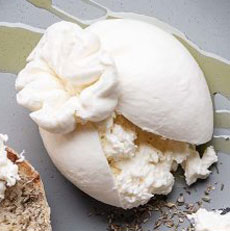
Burrata, which means “buttery,” is a fresh combination of mozzarella, stracciatella, and cream. Burrata is like a cheese within a cheese, with stracciatella (a creamy, milky cheese) on the inside and mozzarella on the outside. Burrata is made by using mozzarella cheese, stretched to include a small pouch that holds fresh cream and cheese curd, and is then tied off. Because of this, burrata is much richer and creamier than a traditional mozzarella. The uncooked curds ferment further, developing a flavor that is tangier and richer than the exterior of the cheese. Slice through the mozzarella-esque exterior and savor the velvety, sweet filling of milky cheese inside. |
|
Caciocavallo
(Italy)
|
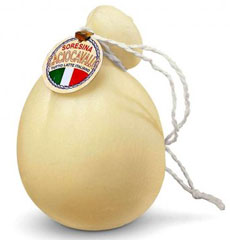
Caciocavallo has a fascinating history. It originated in the southern regions of Italy in the 14th century and is thought to be a descendant of the ancient Roman cheeses. It earns its name, roughly translated as “cheese on horseback,” from the way duos of gourd-shaped cheeses were slung like saddlebags over horses’ flanks centuries ago, when trade and sustenance often traveled along with the rider. It is believed that caciocavallo was once made from mare’s milk, but today it is sourced from cow’s milk. Rather than hanging from horses, caciocavallo is now slung across a wooden board. With a nuttier, toastier flavor than most of its filata relatives, caciocavallo is a distinctive cheese not to be missed.
This cheese is a style of Provolone, with a golden yellow interior, firm texture, and intense and lingering aroma. At three months of age, Caciocavallo is sweet and supple, enjoyed as a table cheese. As it hardens with age, it becomes a grating cheese. As a table cheese, Caciocavallo is great with fruit (figs, dates and melon), ham, mushrooms, olives, roasted peppers, and crusty Italian bread. It can be used in place of Provolone and Mozzarella. A mature Caciocavallo is excellent grated over pasta and potato dishes. Chianti Classico, Zinfandel or Cabernet complement Caciocavallo well. |
|
Provolone
(Italy)
|
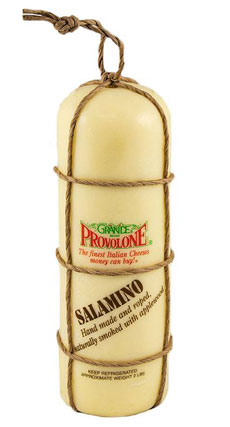
Enter any authentic Italian grocery store, and you're bound to see provolone cheese tied with cord and hanging from the rafters. Created in southern Italy in the 1800s, provolone is a semi-hard cow’s milk cheese. Provolone cheese is classified into two forms: Provolone Dolce, which is aged for 2-3 months, has a pale yellow to white colour and sweet taste. The other, Provolone Piccante is aged for more than four months and has a sharper taste. Most of the provolone served in the States is Dolce and is a popular sandwich cheese. In both cases, during production, the curds are stretched or pulled, giving it a more elastic texture. Both are available in smoked and non-smoked versions.
There are names for the different shapes of provolone, too. Melon-shaped provolone is called Mandarino, Mandarone, or Provoletta, while sausage-shaped is called Pancetta, Pancettone, or Salamino. Provolone with a truncated cone shape is called Gigante, Gigantino or Gigantone, and bottle-shaped varieties are known as Fiaschetta. |
|
Queso Oaxaca (Asadero)
(Mexico)
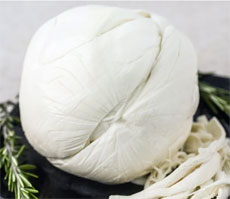 |
Often referred to as Mexican Mozzarella, Asadero was created in Oaxaca. It is a cow's milk cheese sometimes called Queso Oazaca, and is similar to Provolone. Queso Oaxaca, or Asadero, is a pasta filata cheese from Mexico thought to be inspired by the filata cheese-making habits of the Dominican monks that settled there. Semi-soft and white, this Hispanic-style cheese melts beautifully. Rather than being pulled into thick ropes like other pasta filatas, Oaxaca is stretched into thinner bands that are then rolled up like a ball of yarn.
It is an excellent cooking cheese. It's flavor ranges from quite bland to buttery and sweet. Great for chili con queso, fondue, quesadillas to cubed in tortilla soup. Asadero complements peaches, apples and pears. Flour tortillas, jalapenos, beans, chilies, roasted peppers and salsa are great accompaniments to Asadero. Wine choices are Chardonnay, Sangria, or even sparkling wines and Champagne. |
