Monkfish
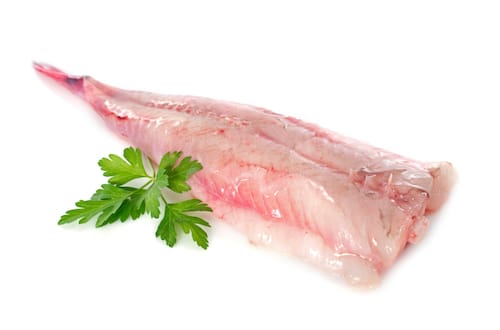
Monkfish have small eyes, rows of fang-like teeth, and large heads and mouths. The tail is the only edible part of this fish. When filleted, the flesh is bright white and the texture and mouthfeel are often compared to that of a cooked lobster.
Monkfish are deep water bottom-dwellers, mostly harvested in the North Atlantic from coastal Norway to the Mediterranean. Rather than swimming, they use their fins to "walk" along the ocean floor and search for prey. They are voracious feeders and will eat nearly anything that swims nearby.
Each fish contains two thick fillets, generally weighing between one and four pounds, on either side of the spine. The tail is prized for its tenderness and mild flavor, and is the part of the fish most commonly sold. There is flavorful meat located in the cheeks, as well, but this cut is not commonly harvested in America. The meat is firm, lean, and white, light gray, or light pink in color, firm.
When purchasing at the market, look for American wild-caught sustainable monkfish whenever possible. Keep in mind that the fillets will shrink upon cooking when determining portion sizes. Bright red blood on the fish is a sign of a recently caught fish. Dried or brown blood indicates a fish that has already begun to age and may be nearing the end of the safety zone for purchasing and cooking. Look for fish that looks moist and colorful, and beware of an overly fishy odor.
How to Cook Monkfish
Monkfish is known as “poor man’s lobster” for its similar look, texture, and more affordable price (@ $10/lb). Monkfish doesn’t flake readily and is firm like scallop or lobster meat. Another bonus is that its center cartilage makes monkfish truly boneless. The fillet has a thin gray membrane that needs removing. If you’ve ever pulled the membrane off a rack of pork ribs, then you’re ready strip a monkfish.
Pan-frying monkfish is just one of the many cooking methods to use with this versatile fish, but is probably the most popular. One fillet is sufficient for one person, but due to the high water content of the fish, be aware that fillets may shrink during the cooking process. Make sure that the pan is hot before adding the fish to achieve a nice crispy outside.
Monkfish is a surf and turf dream come true: meaty exterior like a charred steak with a sweet lobster-like texture inside. Monkfish is good for grilling because unlike most white fish that ends up falling between the grates, monkfish doesn’t flake and can even be cut into medallions before grilling or cut into chunks for making shish kebabs. It’s not flaky, but nevertheless handle with care on the grill using tongs and a spatula. A well-oiled fillet and grill grate make the process easier and the fish better tasting.
Serve grilled monkfish any way you would a lobster or mild white fish. You can grill the fillets rubbed with a little oil, salt and pepper, and serve with parsley and fresh lemon. They’ll go well with any quick sauce that complements your menu. Anything you can do with lobster or scallops you can do with monkfish.
In the kitchen, roast monkfish in the oven over thinly sliced waxy potatoes. It’s a great cold weather dinner and a nice dinner party meal.
Monkfish is ideal for hearty stews, chowders, and soups like bouillabaise, and is ideal for poaching. (Brian and I poached monkfish once and found it bland tasting. We used onion, garlic, and parsley in the poaching liquid and made a butter sauce with capers. We both thought it would be better pan or deep-fried.)
