How to Poach Fish
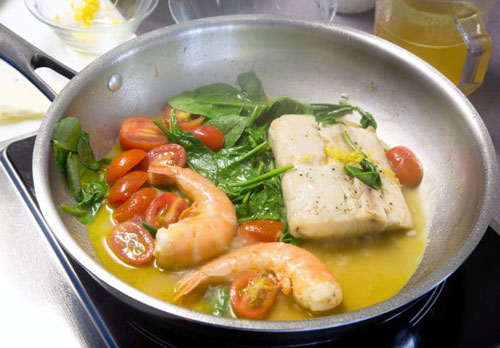
Poached Mahi-mahi with Shrimp, Tomatoes and Baby Spinach
Poaching is an easy way to cook fish quickly. It’s a healthy alternative to frying, instead using a simmering liquid to cook the fish. Perfectly poached fish should unbelievably tender and melt in your mouth. With this easy technique, you can make sure that every time you poach fish it turns out perfect.
The trick to perfectly poached fish is to cook it gently and over low heat. The problem is that when people poach fish they will boil it until it turns tough and rubbery. Don't bring your pot to a boil, or even a simmer for that matter. Lower the heat. Fish is perfectly cooked when it reaches an internal temperature of 140 degrees. When you're poaching fish, you want the temperature of the water to remain at 140 degrees Fahrenheit. If you are familiar with sous vide cooking then this concept will ring a bell. Basically, if the water temperature never rises above (or much above) 140 degrees, then the fish will never overcook. Even if you leave the fish in the pan a little longer than necessary, the fish will remain perfectly cooked.
The poaching liquid in the pot will be at the right temperature when it starts moving around, and you see steam rising from the pot. You might notice 2 or 3 small bubbles rising, but no more than that. If the water is simmering, it is too hot. You'll also be able to dip your finger into the water very briefly without burning it.
Poaching fish may require a couple tries to get the timing and temperature right, but you’ll be glad you mastered it when you bite into that flavorful, perfectly moist fish.
Poaching usually has these four components:
Liquid
Herbs
An acid (lime, lemon, and vinegar)
A mixture of onions, celery and carrots
Traditionally, fish was poached in a court-bouillon, a clear broth made from simmering herbs and vegetables, together with something acidic like vinegar, lemon juice, or white wine.
If that sounds a bit tricky to you, there are many other ways of poaching that vary depending on what’s in your kitchen. The simp(Brian and I poached monkfish once and found it bland tasting. We used onion, garlic, and parsley in the poaching liquid and made a butter sauce with capers. We both thought it would be better pan or deep-fried.) lest method is just to use water as your liquid and add a little lemon juice, garlic, onions, herbs and spices or maybe some dry white wine, vinegar, broth and milk.
These are some good fish to poach:
Thicker, meatier fish such as salmon, trout, halibut and arctic char are best for poaching.
Mahi mahi
Barramundi
Arctic char
Dover sole
Halibut
Salmon
Tuna
Sturgeon
Turbot
Striped bass
Monkfish
Try whatever you like, but these varieties are among the most flavorful. Fish can be fresh or frozen. Fish steaks and whole fish are easier to poach than fillets, as they don’t crumble quickly. Sometimes even whole fish (usually the more delicate varieties) will curl or fall apart after poaching, but you can wrap your fish in layers of cheese cloth before poaching to avoid that.
Perfect Poached Fish
½ cup white wine
½ onion, sliced
2 garlic cloves, crushed
½ lemon, sliced
1 tablespoon fresh parsley, chopped
½ teaspoon sea salt
Fish, of your choice
Put all the ingredients, except the fish, in a large skillet with high sides and add at least 2 inches of water. Heat the water over medium heat until it reaches 140 degrees Fahrenheit, or until it is steaming and the water is moving around but not bubbling at all. You should be able to dip your finger into the water very briefly without burning it. Reduce the heat to medium-low.
Once the water is at 140 degrees, slide the fish into the pot. If there is not enough water to cover the fish, add a little more. The trick here is that you want the water to remain at a fairly constant 140 degrees so that the fish doesn't overcook.
The fish is ready once it reaches an internal temperature of 140 degrees. Without a thermometer you can test for doneness by seeing if the flesh flakes easily from the fish. A salmon fillet will take approximately 10 minutes to poach. The poaching time will vary depending on the thickness of the fish. Remember though that as long as the water does not rise above 140 degrees you will not overcook your fish.
When the fish is done, remove it from the liquid with a slotted spatula. Serve poached fish hot, right out of the poaching liquid, with the sauce of your choice. You can also chill it and serve it later.
Poached Mahi-mahi
1 stalk celery rough cut
1 carrot rough cut
1/2 onion rough cut
2 cloves garlic
1 tablespoon olive oil
12 ounce mahi-mahi 2 fillets
4 jumbo shrimp shell on
sea salt and black pepper
1 1/2 cup vegetable stock
1/2 cup white wine
1/2 lemon juice only
1 lemon zest only
2 cups baby spinach
1 cup grape tomatoes cut half long way
1 tablespoon butter
Rinse then pat dry the mahi filets with paper towels
Season the filets with sea salt and black pepper
In a large heated skillet add the olive oil (medium high heat)
add the mahi-mahi fillets, garlic and veggies
After 1 minute in the hot skillet, gently turn the fillets over and continue cooking for another minute
Remove the mahi from the skillet and set aside
Add stock and wine to the skillet, bring to a boil and reduce by half
Reduce the heat to medium and return mahi to pan along with shrimp, spinach and tomatoes, this shouldn't take more than 3-4 minutes to finish cooking but you can test the mahi by inserting a very sharp knife into the thickest part to make sure its done
Remove fish and shrimp and plate over rice
Add butter to pan and mix well until melted
Serve spinach mixture with mahi over rice.
You can peel the shrimp if you like before serving or simply have your guests peel them with the dinner.
2 servings
Serving
Try topping your perfectly poached fish with a squeeze of charred lemon juice, some fresh dill or a little lemony hollandaise.
Velouté Sauce
If you plan to prepare a velouté from the cooking liquid, keep the fish covered and warm while you do the next step. Transfer about four cups of the poaching liquid to a separate saucepan. Reduce by about half, then whisk the resulting liquid into a simple butter-flour roux to make a velouté sauce. Sauce the fish and serve right away. Other ingredients can be added to the velouté to give it additional flavor. See Velouté Sauce
