Standing Rib Roast (Prime Rib)
Recipe courtesy Emeril Lagasse (modified slightly)
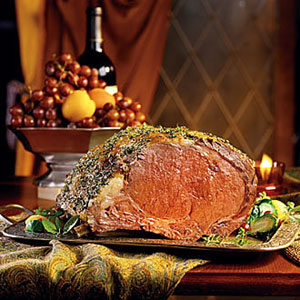 This recipe is excellent for a special dinner, but if you want just a hearty beef dinner, skip the garlic, rosemary, thyme and red wine. Season with salt and fresh ground black pepper and add beef stock (no wine) to the pan while roasting. Adding Worchestershire sauce will add to the depth of flavor. Follow the recipe otherwise. On the other side, Tyler Florence has a recipe where he mashes together garlic, rosemary, thyme, salt, pepper and olive oil to make a paste in a small bowl and smears the paste generously over the entire roast. He deglazes the pan with 2 cups Cabernet Sauvignon and serves as a sauce.
Buying Tips: Allow for 2 portions per rib. A four rib roast should provide an adequate serving for eight people. Avoid using anything less than a 3 rib portion as a roast unless you prefer a well done roast. Smaller cuts are best used as steaks. Most people think that the word "Prime" in Prime Rib means it is USDA (US Department of Agriculture) Prime Grade. But, the word "Prime" by itself only describes the most desirable part of the "rib section" of the beef regardless of the USDA Grade. Most good butchers recommend that you request a roast from the small end (ribs 10 through 12) toward the back of the rib section, which is leaner and gives you more meat for your dollar.
2 heads roasted garlic
3 1/2 teaspoons salt
1 1/2 teaspoon freshly ground black pepper
1 tablespoon finely chopped fresh rosemary leaves
1 tablespoon finely chopped fresh thyme leaves
1 standing rib roast of beef (about 6 1/2 pounds), excess fat trimmed in 1 strip and reserved
1 1/2 cups red wine - can use beef stock instead
1/2 cup beef stock, plus 2 more cups if making au jus (optional)
Preheat the oven to 450 degrees F. Bring the rib roast to room temperature - takes about 2 hours.
Separate the heads of roasted garlic into cloves and squeeze the roasted garlic out of the peels. Place the garlic in a small bowl and mash with the back of a fork until mostly smooth. Add 1 teaspoon salt, 1/2 teaspoon pepper, the rosemary and thyme, and stir to blend. Pat this mixture evenly over the top and sides of the roast. Place the trimmed strip of fat over the garlic-herb mixture and tie with kitchen string in several places to secure the fat onto the top of the roast. Season the roast all over with the remaining 2 1/2 teaspoons salt and 1 teaspoon of pepper.
Place the roast on a rack in a roasting pan, bone side down, and add 1 1/2 cups red wine (or substitute beef stock) and 1/2 cup beef stock to the bottom of the pan. Reduce the heat to 325 degrees F and cook the roast to the desired degree of doneness, about 18 minutes per pound for rare (internal temperature 125°) and 22 minutes per pound for medium (internal temperature 140°). (Faith's note: 130°, medium-rare, seems to suit most people's taste.) Add water to the pan as the liquid evaporates to keep the meat moist and to ensure good au jus.
Let stand at least 15 minutes before carving. De-fat the pan juices and serve alongside the beef.
If making au jus, place the roasting pan on the stove burners over medium-high heat. Add 2 cups beef stock and scrape the browned bits on the bottom of the pan with a wooden spoon. Season with salt and pepper. Continue to cook until the au jus is reduced by half, about 5 minutes. Strain the sauce through a sieve to remove the solids before serving. De-grease, if necessary.
Serve with the au jus (if making), Yorkshire Pudding or Popovers and Horseradish Cream.
8 servings
Carving a Rib Roast
Tilt roast to expose ribs on bottom; separate bones from roast by following curve of ribs with knife. If ribs are attached by butcher’s string, cut strings and set bones aside.
Turn roast so rib area is facing you. Using a long, very sharp knife, cut straight down into the roast, letting the knife do the work. Use long, sweeping motions; don’t saw. Cut slices to your preference, or cut two portions per rib.
Leftover Ideas from elise.com
"When I last made this I saved the rib bones from the roast and made a stock out of them which I used later in an onion soup. It was delicious, and all because of that great stock. To make beef stock, put the (already cooked) bones in a big pot, with any scraped up drippings, and cover with cold water. Bring to a gentle boil and reduce heat to a simmer. Cover and simmer for several hours. Simmer uncovered to reduce the stock further for easier storage. If you are starting with uncooked bones, roast them in a shallow roasting pan at 450°F for half an hour first."
"Hash made from Prime Rib is fantastic. My family loves it and prefers hash over any other prime rib leftover dishes. We eat it for dinner along with some over easy fried eggs. All you need to do is to combine leftover prime rib which has been chopped in food processor, a few boiled/cooled potatoes which have been also been chopped in food processor and diced onion. Fry in skillet with butter at medium heat. You can add some left over au jus for moisture or you can use a little water. Add salt and pepper and continue to cook and stir the hash until cooked to your liking."
Beef Stroganoff - add rare beef to the sauce at the last moment to heat through
Shepherd's Pie
Prime Rib Sandwich on Baguette - place provolone cheese on sliced bread and melt under the broiler, top with warmed Prime Rib, caramelized onions, arugula (or other crunchy greens), horseradish cream
French Dip sandwiches
Cheesesteaks
