Homemade Pappardelle from Michael Chiarello
Pappardelle pasta is a crucial part of Italian cuisine, and the fresh version, with its toothsome bounciness, tastes worlds apart from the commercially packed, dried version. This traditional pasta, a cousin to the smaller tagliatelle, was traditionally paired with wild boar and rich hare ragus. The pasta shape is so popular that in Italy there are towns that have festivals honoring it. See below to learn how to make it yourself — no pasta maker necessary!
Recipes using, or that would be good with, pappardelle:
Pappardelle Pasta w/ Duck Rillette, Mushrooms, & Rosemary Cream Sauce
Pappardelle w/ Zucchini Blossom Sauce
Lobster Pasta w/ Herbed Cream Sauce
Bolognese Sauce
1 3/4 cups all-purpose flour, plus more for dusting
1 cup semolina flour, plus more for dusting
6 large eggs, at room temperature
4 teaspoons extra-virgin olive oil
Salt
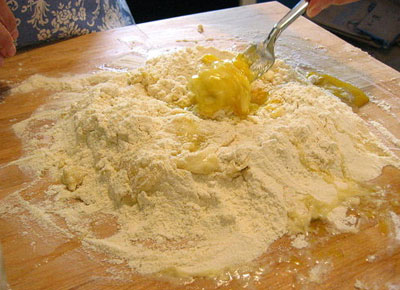
Make the dough: Sift both flours together on a large work surface and make a well in the center. Place the eggs, olive oil and a pinch of salt in a bowl, then pour into the well; with a fork, break up the eggs, then gradually mix the wet ingredients into the flour mixture just until combined.
FMM Tip: This was very wet and I had to add quite a bit more flour to the mix. I used a dough scraper, while sprinkling more flour on top and underneath, to scrape the dough from the board and fold it over on top of itself until the dough was manageable by hand.
Knead by hand. Gather the dough into 2 equal-size balls [I made 4 because I don't have a large space for rolling out the dough later]; flour the surface. To knead each piece, push the dough away from you with the heel of your hand, fold the dough over itself and turn it counterclockwise. Continue pushing, folding and turning until the dough is smooth and elastic, 4 to 5 minutes. You’ll know when to stop – it’s when your pasta starts to feel smooth and silky instead of rough and floury. Don't skimp on the kneading or the dough will tear while you're rolling it out.
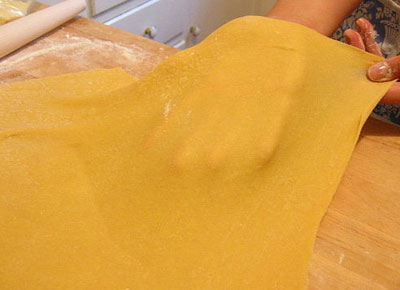
Rest the dough. Pat each piece into a ball. Flatten slightly, wrap in plastic and refrigerate for at least 30 minutes or overnight. (You can freeze 1 ball for later, or roll out both and freeze the cut pasta.)
Roll out the dough. Place the dough on a lightly floured surface and dust with flour. Starting in the middle, push away from you with a rolling pin, easing up on the pressure as you approach the edge. Continue rolling the dough into a sheet, turning occasionally, until you can see your fingers through the bottom. The pasta will almost double in thickness while cooking, so get it as thin as possible. Let dry about 10 minutes.
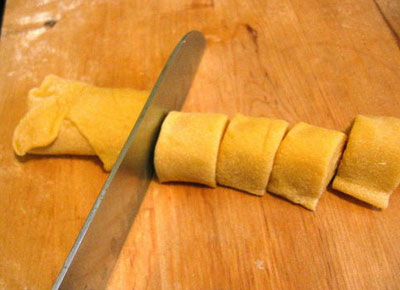
Cut the pappardelle: Dust the top of the sheet of dough with flour and loosely roll it into a cylinder. Using a sharp knife, cut into 3/4-inch-wide slices.
Unwrap the noodles; dust with semolina and gently toss to separate. Place on a sheet pan and cover with a tea towel until ready to cook (or freeze in freezer bags for up to 2 months).
Makes about 20 ounces pasta.
