Lobster Bisque
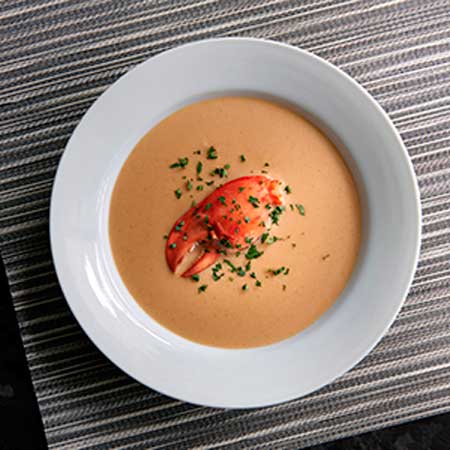
“Bisque” was a term originally used for soups made with game birds, quail or pigeon, with chunks of crayfish meat sometimes added. It fell into disuse, and was resurrected many years later. The first mention of bisque as a shellfish soup dates back to 17th century. Bisque was not initially a fancy soup but contained finely crushed shells of whatever seafood was used, leading food historians to suggest that it was a fisherman’s dish, designed to get the most flavor out of ingredients at hand.
Some say the name pays homage to the Bay of Biscay, the enormous, shellfish-rich sweep of water bordered by the eastern coast of France and the northern coast of Spain. While this theory conjures up picturesque coastlines and the cry of gulls, it probably isn’t true. A more likely story is that bisque is a contraction of two words — bis, meaning “twice” or “again” and cuites, meaning “cooked.” Since the standard way to make bisque is to first roast the shells, then simmer them in the broth, this accurately describes the soup.
Since America’s Atlantic coast produces shellfish in abundance, it might seem that a dish like bisque arrived with English and French colonists and became a popular staple. Staple, yes. Popular, not so much. Lobsters in New England and oysters in New York were so plentiful they were considered poverty foods, and there are many stories of servants who would not work for anyone who served them shellfish more than twice a week.
In the second half of the 19th century, chefs discovered that lobster was much tastier if cooked alive rather than dead, and upscale restaurants began serving it as a delicacy. Lobster Newburg and Lobster Thermidor both appeared in the 1890s, followed a decade later by Lobster Fra Diavolo. Delmonico’s menus from the 1890s, written in classy French, show that Bisque d’Ecrivesses (crayfish), Bisque de Homard (lobster), and Bisque de Crabes (crab) were all regular offerings.
In the common mind, however, lobster’s unsavory reputation lingered. As late as the Great Depression, a father confessed his shame in trapping lobster at night to keep his family’s poverty a secret. It was only when the abundance of shellfish diminished, driving prices to new highs, that bisque became synonymous with rich, luxurious living.
How to Make Bisque
The majority of the flavor in a bisque is not derived from the meat of the crustacean, but rather from the shells. The shells of crustaceans happen to be loaded with flavor. But since you can't eat the shells, you have to find a way to extract that flavor. Some recipes use a bit of meat as well but at its most classic level a lobster bisque is shell based.
A traditional way of making bisque is to cook the shellfish, pick out and set aside the meat, and reserve the shells. The next step is to sauté the chopped onions, celery and carrots in butter in a large pot until the vegetables are soft, then add the shells, some sherry or brandy, spices such as pepper and bay leaf, water, and simmer until a rich broth forms. The liquid is strained twice, the solids are discarded, and the broth is returned to the pot and thickened with cream, a roux, or both. Tomato puree or paste can also be added, along with a dash of hot sauce or cayenne to taste. The soup is heated, the shellfish is added and heated through, and voila! –soup’s on.
Lobster Bisque
Adapted from Cuisine at Home by Cathy Pollak
Recipe can easily be doubled.
FMM: I made this using snow crab legs. I didn’t buy the fresh fennel as it would have cost me $8 for one bulb and I had already spent quite a bit on the crab. I added a few fennel seeds trying to capture some of the flavor of the fennel. I found that the soup was very salty and will try adding more chicken stock and cream when I reheat the leftovers.
Prep the Lobster Tails
2 lobster tails (10 oz. each), split in half [or use body and shells left from Steamed Whole Lobster]
4 cups water
1 Tablespoon sea or kosher salt
Make the Stock
2 Tablespoons olive oil
2 cups dry white wine
3 cups chicken stock
Make the Bisque Base
1/4 cup unsalted butter
1 cup fennel, chopped
1/2 cup shallot, chopped
1 cup fresh tomato, peeled, seeded, diced
2 Tablespoons brandy
2 Tablespoons raw white rice
1 Tablespoon tomato paste
1 teaspoon paprika
1/8 teaspoon cayenne
1 bay leaf
1 thyme sprig
Finish the Bisque and Serve
1/2 cup heavy cream
1 teaspoon fresh lemon juice
1 Tablespoon butter
meat from lobster tails
Prep the Lobster Tails
You will need 2 lobster tails (about 10 oz. each). It’s alright to use frozen tails if fresh are not available. Make sure they are completely thawed out. Split the tails in half with a sharp knife starting at the fan and slice the knife down and through the meat.
Devein the split tail. Look for the vein along the edge of the shell, between the shell and the meat.
Steam the lobster tails, shell-side down (the shell protects the meat from the intense heat of the steam) in 4 cups salted (sea or kosher) water. Using a regular steaming basket works perfectly. The salted water imparts a minimal but not insignificant taste to the bisque; you will use this water later as a base. Steam the tails for 5-7 minutes and reserve the steaming water for the stock.
When cool enough to handle, remove the tail meat with a fork to pull out the steamed tail meat in one piece. Chill the lobster meat until ready to use.
Make the Stock
Sauté lobster shells in 2 Tablespoons olive oil over medium-high heat for five minutes to release the flavors.
Deglaze the pan (with shells present and scraping bits at the bottom) with 2 cups dry white wine (Chardonnay works well), 3 cups chicken stock and reserved lobster water from the steaming of the tails. Simmer until reduced to 6 cups; about 45 minutes. Then strain the shells from the stock.
Make the Bisque Base
While the stock is simmering prepare the rest of the ingredients. You will need a cup of diced tomatoes, peeled and seeded. The easiest way to peel tomatoes is to place them in boiling water for about 45 seconds. The skin will instantly pull away. Cut the tomato in half and scoop out the seeds and dice.
Sauté fennel and shallot in 1/4 cup unsalted butter, about 5 minutes.
Stir in strained lobster stock, diced tomato, brandy, raw white rice, tomato paste, paprika, cayenne, bay leaf and thyme sprig; simmer 45 minutes. Remove bay leaf and thyme sprig.
The next step is to puree the bisque. Let’s talk safety and pureeing hot liquids — Pureeing hot liquids can be dangerous because steam causes pressure to build inside the blender. It’s crucial to puree in batches and work from a low to a higher speed.
When using the blender, I puree in two batches and return the bisque to the pot.
Finish the Bisque and Serve
Stir in heavy cream and fresh lemon juice to finish off the bisque.
When you are ready to serve the bisque, sauté the lobster meat in 1 Tablespoon unsalted butter over medium-high heat, just until warmed through. Slice tails into the size of your choosing for serving and arrange in bisque. Serve immediately.
Makes 6-7 cups
Lobster Bisque
from https://www.tasteofhome.com/
FMM: This recipe is simpler than the one on the left and is the one I will try next time.
A well-made lobster bisque is nothing short of incredible: velvety smooth and packed full of rich seafood flavor. The secret to getting there is to make the broth from scratch. Lobster shells and a touch of tomato paste create deep, complex flavors that are perfectly rounded out when you add a splash of heavy cream. Finish it off by studding the creamy soup with chunks of buttery lobster meat, and you have a date-night dinner winner.
The soup itself is smooth but not thin, and it’s usually garnished with large chunks of cooked lobster, shrimp, crab or vegetables. The soup gets its body by pureeing flavorful broth with cooked rice, thickening it up without having to add flour or cornstarch. Most bisque also contains butter and heavy cream, making it very rich and filling.
2 live lobsters (about 1 pound each)
2 medium carrots, peeled and chopped
1 medium onion, chopped
3 tablespoons butter
2 tablespoons tomato paste
2 garlic cloves, minced
3/4 cup white wine or sherry
1 carton (32 ounces) seafood stock
2/3 cup uncooked long grain rice
2 cups heavy whipping cream
1 teaspoon minced fresh thyme
1-1/2 teaspoons salt
1 teaspoon coarsely ground pepper
Minced fresh parsley, optional
In a Dutch oven, add 2 inches water; bring to a rolling boil. Add lobsters; cover and steam for 8 minutes. Remove lobsters, reserving liquid. When cool enough to handle, remove meat from claws and tail, reserving any juices; refrigerate meat and juices.
In the same Dutch oven, cook carrots and onion in butter over medium-high heat until tender, 5-8 minutes. Stir in tomato paste and cook until it starts to caramelize, about 5 minutes. Add garlic; cook 1 minute. Stir in wine and simmer until reduced by half. Add lobster shells, bodies, reserved cooking liquid, reserved lobster juices and stock. Bring mixture to a simmer; cook 1 hour. Strain mixture, pressing to extract as much liquid as possible; discard shells and solids.
Return liquid to Dutch oven. Add rice and cook until extremely soft, 25-30 minutes. Puree in a blender until smooth. Add cream, thyme, salt and pepper. Bring mixture to very low simmer; add reserved lobster meat and cook until heated through. If desired, sprinkle with additional ground pepper and parsley.
Yield: 8 servings (2 quarts)
