Books on Bartending and Mixology
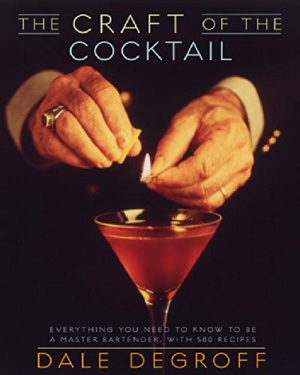
The Craft of the Cocktail - Dale DeGroff - 2002
The King of Cocktail is credited with being one of the first bartenders to revive the art of vintage craft cocktails at the Rainbow Room in the late 90's.
Cocktails are bigger than ever, and this is the first real cookbook for them, covering the entire breadth of this rich subject. The Craft of the Cocktail provides much more than merely the same old recipes: it delves into history, personalities, and anecdotes; it shows you how to set up a bar, master important techniques, and use tools correctly; and it delivers unique concoctions, many featuring Dale DeGroff's signature use of fresh juices, as well as all the classics.
Debonair, a great raconteur, and an unparalleled authority, Dale DeGroff is the epitome of Perfect Bartender, universally acknowledged as the world's premier mixologist. From Entertainment Weekly and USA Today to the Culinary Institute of America and the nation's best restaurants, whenever anybody wants information or training on the bar, they turn to Dale for recipes, for history, for anecdotes, for fun—for cocktail-party conversation as well as for cocktails.
That's what The Craft of the Cocktail is—the full party, conversation and all. It begins with the history of spirits, how they're made (but without too much boring science), the development of the mixed drink, and the culture it created, all drawn from Dale's vast library of vintage cocktail books. Then on to stocking the essential bar, choosing the right tools and ingredients, mastering key techniques—hints worthy of a pro, the same information that Dale shares with the bartenders he trains in seminars and through his videos. And then the meat of the matter: 500 recipes, including everything from tried-and-true classics to of-the-moment originals. Throughout are rich stories, vintage recipes, fast facts, and other entertaining asides. Beautiful color photographs and a striking design round out the cookbook approach to this subject, highlighting the difference between an under-the-bar handbook and a stylish, full-blown treatment. The Craft of the Cocktail is that treatment, destined to become the bible of the bar.
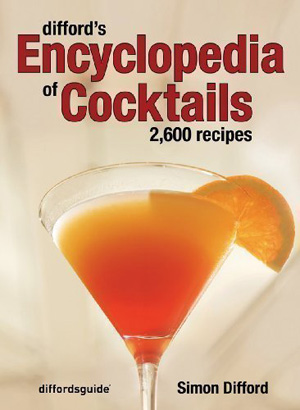
Difford's Encyclopedia of Cocktails - Simon Difford - 2009
The most complete and authoritative cocktail encyclopedia ever published.
Simon Difford has earned a huge and loyal international following in professional bartending circles, and discerning drinkers, amateur mixologists and professional bartenders will find this new edition of his cocktail guide to be an indispensable reference.
Practical and inspiring, this book contains 2600 recipes from the traditional to the new and inventive. Each easy-to-follow recipe has a color photograph of the assembled drink in its assigned glass, ingredient measures, directions, garnish, variations, plus fascinating information on the cocktail's origin. Difford even grades each drink from (rarely) "disgusting" to "delicious."
The book includes:
An A to Z recipe directory
Detailed instructions for beginners, including all the basic skills
Recommendations for the best equipment
A directory of glass types
The 14 key alcoholic ingredients, which make a minimum of 450 cocktails
The 9 essential juices and mixers
The 18 essential refrigerator and cupboard staples
An index of ingredients and the cocktails they are used in
The top 100 great cocktail bars of the world.
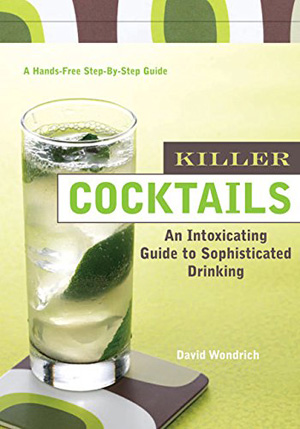
Killer Cocktails - David Wondrich - 2005
Killer Cocktails is a unique hands-free, stand-up guide with all the advice and guidelines you need to set up a home bar and learn the art of mixing cocktails the right way. The drinks you'll find in here avoid novelty products, artificial flavors, and colors not found in nature. They're heavy on tradition and light on trendiness. You also might learn a thing or two, from the origins of the John Collins (no Toms, Dicks, or Harrys here) to why the Daiquiri should be resurrected from its status as the wimp of all cocktails (it was JFK's fave, after all).
And that's not all. While respecting the traditions of balance and simplicity that our mixological forefathers founded, Killer Cocktails also shows you how to be creative. First you master the basics and only then can you start substituting vanilla vodka for rum, or rhubarb for raspberry. But if you're simply in the mood for a Rye Old-Fashioned, the real recipe is right here.
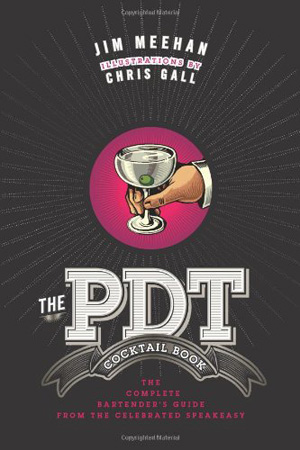
The PDT Cocktail Book - Jim Meehan - 2011
Beautifully illustrated, beautifully designed, and beautifully crafted--just like its namesake--this is the ultimate bar book by NYC's most meticulous bartender.
To say that PDT is a unique bar is an understatement. It recalls the era of hidden Prohibition speakeasies: to gain access, you walk into a raucous hot dog stand, step into a phone booth, and get permission to enter the serene cocktail lounge. Now, Jim Meehan, PDT's innovative operator and mixmaster, is revolutionizing bar books, too, offering all 304 cocktail recipes available at PDT plus behind-the-scenes secrets. From his bar design, tools, and equipment to his techniques, food, and spirits, it's all here, stunningly illustrated by Chris Gall.
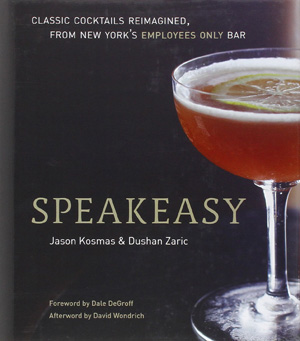
Speakeasy - Jason Kosmas and Dushan Zaric - 2010
Time-honored cocktails like the New York Sour and the Sidecar were born during the era of Prohibition, the blessedly bygone social experiment that turned drinking into an underground adventure. In those days, hard beverage options were usually made with homemade hooch and flavorings of dubious origin and quality.
Thankfully, a cocktail renaissance has emerged in many of today's bars, where inventive drinks showcase both the artistry and craft of bartending. At their moody and atmospheric West Village bar-restaurant Employees Only, master mixologists Jason Kosmas and Dushan Zaric can regale you with colorful tales of cocktail origins—or just pour you a mean drink. In Speakeasy, Kosmas and Zaric take their inspiration from traditional favorites, then use the finest spirits, the freshest ingredients, and a good measure of reverence for their craft to elevate the mixed drink to artisanal status.
More than 80 imaginative libations that riff on the classics are showcased in this one-of-a-kind collection. Recipes emphasize fresh fruits and herbs, homemade syrups and infusions, and a careful balancing of flavors, with a mind toward seasonality. A Ginger Smash is offered in four different versions: kumquat, pineapple, pear, or cranberry, depending on the time of year. The Millionaire becomes the Billionaire with the addition of homemade grenadine and 107-proof bourbon. And the South Side becomes the West Side by replacing the gin with sun-kissed Meyer lemon–infused vodka. With the specter of Prohibition firmly in the past, Speakeasy shares recipes for the choicest potent potables, reimagining the finest drinks of yesterday for today's thirsty imbibers.
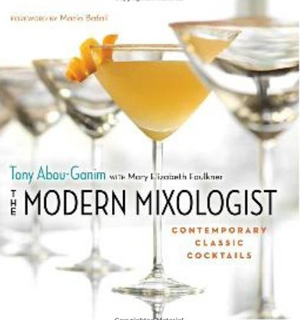
The Modern Mixologist - Tony Abou-Ganimm- 2010
Over the course of the past two decades, Tony Abou-Ganim has earned his reputation as one of the leaders in the craft cocktail movement. Through his work with food and hospitality legends like Mario Batali, Steve Wynn, and Harry Denton, Abou-Ganim has earned his reputation as "the Modern Mixologist," someone bringing the traditional art of mixology into the 21st century.
Now, in The Modern Mixologist, Abou-Ganim has established the new standard in cocktail books — a must-have guide to home mixology in a beautiful, coffee-table–suitable format. Featuring gorgeous full-color photography throughout by the award-winning Tim Turner, this book instantly becomes the most beautiful guide to creating cocktails available anywhere. If you carry one high-end cocktail book, this is it — sure to be a terrific gift item all year round.
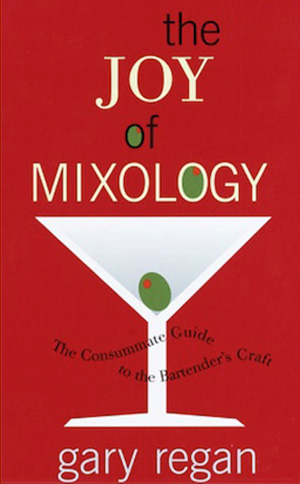
The Joy of Mixology - Gary Regan - 2003
An original book on the craft of mixology is a rare gem. Gary Regan's The Joy of Mixology is such a gem, one whose genius lies in Regan's breakthrough system for categorizing drinks that helps bartenders—both professionals and amateurs alike—not only to remember drink recipes but also to invent their own.
For example, once you understand that the Margarita is a member of the New Orleans Sour Family, you'll instantly see that a Kamikaze is just a vodka-based Margarita; a Cosmopolitan follows the same formula, with some cranberry juice thrown in for color. Similarly, the Manhattan and the Rob Roy, both members of the French-Italian family, are variations on the whiskey-vermouth-bitters formula.
In this way Regan brings a whole new understanding to the world of cocktails and how to make them. Not only will you learn how to make standard cocktails, you'll actually learn to feel your way through making a drink, thereby attaining the skills needed to create concoctions of your own. And as Regan explains methods for mixing drinks, how to choose bartenders' wares and select spirits and liqueurs, and the origins of many cocktails, you'll feel as though you're behind the bar with him, learning from a master. Plus, his charming and detailed history of mixed drinks raises this far above the standard cocktail guide fare.
With more than 350 drink recipes, The Joy of Mixology is the ultimate bar guide. Ground-breaking and authoritative, it's a must-have for anyone interested in the craft of the cocktail.
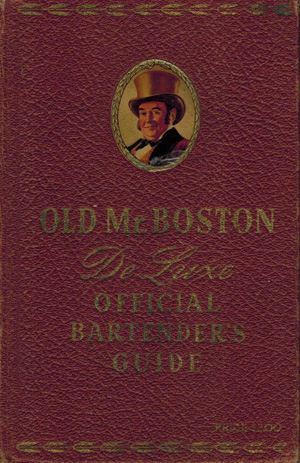
Mr. Boston Official Bartenders Guide - Jonathan Pogash and Rick Rodgers - 1941
Old Mr. Boston was a distillery located at 1010 Massachusetts Avenue in Boston, Massachusetts from 1933 to 1986. It produced its own label of gin, bourbon, rum, and brandies, as well as a few cordials and liqueurs.
The "Mr. Boston" name is known not only for its brands of distilled spirits, but also for its unique reference book, (Old) Mr. Boston Official Bartender's Guide, used by both professional and home bartenders as the "Bible of Booze." The Guide was first published 1935, according to the first date published in the Guide's publisher information page, the early days after the Repeal of Prohibition, when the distillery started up business again. As late as 2012 new editions were printed.
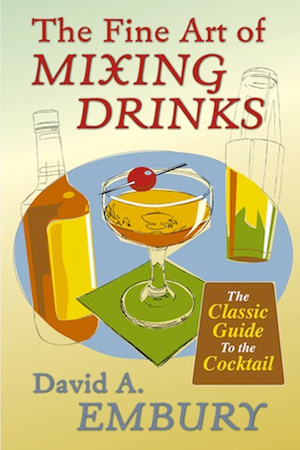
The Fine Art of Mixing Drinks - David Embury - 1948
The Fine Art of Mixing Drinks is a book about cocktails by David A. Embury, first published in 1948. The book is noteworthy for its witty, highly opinionated and conversational tone, as well as its categorization of cocktails into two main types: aromatic and sour; its categorization of ingredients into three categories: the base, modifying agents, and special flavorings and coloring agents; and its 1:2:8 ratio (1 part sweet, 2 parts sour, 8 parts base) for sour type cocktails.
Basic principles
Embury first outlines some basic principles for fashioning a quality cocktail:
It should be made from good-quality, high-proof liquors.
- It should whet rather than dull the appetite. Thus, it should never be sweet or syrupy, or contain too much fruit juice, egg or cream.
- It should be dry, with sufficient alcoholic flavor, yet smooth and pleasing to the palate.
- It should be pleasing to the eye.
- It should be well iced.
Embury stresses frequently that the drink will never be any better than the quality of the cheapest ingredient in it, and hence he stresses constantly the need for the highest quality spirits, liqueurs, cordials, and modifiers (fresh squeezed lemons, etc.). He also repeatedly stresses that a cocktail, in the classic sense (a before-dinner drink) should have no more than the slightest touch of sweetness to it, and deplores the use of drinks like the Brandy Alexander as preprandial (before dinner) cocktails, as they dull rather than sharpen the appetite. He does not denigrate sweet drinks as such, but rather points out that they are excellent after dinner or mid-afternoon drinks accompanying cake or chocolate cookies, but they are anathema as a "cocktail" before a large meal.
In terms of IBA Official Cocktails, Embury describes classic Before-Dinner Cocktails, which whet the appetite, not other categories.
Components of a cocktail
Embury breaks all cocktail ingredients down into three categories:
- The base is the principal ingredient of the cocktail. It is typically a single spirit such as rum, gin, or whiskey, and typically makes up 75 percent or more of the total volume of the cocktail before icing.
- The modifying agent is the ingredient that gives the cocktail its character. Its function is to soften the raw alcohol taste of the base while enhancing its natural flavor. Typical modifying agents are aromatic wines (such as vermouth) and spirits (such as Fernet Branca or Amer Picon), bitters, fruit juices and "smoothing agents" such as sugar, eggs, and cream.
- Special flavoring and coloring agents include liqueurs (such as Grand Marnier or Chartreuse), Cordials, Bitters like Angostura Bitters,etc. and non-alcoholic flavored syrups (such as Grenadine or Orgeat syrup). These are typically used in place of simple syrup, and are to be used sparingly.
Categories of cocktails
Embury breaks all cocktails down into two categories:
- Cocktails of the Aromatic Type use as modifying agents bitters or aromatic wines or spirits.
- Cocktails of the Sour Type use as modifying agents a fruit juice (typically, lemon or lime) and sugar. For these a ratio of 1 part sweet to 2 parts sour to 8 parts base is generally recommended. However, Embury makes it very clear that he thinks the idea that a drink must be made according to one exact recipe preposterous, and that the final arbiter is always your taste. He suggests trying different ratios, finding the one that is most pleasing to you, and sticking with it.
Once one understands the basic components of each type of drink, new cocktails can be created by substituting a different base or modifying agent or by adding a special flavoring or coloring agent. A daiquiri, for example, is nothing more than a whiskey sour with rum substituted for whiskey as the base and lime juice substituted for lemon juice as a modifying agent. An entire chapter of the book ("Roll Your Own") is dedicated to this premise.
Six basic drinks
Embury's six basic drinks are the Daiquiri, the Jack Rose, the Manhattan, the Martini, the Old Fashioned, the Sidecar. Embury's preferred recipe for each is:
Daiquiri
8 parts white Cuban rum
2 parts lime juice
1 part simple syrup
Shake with lots of finely crushed ice and strain well into a chilled cocktail glass.
Jack Rose
8 parts Applejack
2 parts lemon juice
1 part Grenadine
Shake vigorously with ice and strain into a cocktail glass. Garnish with a twist of lemon, if desired.
Manhattan
5 parts American whiskey
1 part Italian (sweet) vermouth
dash of Angostura bitters to each drink
Stir with ice, strain into a cocktail glass and serve garnished with a maraschino cherry.
Martini
7 parts English gin
1 part French (dry) vermouth
Stir with ice, strain into a cocktail glass, twist lemon peel over the top and serve garnished with an olive, preferably one stuffed with any kind of nut.
Old Fashioned
12 parts American whiskey
1 part simple syrup
1-3 dashes Angostura bitters to each drink
In an old-fashioned glass, add bitters to simple syrup and stir. Add about 1 ounce of whiskey and stir again. Add two cubes of cracked, but not crushed, ice and top off with the rest of the whiskey. Twist lemon peel over the top and serve garnished with the lemon peel and a maraschino cherry.
Sidecar
8 parts Cognac or Armagnac
2 parts lemon juice
1 part Cointreau or triple sec
Shake vigorously with ice and strain into a cocktail glass. Garnish with a twist of lemon, if desired.
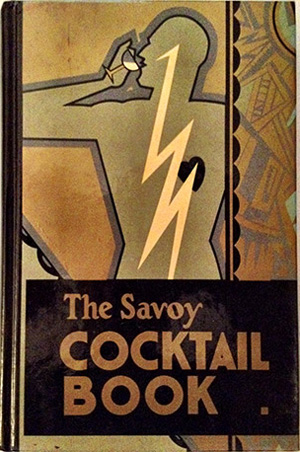
The Savoy Cocktail Book - Harry Craddock - 1930 (Prohibition era)
Harry Craddock (1876 – 1963) was one of the most famous bartenders of the 20s and 30s.
Born in Stroud, United Kingdom, Craddock moved to the United States, where he worked at Cleveland's Hollenden Hotel and New York's Knickerbocker Hotel and Hoffman House, becoming a United States citizen. He left during Prohibition and joined the American Bar at the Savoy Hotel, London, in 1920. ‘American’ bars, and subsequently ‘Cocktail’ bars emerged, especially during the Prohibition era, when many American barworkers came to London to continue their trade, and American tourists arrived thirsty for a legal drink. The best known and most enduring American bar in London was (and still is) at The Savoy.
Craddock's "The Savoy Cocktail Book" was first published in 1930, and is still in print today. He is sometimes credited with creating a number of classic cocktails, including the famous Corpse Reviver #2 and White Lady.
While at the Savoy, Craddock co-founded the United Kingdom Bartenders' Guild in 1934. In 1938, he moved to the Dorchester Hotel, retiring in 1947. He died in 1963, and was buried in a pauper's grave.
Synonymous with style, elegance, and sophistication, the Savoy is unsurprisingly also the birthplace of some of the most famous cocktails in the world. During the 1920s and 1930s, Prohibition-dodging Americans visiting London for tea-dances and cocktails made the bar at the Savoy their home. Here they were entertained by legendary American barman Harry Craddock, inventor of the White Lady and popularizer of the Dry Martini. Originally published in 1930, the Savoy Cocktail Book features 750 of Harry's most popular recipes. It is a fascinating record of the cocktails that set London alight at the time—and which are just as popular today. Taking you from Slings to Smashes, Fizzes to Flips, and featuring art deco illustrations, this book is the perfect gift for any budding mixologist or fan of 1930s-style decadence and sophistication.
Imbibe! by David Wondrich.
Imbibe! was first published in November 2007.
Punch: The Delights (and Dangers) of the Flowing Bowl by Dave Wondrich
In addition to Imbibe!, Wondrich also wrote Punch, which charts the punch bowl’s history alongside ideas to create your own bowl-based cocktail. Shine says a deep dive into both Imbibe! and Punch is “essential to the serious bar professional” or anyone “who is looking to further their knowledge of the history of where our incredible profession comes from.” Ehrmann also recommended both of Wondrich’s titles, calling them “definitive historical books” for bartending.
Bitters by Brad Thomas Parsons
Author Brad Thomas Parsons hits the nail on the head with the execution of the topic of bitters, both sippers like amari and 'seasoning' bitters like Angostura or Peychaud's. It offers well-reported brief history, complete with a guide on how to make your own bitters at home, and comes stocked with ample recipes to play around with as well. As America's palate continues to skew towards the unusual, this book will only become more relevant.
TIKI: Modern Tropical Cocktails by Shannon Mustipher
