Great Gatsby Cocktail Recipes
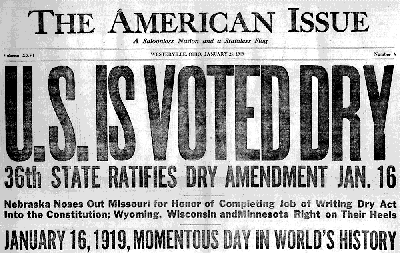
It was the age of jazz, flappers, gangsters and Prohibition—as well as the setting for F. Scott Fitzgerald's acclaimed novel The Great Gatsby.
The History of the Time and Place
Prohibition was implemented in 1919, so it was illegal in the 1920's to distribute or manufacture alcohol in the U.S.. Racism was rampant, there was a general fear of foreigners (partially because Prohibition played on fears by linking immigrants - particularly Europeans - to the consumption of alcohol), but women were able to vote and join the workforce as of 1920. Of course, they got paid less, didn't have many opportunities, and were under constant pressure to maintan outdated ideals. This lead to a female rebellion culture called "Flappers." These girls cut their hair short, hiked up their skirts, and partied like crazy in speakeasys around the country.
Art deco, modernism, surrealism, abstract expressionism, dadaism, and surrealism were popular art forms at the time, and authors like R.S. Eliot, F. Scott Fitzgerald, and Ernest Hemingway were publishing. American baseball was popular, Harry Houdini was performing his great escapes, and the Miss America padgent had just begun.
1920's America was the Golden Age of organized crime, which was previously limited to extortion, prostitution, rackets, and the like, but now the mob was able to use Prohibition to control one of the most lucrative businesses ever. Bootlegging really funded the mob and made them into the wealthy and powerful force they came known to be. Gang wars raged throughout Chicago in particular, and spread across the country and into the streets. Al Capone was the biggest name in crime, running his gang on the south side of Chicago until his eventual incarceration in the early 30's.
Musically, Chicago was one of the most important jazz scenes, with a great number of New Orleans early jazz bands and musicians moving north for a better quality of life. King Oliver, Jelly Roll Morton, and Louis Armstrong, some of the most influential artists in modern music, all moved to Chicago in the late 1910's. Armstrong and his Hot Five (and later Hot Seven) recorded throughout the mid 20's and developed jazz from its raw beginnings to the intellectual, improvised style focusing on soloists that became the framework for all jazz to come. The music got faster, more complicated, more arranged, got rid of tuba and replaced it with upright bass, and really kickstarted the genre, leading it into the swing era of the 30's and 40's. Armstrong's influence on American music, and popular music in general can not be understated, and neither can his influence on racial culture, as he was essentially the first widely popular American personality who wasn't white.
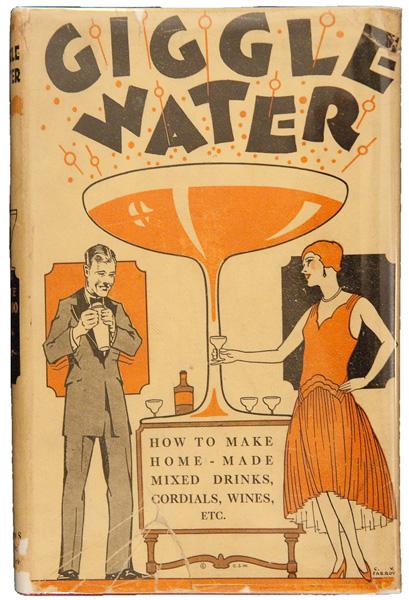
One of the few cocktail books published during prohibition –
“Giggle Water: Including Eleven Famous Cocktails
of the Most Exclusive Club of New York”, 1928
Some Interesting Facts
- As of midnight on January 17, 1920, it became illegal to buy or sell wine, beer, and spirits (with limited exceptions). It was not illegal to drink alcohol. So the last days before Prohibition were a scramble to purchase every bottle in sight. The well-to-do had the means, connections, and physical space to buy up entire shops' worth of wine or Scotch; the less well-off made their own way.
- By January 16, 1920, 80 percent of the booze stored in the cellars of the Union Club, Fifth Ave. at 51st St. in New York City, had been transferred to members’ homes.
- Weeks before Prohibition was put into effect, Franklin Delano Roosevelt— then the assistant secretary of the Navy— had four cases of Old Reserve delivered to his townhouse. 49 E. 65th St., nr. Park Ave.
- So it wasn't hard to get a drink in Prohibition-era America. But as the entire alcohol trade moved underground, it was virtually impossible to have any guarantee of quality.
- Making wine at home was permitted, so every fall, California vineyards loaded thousands of tons of lugs, or crates of grapes, into boxcars headed east. The Pennsylvania Railroad expanded its Jersey City freight terminal to accommodate the surge (about 30,000 boxcars in 1928).
- Halfway through nationwide temperance, much of society had settled into the less guilty routine of frequenting their local –not so quietly spoken – speakeasy in search of a strong drink. After all, everyone was doing it. In 1928 Detroit Police raided a popular high class speak known as the Deutsches Haus located on the corner of Mack and Maxwell. Included in the bust was their local Detroit Mayor John Smith, Michigan Congressman Robert Clancy and resident Sheriff Edward Stein.
- In New York City, there were 38 speakeasies on 52nd Street alone.
- In the city of Boston, there were four recorded speaks on the same street as the Boston Police Department.
- The general rule of thumb of the era was for every one bar closed down due to prohibition, another three would open in its place. Without the need to adhere to licensing or trading standards and with so much more access to liquor, every man and his dog were opening bars in their basements, garages and storerooms.
- One of the few cocktail books published during prohibition – Giggle Water: Including Eleven Famous Cocktails of the Most Exclusive Club of New York, 1928
How Prohibition Reinvented Drinking In America
- Prior to Prohibition, there were thousands of breweries in the United States, mostly brewing heavier beers than modern US beer drinkers are used to. Beginning in 1920, most of these breweries went out of business, although some converted to soft drinks and other businesses. Bootlegged beer was often watered down to increase profits, beginning a trend, still on-going today, of the American markets heavily advertising the weaker beers and keeping them popular. Consolidation of breweries and the application of industrial quality control standards have led to the mass-production and the mass-marketing of huge quantities of light lagers. Advertising became supreme, and bigger companies fared better in that market.
- From the earliest settlers of America straight through 1920, hard cider was an enormously popular drink—particularly in the Northeast, given the ready supply of fruit—consumed as eagerly as lagers and ales. After Prohibition, it was all but forgotten; only in recent years has it begun to make a resurgence, though it's unlikely to ever regain its early dominance.
- And yet, an era defined by banning alcohol led to developments in the drinking world, too. "During Prohibition, alcohol that could be smuggled over the nation's borders grew more popular—tequila from the south and Canadian whisky from the north," says Camper English, cocktail and spirits writer who wrote about several "upsides" of Prohibition on his site Alcademics.
- Even after Prohibition was repealed, those effects lingered. "Canadian whisky surged in popularity," says Gareth Evans. "After repeal, consumers rushed to buy alcohol again, but America's favorite spirit—whiskey—needs to be aged. There wasn't enough stock to satisfy demand. So thirsty Americans turned their eyes North."
- Produced throughout the Caribbean, rum became another attractive option. "Rum was extremely popular during Prohibition, especially in New York," says Kenneth McCoy, Partner at The Rum House. And while in the Northeast, rum was smuggled into the city, Americans closer to the Caribbean (or those of ample means) went right to the source. Thus cocktails like the daiquiri and the mojito, still popular today, became familiar through Prohibition; Bacardi itself, now the best-selling rum in the United States, did too.
- "The main drinks to come out of Prohibition weren't actually from the US, but rather from elsewhere as an indirect result," explains Gareth Evans. "The top American bartenders could obviously not get work anymore at home, so they moved to the big bars of Paris, London, and closer to home—in Cuba." The Mary Pickford—a lesser-known classic of rum, pineapple, grenadine, and maraschino, named for a silent film star of the day—is among them.
- And while mixers were certainly in use before Prohibition, they became far more popular in that era—the better to disguise questionable liquor with, of course. Faux-gin tasted better with tonic than in a martini; bootleg whiskey was more palatable with ginger ale than with soda. And Coca-Cola made out like gangbusters, selling both to the teetotalers and the imbibers desperate to mask the taste of what they drank.
Drink like it's the 1920s!
Unsurprisingly, the role of the mixed drink became essential to help mask the shortcuts made during distillation. As such, the classic cocktails enjoyed prior to prohibition (Fizz, Fix, Flip, Crusta, Daisy, Punch, Julep, Sling, Sour, Smash etc), took a back seat to a glass which included a diluting mask such as soda, coke or ginger ale. With the exception of a cocktail called The Last Word, there were arguably no other popular cocktails invented in America during the 13 odd years of prohibition.
If you were to head back there today and you had the money and connections to get into the finest joints, you could buy iconic cocktails such as the Clover Club, Bronx, Pink Lady, Mary Pickford or Blue Moon, all of which contained a strong mask in the style of cream, juice, soda or egg white. While other cocktails such as the Sidecar or Julep could still be found, it was more common to see people drinking drams of imported whiskey (often Canadian Club), ginger ale Highballs or coupettes of Champagne.
These are cocktails that were popular in the 1920s. Not all of these Prohibition-era drinks were actually created between 1920 and 1933; some date back to the 1880s. During Prohibition, there wasn't a lot of choice in brandy, gin, rum, or whiskey. Many people had to drink whatever they could get. Whether that was smuggled booze from the rum runners, doctored up "whiskey" or moonshine, or bathtub gin, quality was not always a guarantee.
These cocktails saved the day, turning what may have been undrinkable liquor into a boozy beverage anyone could enjoy! You'll notice patterns in the drink mixers used, including flavorful fruits, more sweeteners, long pours of soda, and ingredients like mint. It may have been a time of bad booze, but the bartenders didn't let that stop them from creating amazing cocktails.
A gently fizzing, summery concoction of gin, lime and soda. The name "rickey" stretches back far beyond the Jazz Age – the cocktail may owe its moniker to a 19th century army man, Colonel Joe Rickey, who liked his with bourbon – but the gin version was a Prohibition staple. It's often claimed to have been the favourite drink of Fitzgerald, and is one of only two cocktails to be mentioned by name in the book, The Great Gatsby.
The drink appears in a scene set on a boiling summer's day, when Daisy orders her husband Tom to "make us a cold drink" – using his absence to murmur to Gatsby of her love for him. When Tom returns, he carries "four gin rickeys that clicked full of ice. Gatsby took up his drink. 'They certainly look cool,' he said with visible tension. We drank in long, greedy swallows".
Put three or four ice cubes in a highball glass, and squeeze in the juice of half a lime. Add around 60ml of gin (2 oz.), and top with soda. Rub the lime wedge around the rim, then drop into the glass.
Mint and sugar cut sweetly through the robustness of bourbon in this delicious cocktail. Traditionally served in pewter cups, it is in fact a pre-Prohibition drink, which probably originated in the southern United States in the 18th century. But it soon started to trickle northwards, and survived Prohibition to become the official drink of the Kentucky Derby.
The drink is mentioned twice in The Great Gatsby, most noticeably when Daisy, Tom and Gatsby have a row in a hotel. "I'll make you a mint julep," Daisy tells her husband. "Then you won't seem so stupid to yourself." You''ll hopefully drink yours in less tense surroundings.
Mix a teaspoon of sugar (you can adjust to taste) with a splash of water in a highball glass or pewter cup until dissolved. Add a handful of mint leaves (I'd suggest around 10) and gently bruise with a muddler or wooden spoon. Fill the glass with crushed ice, then pour in 60-90ml (2 - 3 oz.) of bourbon, depending on the size of your glass. Stir, top up the glass with more crushed ice, and garnish with a few more mint leaves.
Mary Pickford
Although she was Canadian, Mary Pickford was known as America’s sweetheart in the 1920s and starred in silent movies alongside famous chaps like Charlie Chaplin. The story goes that she, her husband Douglas Fairbanks, and Chaplin were in Havana, Cuba, from where vast quantities of rum were smuggled during Prohibition, when a bartender whipped up this pink tropical concoction and named it in her honor.
Mix 60ml white rum with 45ml (1.5 oz.) pineapple juice, a teaspoon of maraschino liqueur and half a teaspoon of grenadine in a shaker with plenty of ice. Shake vigorously, and strain into a cocktail glass. Garnish with a maraschino cherry.
South Side
The South Side has a rather hazy history, and could easily pre-date the Jazz Age. But its reputation as a favoured tipple of Al Capone and his gang has landed it a place in Prohibition history: the name may even refer to the the notorious Chicago distict of which Capone was king. The cocktail is sometimes said to have been the invention of the New York's 21 Club, a former speakeasy that still serves them today.
Mix 60ml gin, vodka or white rum with 30ml (1 oz.) fresh lemon juice, 2 tsp of sugar and four or five fresh mint leaves in a cocktail shaker, and shake to bruise the mint leaves. Pour into a highball glass filled with ice, and top with soda, if you like. Garnish with a mint sprig.
You can also try exchanging the lemon for lime or serving short, i.e shaking the ingredients with ice and straining into a cocktail glass, for a more stylish drink.
Bee's Knees
The citrus and honey aromas of this charmingly-named Prohibition cocktail were probably intended to mask the harshness of bathtub gin. The name comes from prohibition-era slang meaning "the best." Recipes often call for honey syrup, but I've used honey here to make it easier. Just make sure it dissolves properly, or you'll end up with clumps of honey on the side of your shaker.
The Bee's Knees was invented by Frank Meier, an Austrian-born, part Jewish bartender who was the first head bartender at the Ritz in Paris in 1921, when its Cafe Parisian opened its doors.
Stir a generous teaspoon of honey in a splash of room temperature water in the bottom of a cocktail shaker until it's almost dissolved. Add 60ml (2 oz.) gin, 15ml (.5 oz.) fresh lemon juice and ice. Shake vigorously, then strain into a cocktail glass and garnish with a lemon twist.
Mr. MacElhone claims credit for this classic cocktail, but only some of the time. In the earliest editions of his 1922 book Harry's ABC of Mixing Cocktails, the recipe includes cognac, triple sec, and lemon juice, and he cited Pat MacGarry, a bartender at London's Buck's Club, as the Sidecar's originator. But in later editions of the book, MacElhone changed his tune and claimed the recipe as his own. However, this revision could be blamed on a revised recipe. The English version called for two parts cognac to one part triple sec (or other orange liqueur) and lemon juice, while the French version (MacElhone's) favors equal parts of this trio of ingredients.
Between the Sheets
This cheeky drink was a favourite of Bright Young Things (a nickname given by the tabloid press to a group of bohemian young aristocrats and socialites in 1920s London). A version of the classic Sidecar, it offers a triple whammy of rum, cognac and triple sec, sharpened with a dose of lemon. Between the Sheets takes the classic trio of cognac, lemon, and orange liqueur and tinkers with the flavor by swapping out part of the base spirit for the brighter character of light rum. The taste is still Sidecar-ish, but there's a little rummy extra in the mix. Fitzgerald and his friends probably had no trouble downing these in quick succession, but one will probably suffice to get you in a suitably Roaring Twenties mood.
Mix 30ml (1 oz.) each of brandy, white rum and triple sec with 15ml (.5 oz.) of fresh lemon juice in a shaker with ice. Shake, and strain into a cocktail glass. Garnish with lemon twist.
Named for the powerful French 75mm field gun, this champagne-based cocktail was the 1915 invention of Harry MacElhone, who mixed gin, champagne, lemon juice, and two dashes of simple syrup for patrons of the New York Bar in Paris. Named for its kick, the French 75 became popular stateside when it was included in The Savoy Cocktail Book of 1930.
This fancy Prohibition-era cocktail adds maraschino liqueur and orange bitters to a Martini. Tuxedo the drink and tuxedo the apparel are just the thing for a proper Gatsby bash.
Related to the martini, the Tuxedo has had many variations since its inception in the 1880s. The cocktail is named after the Tuxedo Club in Orange County, New York where it was first mixed. Tuxedo Park, the planned community where the club was built, is itself a derivation of the Lenape word tucseto. The form of menswear by the same name originated at the same country club around the same time.
"In his blue gardens men and girls came and went like moths among the whisperings and the champagne and the stars." It wouldn't be a Gatsby party without Champagne. The classic Champagne Cocktail is just a bitters-soaked sugar cube in a glass of bubbly. But, in honor of the green light, why not sub Green Chartreuse or absinthe for the bitters.
A Jack Rose is a cocktail containing applejack, grenadine, and lemon or lime juice. It was popular in the 1920s and 1930s, notably appearing in Ernest Hemingway's 1926 classic, The Sun Also Rises. References to the Jack Rose date back to the early 20th century.
The most widely reported version of this drink’s origin is that it was invented at Caffe Casoni in Florence, Italy in 1919. Legend tells that Count Camillo Negroni asked his friend, bartender Forsco Scarselli, to strengthen his favourite cocktail – the Americano – by replacing the soda water with gin. Scarselli added an orange garnish, rather than the lemon you’d usually get with an Americano to distinguish the two, and the drink took off. Before long, everyone was coming into the bar for a ‘Negroni.’
Southside
This story, which is basically confirmed as the origin of the drink, is that it was invented at the Southside Sportsmen's Club on Long Island, New York. For years rich men from NYC came to Long Island to fish and hunt, and they would stay at an inn/tavern known for its Mint Juleps. This reputation, unfortunately for the rich folks, meant it started to get crowded so in 1866 they bought the place and turned it into the aforementioned club. The famous Mint Juleps eventually evolved into other mint drinks and the Southside was born. Over time, country clubs started making "Southside" mixes, letting mint steep for days in a sugar and lemon juice, then using this mix with a spirit and soda. Further evolutions have changed the original gin to vodka or even rum (which makes the drink basically a Mojito). Sadly, the Southside Sportsmen's Club doesn't exist anymore, but its legacy lives on in country clubs everywhere in the form of the Southside cocktail.
The "proper" way to serve this drink in Long Island is with soda, but there is also a straight-up version. There are versions of this drink listing either lemon or lime as well, and everywhere I've looked I've seen a different recipe. I will go with Gary Regan's recipes (never a bad idea) from his book The Joy of Mixology, one being straight up and the other being a fizz:
Southside Cocktail
4 lemon wedges
2-3 teaspoons sugar
4-5 fresh mint leaves
2.5oz ginMuddle the lemon, sugar, and mint in a shaker, add gin and ice, shake, strain into a cocktail glass and garnish with a sprig of mint.
Southside Fizz
4 lemon wedges
2-3 teaspoons sugar
6-8 fresh mint leaves
2.5oz gin
Dash of aromatic bitters - optional
soda waterMuddle lemon, sugar, and mint in a shaker. Add gin and ice, shake, strain into a collins glass over ice, top with soda, and garnish with a sprig of mint.
Bacardi Cocktail
The original Bacardi cocktail is an excellent use for light rum. Popular as early as the 1930s, it's a classic drink designed for this specific brand of rum. It requires just three ingredients and is an easy cocktail to mix up. Essentially a daiquiri sweetened with grenadine rather than simple syrup, the sweet-sour taste can be adapted to suit your taste. Not only is this a great drink, but it's also one of the earliest examples of an effective liquor advertising campaign. In fact, in 1936 the New York Supreme Court ruled that an authentic Bacardi cocktail had to be made with Bacardi Rum.
The Old-Fashioned was around before Prohibition and it was around after Prohibition, but never was it more needed than during Prohibition—there being no better way invented to improve the taste of indifferent liquor. And if you actually have good liquor...
Muddle 1 sugar cube with a teaspoon of water and 2 dashes of Angostura bitters in the bottom of an Old-Fashioned glass until the sugar dissolves. Add 1 1/2 oz whisk(e)y—in order of Prohibition-era popularity: straight rye (or "rye"), bourbon (or "bourbon"), Canadian or blended Scotch—and stir briefly. Then add 2-3 ice cubes, stir some more, squeeze a large swatch of thin-cut lemon peel over the top and drop it in. This drink is always best if you let it sit for a minute or two before sipping it.
Barbary Coast
Only desperation would cause somebody to mix Scotch and gin, but Prohibition was a desperate time—and, surprisingly, the results aren't half bad.
Shake well with cracked ice:
3/4 oz blended Scotch
3/4 oz gin
3/4 oz crème de cacao
3/4 oz heavy cream
Strain into chilled cocktail glass.
