Mulled Wine
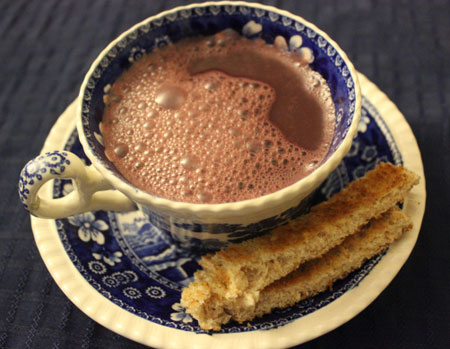
Mulled Wine made with egg and served warm
Mulled wine (otherwise known as Glögg or Gløgg) is a beverage that ranges from alcoholic to non-alcoholic. It is usually made with red wine along with various spices and raisins, served hot or warm. It is a traditional drink during winter, especially around Christmas and Halloween. Port and claret are popular choices for mulled wine. Mull means "to heat and spice."
Spiced wine has been around for a long time, dating at least to ancient Roman times, when Hippocrates supposedly made spiced, sweetened wine for medicinal use. His drink was called hippocras, and recipes for it were in cookbooks from at least the 16th century until about the 18th century. English mulled wine, Swedish glögg, and German Glühwein all trace their roots back to hippocras. English versions sometimes contained milk, but none had eggs until around the 18th century. The eggs then disappeared again by the 19th century, according to culinary historian Nancy Carter Crump.
Our ancestors were very found of comforting winter nightcaps like these, particularly at supper. In a world without central heating or electric blankets, you can understand why these hot beverages were so popular before the dreaded ascent of the stairs to an often ice-cold bed chamber. The medical books of the eighteenth century are full of references to mulled wine, often combined with more powerful medicaments for treating all manner of disorders. Both Raffald's mulled wine and ale, with their fusion of egg yolks, spice and alcohol were really types of caudle, a beverage often consumed in a medical context. When cream or milk was added to the alchemical formula, these restoring beverages were usually called possets.
British Mulled Wine
Mulled wine was popular in Victorian England at Christmas. Another popular holiday recipe was Smoking Bishop.
Here is an 18th-century mulled wine recipe containing eggs, from Elizabeth Raffald, author of The Experienced English Housekeeper (1769). Mrs Raffald instructs us to serve her mulled wine in a chocolate cup.
Grate half a nutmeg into a pint of wine and sweeten it to your taste with loaf sugar. Set it over the fire and when it boils take it off to cool. Beat the yolks of four eggs exceedingly well, add to them a little cold wine, then mix them carefully with your hot wine a little at a time. Then pour it backwards and forwards several times until it looks fine and bright. Then set it on the fire and heat it … till it is quite hot and pretty thick, and pour it backwards and forwards several times. Then send it in chocolate cups and serve it with dry toast cut in long narrow pieces.
Notes by a reviewer: The wine is thick from the eggs, and the nutmeg flavor really comes through. Be sure to make the suggested toast sticks as they're a perfect accompaniment, and good for dipping. Use a decent but not fancy wine, and it should be fairly dry.
Mulled Wine ~ Marion Harlands Kitchen Directory – 1847
To a pint of water put a teaspoon of powdered cloves and cinnamon. Set it where it will boil – then separate the whites and yolks of three eggs, and beat the yolks with a large spoonful of powdered sugar. As soon as the water boils, turn it onto the yolks and sugar – add a pint of wine, and turn the beaten egg white over the whole.
Another traditional recipe can be found in Mrs Beeton's Book of Household Management at paragraph 1961 on page 929 to 930 of the revised edition dated 1869:
TO MULL WINE.
INGREDIENTS.- To every pint of wine allow 1 large cupful of water, sugar and spice to taste.
Mode.-In making preparations like the above, it is very difficult to give the exact proportions of ingredients like sugar and spice, as what quantity might suit one person would be to another quite distasteful. Boil the spice in the water until the flavour is extracted, then add the wine and sugar, and bring the whole to the boiling-point, when serve with strips of crisp dry toast, or with biscuits. The spices usually used for mulled wine are cloves, grated nutmeg, and cinnamon or mace. Any kind of wine may be mulled, but port and claret are those usually selected for the purpose; and the latter requires a very large proportion of sugar. The vessel that the wine is boiled in must be delicately cleaned, and should be kept exclusively for the purpose. Small tin warmers may be purchased for a trifle, which are more suitable than saucepans, as, if the latter are not scrupulously clean; they spoil the wine, by imparting to it a very disagreeable flavour. These warmers should be used for no other purpose.
German and Austrian Glühwein
A cup of Glühwein.
Glühwein (roughly, "glow-wine," from the hot irons once used for mulling) is popular in German speaking countries and in the region of Alsace in France. It is a traditional beverage that is offered during the Christmas holidays. The oldest documented Glühwein tankard is attributed to Count John IV of Katzenelnbogen, a German nobleman who was the first grower of Riesling grapes.
Glühwein is usually prepared from red wine, heated and spiced with cinnamon sticks, cloves, star aniseed, citrus, sugar and at times vanilla pods. It is sometimes drunk mit Schuss (with a shot), which means that rum or some other liquor has been added. Fruit wines, such as blueberry wine and cherry wine, are occasionally used instead of grape wine in some parts of Germany. There is also a variation of Glühwein which is made with white wine. However, white Glühwein is less popular than its red counterpart.
Another popular variant of Glühwein in Germany is the Feuerzangenbowle. It shares the same recipe, but for this drink a rum-soaked sugarloaf is set on fire and allowed to drip into the wine.
Nordic glögg
Recipe for Swedish Glögg
Glögg, gløgg, and similar words are the terms used for mulled wine in the Nordic countries (sometimes misspelled as glog or glug). It is spelled gløgg in Norwegian and Danish, glögg in Swedish and Icelandic, and glögi in Estonian and Finnish.
Non-alcoholic glögg can be bought ready-made or prepared with fruit juices instead of wine. The main classic ingredients (of alcoholic glögg) are red wine, sugar, spices such as cinnamon, cardamom, ginger, cloves, and bitter orange, and optionally also stronger spirits such as vodka, akvavit, or brandy. In all Scandinavia, glögg spice extract and ready-mixed spices can be purchased in grocery stores. To prepare glögg, spices and/or spice extract are mixed into the wine, which is then heated to 60-70 °C (140-158 °F). When preparing homemade glögg using spices, the hot mixture is allowed to infuse for at least an hour, often longer, and then reheated before serving. Ready-made wine glögg (and low- or non-alcoholic varieties) is normally sold at Systembolaget in Sweden, and in Alko in Finland, ready to heat and serve, and not in concentrate or extract form. Glögg is generally served with raisins, blanched almonds and Ginger biscuits (Ginger Snaps), and is a popular hot drink during the Christmas season.
In Sweden, ginger bread and lussebullar (also called lussekatter), a type of sweet bun with saffron and raisins, are typically served. It is also traditionally served at Julbord, the Christmas buffet. In Denmark, gløgg pairings typically include æbleskiver sprinkled with powdered sugar and accompanied with strawberry marmalade. In Norway, gløgg is paired with rice pudding (Norwegian: riskrem) are common. In such cases, the word graut-/grøtfest is more precise, taking the name from the rice pudding which is served as a course. Typically, gløgg is drunk before eating the rice pudding, which is often served with cold, red cordial (saus).
Glögg recipes vary widely; variations with white wine or sweet wine such as Port or Madeira, or spirits such as brandy or whisky are also popular. Glögg can also be made without alcohol by replacing the wine with fruit or berry juices (often blackcurrant) or by boiling the glögg to evaporate the alcohol. Readymade non-alcoholic glögg is also available. Glögg is similar in taste to modern Wassail or mulled cider.
Mrs. Isabella Beeton, Book of Household Management, 1861
TO MULL WINE.
1838. INGREDIENTS.-- To every pint of wine allow 1 large cupful of water, sugar and spice to taste.
Mode.-- In making preparations like the above, it is very difficult to give the exact proportions of ingredients like sugar and spice, as what quantity might suit one person would be to another quite distasteful. Boil the spice in the water until the flavour is extracted, then add the wine and sugar, and bring the whole to the boiling-point, when serve with strips of crisp dry toast, or with biscuits. The spices usually used for mulled wine are cloves, grated nutmeg, and cinnamon or mace. Any kind of wine may be mulled, but port and claret are those usually selected for the purpose; and the latter requires a very large proportion of sugar. The vessel that the wine is boiled in must be delicately clean, and should be kept exclusively for the purpose. Small tin warmers may be purchased for a trifle, which are more suitable than saucepans, as, if the latter are not scrupulously clean, they will spoil the wine, by imparting to it a very disagreeable flavour. These warmers should be used for no other purposes.
