The Key to Crinkly Cookies
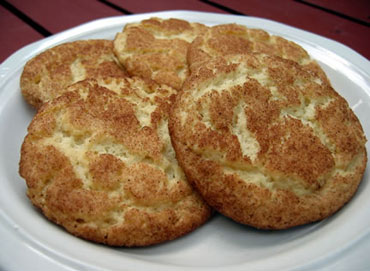
Snickerdoodles
From Cook's Illustrated, https://www.cooksillustrated.com
Most cookies have top crusts that remain relatively soft and flexible as the cookies set during baking. However, if the top surface dries out before the cookie is finished spreading and rising, it hardens, cracks, and pulls apart, producing an attractive crinkly, cracked exterior.
While we found that multiple factors can affect how quickly the top dries out and thus how many cracks are formed (including the temperature of the dough and how rapidly it spreads in the oven), a simple tweak turned out to be key to producing a maximum number of fissures: rolling the balls of dough in granulated sugar before rolling them in powdered sugar.
Coating of Sugar
Coating the cookies with either granulated or powdered sugar draws out moisture from their surface, promoting cracks by drying out their tops before the interiors set. But granulated sugar does so more efficiently because of its coarse, crystalline structure. As the crystals absorb moisture, some—but not all—dissolve into a syrup. As the cookies continue to bake, the moisture evaporates, and the sugar begins to recrystallize, a process that is accelerated by the undissolved sugar crystals, which act as “seed” crystals. Sugar is hydroscopic and draws water into its structure. This gives the cookie a fast drying surface that is prone to cracking.
Right Amount of Spread
To get the right amount of spread you need to control both leavening and temperature.
Levening. You need the correct ratio of baking soda and baking powder, so that the cookies not only rise but spread. Baking soda raises the pH of the dough and weakens the gluten structure providing for more spread. Plus it also provides more carbon dioxide gas than baking powder alone. Excess gas exists the surface of the cookie as they bake helping to create fissures. Baking powder without the soda gives more of a wrinkled dome shape. It is best to use both baking powder and baking soda.
Another factor besides surface drying is spread. Getting a balance between the two is tricky. If the cookies spread too rapidly, you don't get a nice crinkling on top. If the surface is dry enough but the cookie did not spread enough, you get tiny cracks - not what you want.
To efficiently dry the surface, it is crucial you bake just one pan of cookies at a time. It ensures all the cookies are drying out from the radiant heat reflecting off the top of the oven.
DON’T: Overbake them: “Overbaked crinkle cookies will be cakey and dried out,” says Molly. Look for the cookies to be cracked all over and dry around the edges; the tops will still be shiny and moist but should not stick to your finger if touched lightly.
From https://www.leaf.tv/
Temperature
Crackling will occur when the outside of a cookie has solidified while the moist inside is still baking. Expanding air bubbles force cracks to let dough continue expanding, in response to the heat. Amplify this reaction by chilling dough before baking. A period from one hour to overnight will chill dough enough that centers lag substantially behind outer surfaces in baking, swelling to force cracks.
Coating
Highlight natural cracking tendencies by rolling cookies with granulated or powdered sugar before baking. A sugar coating dries the surface of the raw dough ball, especially if you use powdered confectioner's sugar, which contains cornstarch. Roll light-colored snickerdoodle dough in cinnamon-sugar or colored granulated sugar to emphasize pale cracks. Make dark crackles stand out in chocolate or ginger cookies with a powdered sugar coating.
Cookies with Crinkly Top
