Early English Breads, Cakes and Buns
Maids of Honour
Maids of Honour (18th century)
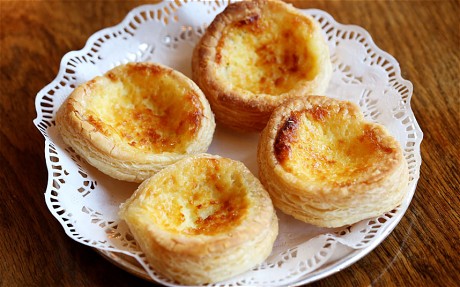
These delicious tartlets, filled with curd cheese, have a fantastic legend behind them. Supposedly, that great guzzler Henry VIII once stumbled across Anne Boleyn and her ladies-in-waiting enjoying a plateful, and loved the pastries so much that he confiscated the recipe, declaring that only royalty could now enjoy them. The Richmond tearoom called The Original Maids of Honour was set up in the 1800s to sell the tartlets, and still makes them today.
Maid-of-Honour tarts are also sometimes called Richmond Tarts. In the borough of Richmond in London, there is a little street called Maid-of-Honour Row which was built to house the Maids of Honour of Caroline, the wife of George II, two centuries after Anne's short reign. Perhaps then there is some connection between this elegant row of houses and the Tarts?
Several sources say that the first recipe for Maid of Honour Tarts are to be found in late seventeenth century books. Alan Davidson in The Oxford Companion to Food gives a reference that suggests that the first print occurrence occurred in the Public Advertiser of 1769. Hannah Glasse places them in the second course of several of her suggested menus in the 1778 edition of The Art of Cookery (but does not give a recipe with the name). So – perhaps there is a mid-eighteenth century association with this little elegant row of houses, and not the mother of Queen Elizabeth I?
Maids of Honour
from The New Art of Cookery, according to the present practice…; by Richard Briggs; 1792
Take half a pint of sweet curds, beat them well in a marble mortar till they are as smooth as butter. Put in half a pint of cream, the yolks of four eggs, the whites of two, well beaten and strained through a sieve; a quarter of a pound of fresh butter melted, a little grated lemon-peel, and nutmeg, one ounce of candied citron shred very fine, a glass of brandy, and a spoonful of orange flower water; sweeten it to your palate with powder sugar, mix the ingredients all well together, have your patty pans very small, sprinkle on a little flour, put a thin puff-paste over them, more than half fill them, and bake them in a moderate oven.
Rout cakes and biscuits (18th century)
Tiny rich sweet cakes and biscuits made for routs, or evening parties.
Also see A History of Routs & Rout Fare in 18th and 19th c. England and America
Literary buffs may remember rout cakes from Jane Austen's Emma, when the hideous Mrs Eltham is shocked at the "poor attempt at rout cakes" in her new home of Highbury. These are rich, sweet cakes, flavoured with alcohol and currants, and named for where they were generally enjoyed in Austen's time: at fashionable evening parties, or "routs ". Card playing was popular at routs.
Rout cakes are mentioned time and again in the literature of the 18th and 19th centuries - in Jane Austen's 'Emma', in Flaubert's 'Bouvard and Pecuchet' and in Thackeray's 'Vanity Fair', where "Joseph Sedley contented himself with a bottle of claret besides his Madeira at dinner, and he managed a couple of plates full of strawberries and cream, and twenty-four little rout cakes that were lying neglected in a plate near him".
The earliest printed recipe, for Rout Drop-Cakes, is found in Mary Eaton’s c.1822 British cookbook, The Cook and Housekeeper's Complete and Universal Dictionary.
Rout Cakes
The Cook and Housekeeper's Dictionary by Mary Eaton (Bungay, East Suffolk, England, 1822):To make rout drop-cakes, mix two pounds of flour with one pound of butter, one pound of sugar, and one pound of currants, cleaned and dried. Moisten it into a stiff paste with two eggs, a large spoonful of orange-flower water, as much rose water, sweet wine, and brandy. Drop the paste on a tin plate floured, and a short time will bake them.
A recipe from 1914 with currants and candied orange and lemon.
821. Rout Cakes (Middlesex)
Original Receipt from 'Pot-luck; or, The British home cookery book' by May Byron (Byron 1914)Rub into two pounds of flour an ounce of fresh butter, washed in orange-flower water; then add half a pound of well beaten loaf sugar, the same weight of candied orange and lemon cut into strips, and a quarter of a pound of well-dried currants; mix all these ingredients well together with five eggs, well beaten, and half a glass of brandy or ratafia, or a httle of both; drop this paste in small rough knobs upon floured tins, and bake in a quick oven; they will require but a very short time to bake, as they must not be high-coloured.
Rout Biscuits
Enriched paste with sugar and egg, rolled and cut, or moulded, into small decorative shapes. Lightly baked. The word 'Rout' means a large convivial gathering, where these biscuits would have been served.
867. Rout Biscuits
Original Receipt from 'The Modern Housewife, or Menagere' by Alexis Soyer (1850)Boil a pound and a quarter of lump sugar, upon which you have rubbed the rind of a lemon, in half a pint of milk; when cold, rub half a pound of butter with two pounds of flour, make a hole in the centre, pour in the milk with as much carbonate of soda as would he upon a sixpence, and a couple of eggs, mix the whole into a smooth paste, lay it out upon your baking-sheet in whatever flat shapes you please, and bake them in a very warm oven.
The proper way to shape these biscuits is by wooden blocks having leaves, pine-apples, and other devices carved upon them.
Wiggs (17th century)
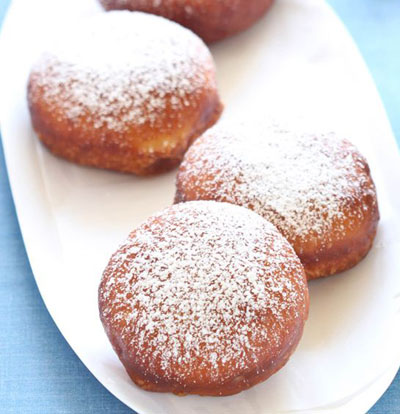
These marvellously-named yeasted buns, slightly sweet and flavoured with spices such as caraway seeds, were once enjoyed all over the country, though they seem to have often been connected to special occasions like Lent: in his diary on Good Friday 1664, Samuel Pepys wrote he had a Lenten supper of "wiggs and ale", while the food historian Ivan Day says they were often served at funerals in the North-West. It is likely that the flavoured seeds they contained were symbolic of resurrection and everlasting life. In the Lake District they were sometimes called Arvel Bread.
What shape they were is something of a mystery – the great food writer Elizabeth Day thought the name was derived from a Teutonic word meaning wedge, and surmised that they were cut in wedges from a large round loaf. But others think they were made in a more conventionally round shape. They are a type of bun made as a snack perhaps for a farm worker and usually eaten with ale and cheese.
Recipes for Wiggs
Huffkins
Huffkins
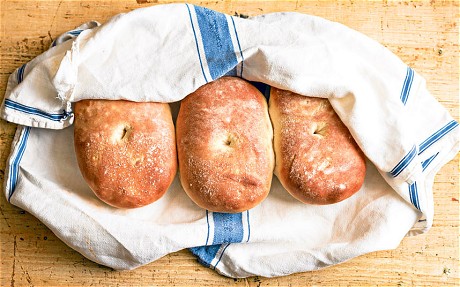
Older residents of Kent may still remember huffkins – a very soft bread roll, oval in shape, with an indentation in the middle made by the baker's thumb. Our baking expert Rose Prince says they were traditionally eaten with cherries, but some recipes also call for them to be flavoured with hops – a once plentiful crop in that county.
Wood Street cakes (17th century)
Another historic bake with a royal connection. According to Mary-Anne Boermans in her book Great British Bakes, these are lightly yeasted fruitcakes with a delicious rosewater icing that originate from Wood Street in the City of London, a street once famous for its baking. Supposedly, when Lady Anne Murray helped smuggle the future King James II from London into Europe dressed as a woman, she gave him a Wood Street Cake for the journey.
Cumberland Rum Nicky (17th - 18th century)
This rich and sticky tart, laden with spices and rum and covered with a pastry lattice, is a classic Lake District bake, dating back to the 17th and 18th centuries when new and exotic ingredients from the Caribbean arrived by boat. Paul Hollywood, who is something of a champion of the dessert, thinks that the name could refer to the "original technique of covering the filling with a whole piece of pastry then making slashes or 'nicks' in it", but there's plenty of other theories. Usually served with clotted cream.
Goosnargh cakes
Less a cake than a biscuit, these shortbread-like treats are studded with caraway seeds – a favourite flavouring in days gone by, though rather out of fashion now – or ground coriander. They hail from the village of Goosnargh near Preston, Lancashire, and are thought to have usually been served during the Easter/ Whitsun period.
Clapcake (17th century)
Another Cumbrian speciality, clapcakes (also known clapbread, or havver cakes) are a kind of large oatcake, beaten or rolled very thin, that was once widely eaten in the area: in Elizabeth Gaskell's 1863 novel Sylvia's Lovers, mention is made of "a great rack of clap-bread hung over-head." Sadly, they have now been almost completely forgotten.
