Difference between Shrimp Étouffée, Shrimp Gumbo, & Shrimp Creole
While all three dishes are Louisiana-based and often feature seafood, the key difference lies in their sauce consistency: shrimp creole has a tomato-based, thinner stew-like sauce, while etouffee is a thicker, gravy-like roux-based sauce focused on shellfish like shrimp, and gumbo is a richer, more substantial stew with a darker roux, often including okra and a wider variety of ingredients beyond just seafood.
Shrimp Étouffée is similar to other Cajun and Creole dishes like seafood gumbo and shrimp Creole, but these three dishes are unique. Gumbo often includes a wider variety of proteins like chicken, sausage, and seafood, whereas etouffee usually focuses on just one type of shellfish like shrimp or crawfish. The French word étouffée means “smothered,” and refers to the thick, flavorful sauce that smothers the shrimp and rice in Shrimp Étouffée. The sauce contains roux (flour and butter or oil), the “holy trinity” vegetables (onions, green pepper and celery) and Cajun seasonings.
Gumbo is quite distinct, utilizing a darker roux that gives it a nuttier flavor. It’s served as a stew and often contains chunky vegetables like tomatoes and okra. Gumbo is considered "soupier" than etouffee, meaning it has a thinner consistency, as etouffee is typically thicker and more like a gravy, while gumbo has a more pronounced broth-like quality, often described as a stew-like soup. Etouffee is usually served directly over rice, while gumbo can be eaten with a scoop of rice in the bowl.
Creole sauce is a lot like étouffée (especially if the étouffée is made with tomatoes), but étouffée is typically spicier and has a thicker, more gravy-like consistency. Shrimp Creole is a Creole dish that relies heavily on tomatoes to build flavor for the sauce; Creole étouffée is much thinner and has a more stew-like consistency.
What about Jambalya? Jambalaya is a rice dish, made with a mix of proteins like shellfish, andouille, shrimp, and more, and stands tall as a beautiful representation of this cuisine, but you can’t lump it in with gumbo and etouffee. Jambalaya is a fully rice-based dish, more akin to paella than any of these. The rice is cooked with a flavorful broth until the rice has absorbed all the liquid. Seafood is added during the last few minutes to keep it from getting overcooked.
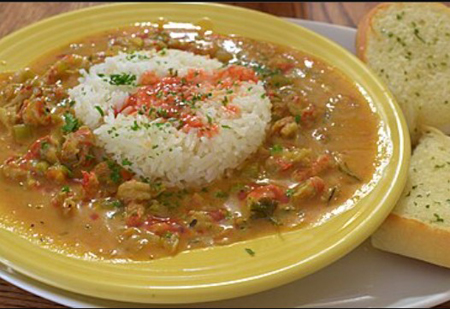
Crawfish étouffée, served at a restaurant in New Orleans
Étouffée
Étouffée is a dish found in both Cajun and Creole cuisine typically served with a shellfish sauce over rice. It is most commonly made with crab, shrimp or crawfish. The dish employs a technique known as smothering, a popular method of cooking in the Cajun and Creole areas of south Louisiana. Étouffée is most popular in New Orleans and in the Acadiana region as well as the coastal counties of Mississippi, Alabama, northern Florida, and eastern Texas.
Like gumbo, etouffée is also usually made with a roux. However, while gumbo usually uses a dark brown roux created through slow cooking, etouffée typically starts with a lighter-colored roux made with butter.
Then there’s the matter of tomatoes. The use of tomatoes is the major difference between Cajun and Creole food, and true Cajun-style étouffée doesn’t contain any tomatoes. However, they contribute a savory, umami-rich backbone to the sauce.
It is most commonly made with crab, shrimp or crawfish. Depending on who is making it and where it is being made it is flavored with either Creole or Cajun seasonings.
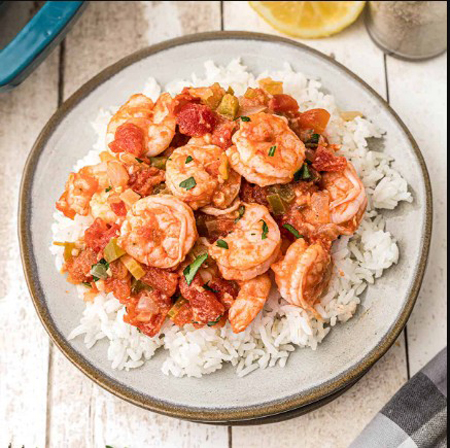
Shrimp Creole
Shrimp Creole and shrimp etouffee are both served over rice and feature a wealth of additional ingredients with a sauce base. But there are a number of variances that make them quite different. Shrimp Creole is a pretty standard shrimp and rice dish which uses tomato as the base of its sauce. The sauce is thin and the whole dish tends to be redder in color than etouffee.
Shrimp Creole features a bunch of ingredients, usually comprising tomato, rice, shrimp, peppers, and okra. Shrimp etouffee is a shrimp with rice dish but the major difference is that the sauce is made of a thick roux, which combines butter and wheat flour, making it more like a gravy. It’s also usually spicy and uses quite a bit of cayenne pepper. In terms of color, you’re looking at an orange dish with some brown streaks. Etouffee is usually made from shrimp, rice, celery, peppers, green onion, and roux.
While both shrimp creole and étouffée are Louisiana dishes featuring shrimp, the key difference is that shrimp creole has a thinner, tomato-based sauce with a more stew-like consistency, whereas étouffée is a thicker, gravy-like dish made with a roux-based sauce, often with less or no tomato depending on the style (Creole or Cajun). Shrimp creole relies heavily on tomatoes, giving it a redder color and a more pronounced tomato flavor, while étouffée typically uses a roux with minimal or no tomatoes.
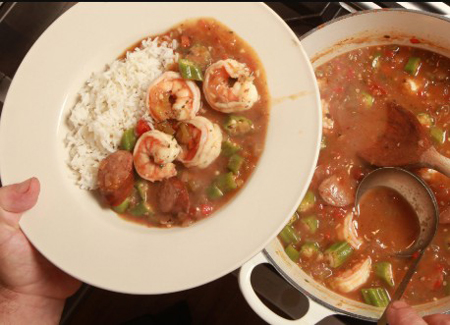
Gumbo
Gumbo is a stew that is popular among the U.S. Gulf Coast community, the New Orleans stew variation being the official state cuisine of the U.S. state of Louisiana. Gumbo consists primarily of a strongly flavored stock, meat or shellfish (or sometimes both), a thickener, and the Creole "holy trinity": celery, bell peppers, and onions. Gumbo is often categorized by the type of thickener used, whether okra or filé powder (dried and ground sassafras leaves).
Gumbo can be made with or without okra or filé powder. The preferred method in the historical New Orleans variation is with a French dark, even chocolate-like, roux. Creole gumbo generally contains shellfish and a dark roux, filé, or both. Cajun gumbo is generally based on a dark roux and is made with shellfish or fowl. Sausage or ham is often added to gumbos of either variety. After the base is prepared, vegetables are cooked down, and then meat is added. The dish simmers for a minimum of three hours, with shellfish and some spices added near the end. If desired, filé powder is added after the pot is removed from heat. Gumbo is traditionally served with rice.
Gumbo broth or gravy derives from three primary thickeners: okra, filé powder, and roux. Traditionally, okra and filé powder are not used in the same dish, although this rule is sometimes broken. Roux has become the most popular thickener. Creole and Cajun gumbos are served with hot rice, which stretches the quantity of the dish for maximum portion sizes.
