German Doughnuts and Pastries
Perhaps the most popular and well-known pastry here in the states is Apple Studel. Made with a flaky dough and wrapped around cinnamon flavored apples. Germany also has many different pastries fried in fat, which we may call doughnuts. The Berliner Pfannkuchen is similar to our jelly doughnut. Pastries typically appear at breakfast or as an afternoon snack with coffee
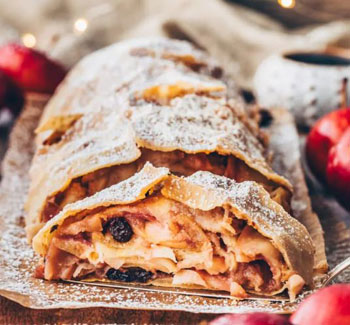
Apfelstrudel (Apple Strudel)
Strudel is most often associated with the Austrian cuisine (1867–1918), but is also a traditional pastry in the whole area formerly belonging to the Austro-Hungarian empire. In these countries, apple strudel is the most widely known kind of strudel. The oldest known strudel recipe is from 1697, a handwritten recipe housed at the Wienbibliothek im Rathaus.
Apple strudel consists of an oblong strudel pastry jacket with an apple filling inside. The filling is made of cooking apples (usually of a tart, crisp and aromatic variety, such as Winesap apples) sugar, cinnamon, and bread crumbs. Raisins are often added.
Strudel uses an unleavened dough. The basic dough consists of flour, oil (or butter) and salt. After kneading, the dough is rested, then rolled out on a wide surface, and stretched until the dough reaches a thickness similar to phyllo. Bakers claim that a single layer should be so thin that a newspaper can be read by peering through it. In traditional Viennese strudel the filling is spread over 3/4 of the dough and then the strudel is rolled, incorporating the dough through the filling and making a swirl pattern when the strudel is cut across.
Apple strudel is traditionally served in slices, sprinkled with powdered sugar. Toppings of vanilla ice cream, whipped cream, custard, or vanilla sauce are popular in many countries
Recipe for Apple Studel
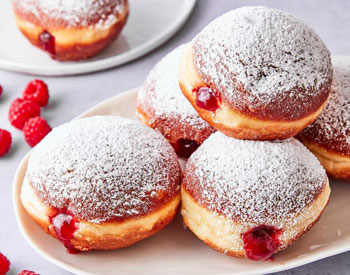
Berliner Pfannkuchen (similar to jelly doughnuts)
Berliner Pfannkuchen is a German version of the jelly doughnut that originated in Berlin and is traditionally eaten during Carnival and New Year's. Regionally also known as just Berliner, Krapfen, Kreppel or, in Berlin, as Pfannkuchen.
Made from sweet yeast dough that's fried in fat or oil, and typically filled with jam or marmalade. The pastry is often covered in powdered sugar, icing, or conventional sugar.
Krapfen are a fluffy, classic German pastry, you can get at any bakery.
Recipe for Berliner Pfannkuchen
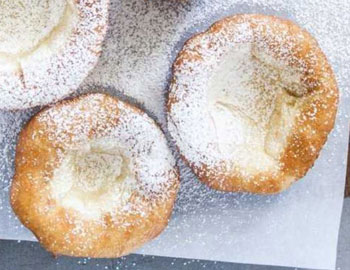
Ausgezogene Krapfen (Pulled out doughnuts)
Ausgezogene Krapfen is popular in many regions, including Old Bavaria, Franconia, Western Austria, South Tyrol, and Thuringia. The word "krapfen" is used in central Germany, especially in Bavaria. In other parts of central Germany, the pastry is called Kreppel, Krebbel(chen), or Kräppel.
The pastry is made by forming balls of dough, then stretching the dough balls into thin patties with a thick edge. The pastry is then fried until golden brown and dusted with icing sugar.
Recipe for Ausgezogene Krapfen
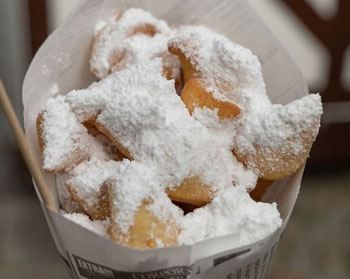
Magdeburger Schmalzkuchen
Magdeburger schmalzkuchen is a small, deep-fried pastry, considered a local specialty in the city of Magdeburg. It usually consists of yeast dough flavored with vanilla extract or vanilla sugar and lemon zest or juice. Typically rectangular or diamond-shaped, the fried pastries are consumed warm, dusted with confectioners' sugar.
These small doughy pillows coated with confectioners' sugar are a staple at festivals, carnivals, and Christmas markets throughout the country.
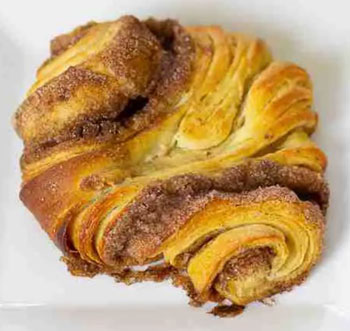
Franzbrötchen (German cinnamon pastry)
This delicious German sweet pastry, baked with butter and cinnamon, is traditionally served with a cup of coffee on the side. It’s shape looks similar to a French croissant. Initially made only in the Hamburg area, it is now also available in other German cities.
The original recipe for these little pastries includes flour, butter, milk, yeast, vanilla and sugar, with a filling consisting of sugar and cinnamon. It is made by layering butter into a yeasted dough using the Danish pastry dough technique, then shaping and baking. The more layers, the flakier the pastry will be. The pastry makes a great little breakfast or afternoon treat.
The name of this dish is possibly related to the French, who had occupied Hamburg during Napoleon's rule.
Recipe for Franzbrötchen
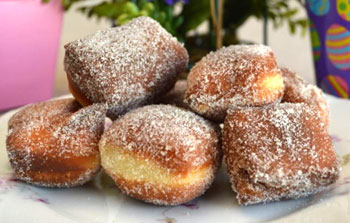
Fasnacht
Fasnacht is a fried doughnut of German origin in Pennsylvania Dutch cuisine. Fasnacht doughnuts originated in Germany and are traditionally served during Carnival, Fastnacht, or Shrove Tuesday, the day before Lent starts. The tradition of making fasnachts in the U.S. dates back to the 17th and 18th centuries when German immigrants settled in southeastern Pennsylvania.
The German version is made from a yeast dough, deep fried, and coated or dusted in powdered sugar or cinnamon sugar; they may be plain or filled with fruit jam. Pennsylvania Dutch fasnachts can often be potato doughnuts, and may be uncoated, dusted with table sugar, or powdered with confectioner's sugar. They are usually square or triangular in shape.
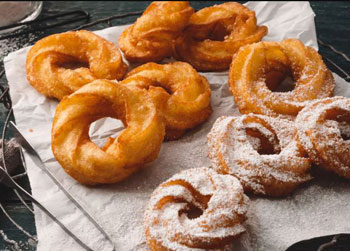
Spritzkuchen
Spritzkuchen (Eberswalder Spritzkuchen, Spritzring) are German Crullers popular during the Karneval season, other festivals, or simply as an afternoon snack alongside coffee or tea. The base is made from a choux pastry dough (no yeast or rising times!), then piped into delicate circles and fried until golden. They are finally topped with a thin sweet glaze before serving.
Quarkbällchen
Quarkbällchen are a German pastry of deep-fried dough balls made with quark cheese and often rolled in cinnamon sugar. They are a classic German treat that are often found at Christmas markets and festivals. The name translates to "little quark balls".
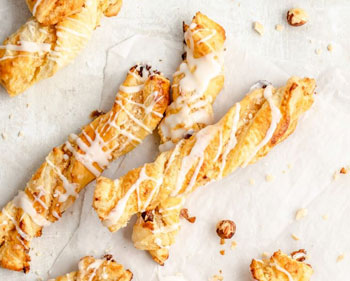
Nussstangen (German hazelnut twists)
These delicious puff pastry twists are called Nussstangen in German, which translates to “nut bars”. From searching the Internet for a recipe for these, it seems that these are made in many different ingredients, but they mainluu made with store-bought puff pastry. The pastry is rolled out, a filling such as apricot jam or nutella is often spread on half, then sprinkled with a nut filling, hazelnuts being popular. The other half of the pastry is folded over, the pastry is cut into strips, twisted, brushed with an egg wash and baked. Here are a couple of descriptions:
- A classic dessert made with puff pastry, apricot jam, marzipan, and hazelnuts. The pastry is layered, filled, and then sliced into strips and twisted before baking.
- The filling is made of chopped hazelnuts and a chocolate hazelnut spread, which adds a crunchy texture and delicious flavor. Once the pastries are filled and twisted, an egg wash is brushed on top. This makes them shiny and glossy on the outside. And extra chopped nuts sprinkled on top add more crunchy texture & nutty flavor.
Recipe for Nussstangen (German Nut Twists)
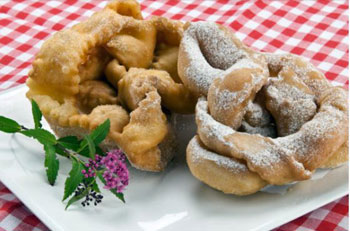
Geschnittene Hasen
Dürre Küchla, Flecken, in the Steigerwald they are called Geschnittene Hasen, in the Obermaintal and Coburger Land Harrische, there are many names. The name of this pastry is often translated as Sliced Rabbits (Hasen), but German websites find this odd and look for other explantions. The yeast dough is rolled out thinly and then cut into strips. The strips are cut in the middle and then one end is pulled through. The knot is then baked in lard and sprinkled with icing sugar before consumption.
One website called these Gschnidna Hosn (Sliced hares), so I searched for a translation for Hosn. It came back trousers. This particulat website suggests that the origin of the term comes from a textile rather than an animal context, but does not go so far as to use the word, trousers. This makes the most sense to me.
Schneeballen (Snowballs), made from the same dough, are a lard pastry made from Rothenburg ob der Tauber, which is formed with a special pair of tongs that fries the dough into a spherical shape. In the original version they were only sprinkled with icing sugar, meanwhile they are available in various other forms.
