French Breads
from http://www.williams-sonoma.com/
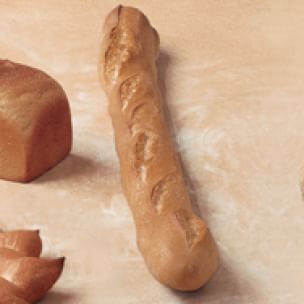
Baguette
The slender baguette, prized for its crisp crust and tender crumb, is a relatively recent invention. It first appeared in Paris in the early twentieth century, replacing the more traditional rustic round loaf known as a boule, the source of the word boulangerie.
The skinny, traditional Parisian-style baguette is known for its crisp golden crust and moist, chewy mie, or interior. At the top boulangeries, baguette dough is given a slow fermentation and the loaves are shaped by hand. Baguettes come in a variety of forms, from the traditional loaf with rounded ends to the more rustic baguette a l'ancienne with pointed end to the thin, crunchy ficelle.
"French Bread" (baguettes, boules, couronne)
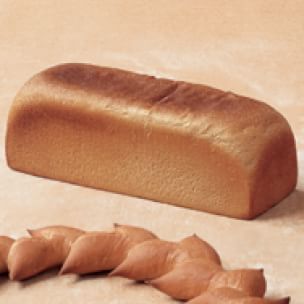
Pain de Mie
Soft and slightly sweet, pain de mie is France's answer to sandwich bread. Made with white flour, sugar and milk, it has a soft interior that holds up well to toasting and is used for the classic cafe snack, the croque-monsieur.
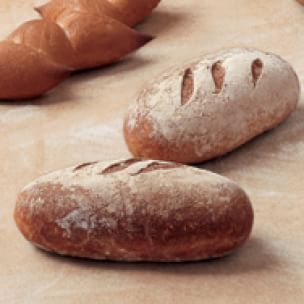
Petit Pain
Commonly served with a meal, a petit pain is a chewy, crusty roll. In the past, petit pains were simply minibaguettes, but today many bakers are experimenting with special petits pains, studding them with sesame or poppy seeds or mixing in nuts or dried fruit, such as raisins. They are somtimes used for small sandwiches, popular in most upscale boulangeries.
"French Bread" (baguettes, boules, couronne)
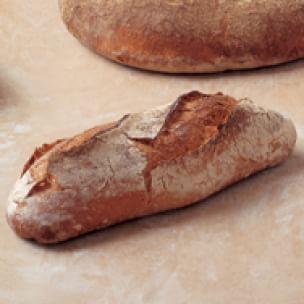
Pain de Campagne
The best country breads are made with a levain (natural sourdough starter) and are given a long, slow rise before being baked in a wood-burning oven. Many bakers use whole-wheat or rye flour, which gives the bread a rustic, deep flavor. Dusted with flour, the characteristic dark, cracked crust gives way to a dense, chewy interior.
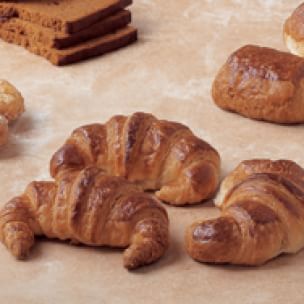
Croissant
Many sources credit bakers in Vienna with inventing the croissant in the 1680s, but others insist the Parisian croissant, a breakfast staple, is traceable only to the late 19th century. If a croissant's tips point outward, it is a croissant beurre and has been made with butter; if they point inward, it is a croissant ordinaire and has been made with margarine.
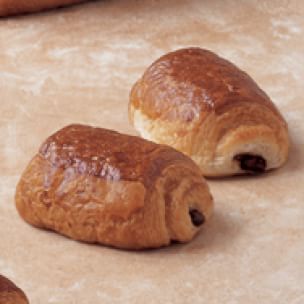
Pain au Chocolat
Even more decadent than a buttery croissant is the pain au chocolate, a rectangular croissant baked around a thin bar or two of dark chocolate. It finds its place at the breakfast table, or as an afternoon snack for children.
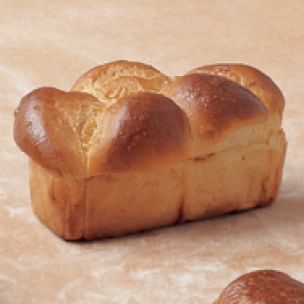
Brioche
Made with white flour, butter, eggs and sugar, a broiche is soft, sweet and recognizable by its shape -- a sort of fluted cupcake with a top-knot. Broiche also comes in a braided rectangular loaf perfect for toasting.
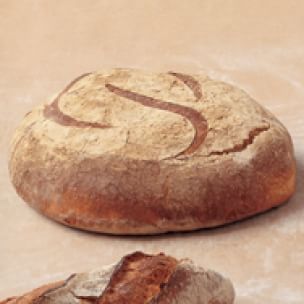
Miche Poilane
This massive, round country loaf from the famed Poilane bakery is shaped by hand, left to rise slowly in a traditional fabric-lined basket and then baked in a wood-burning oven. Made with a natural sourdough starter, it has a slight tang that goes well with savory or sweet toppings. The interior is dense and chewy, tasting faintly of smoke from the oven.
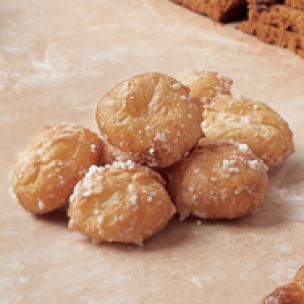
Chouquette
Light and airy and studded with coarse sugar, chouquettes are soft on the outside and hollow on the inside. Sold by weight in bakeries, these delightful puffs are delicious with a cup of chocolate chaud.
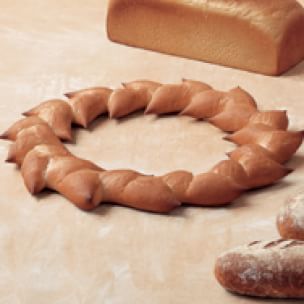
Couronne d'Epis
A specialty bread that make a festive addition at holiday time, the couronne d'epis is a baguette formed into a couronne, or "wreath."
"French Bread" (baguettes, boules, couronne)
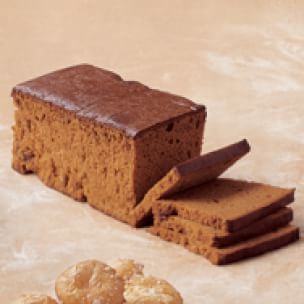
Pain d'Epices
Pain d'epices, which is a cross between a cake and a bread, is a holiday staple in France. It can be found on most Christmas market stalls, sold in big slabs. It is also a favorite to make amongst home bakers as it is a really simple recipe that makes the house smell wonderful.
Despite appearances, the Classic French Spiced Bread (Pain d’Épices) shouldn’t be mistranslated as a “gingerbread”. Less sweet than its American cousin, a Pain d’épices doesn’t include egg nor butter – it is indeed a “pain” (bread). It is also made with rye flour for more earthiness, and honey (while gingerbreads often include molasses) making for a lighter sweetness that lets the spices shine a bit more. The spice blend of a Pain d’Épices is also more complex, including cinnamon and ginger, but also nutmeg, cloves, black pepper, anise seeds and star anise.
According to Le Dictionnaire de l'Académie française (1694), rye flour, honey and spics are the key components of a great Classic French Spiced Bread – also known as Pain d’Épices. The honey used was the dark buckwheat honey of Brittany. Pain d'épices was originally a sourdough bread without added leavening; it was left in a wooden trough to rest in a cool place for months, during which the honeyed rye flour experienced fermentation and was used as a starter. Apparently, a long fermentation allows the enzymes in the honey to interact with the starch of the flour to create a very soft textured bread. When ready the dough was cooked in loaf moulds. The modern product usually rises with baking soda, or with baking powder, developed in the nineteenth century.
