Chaat (Indian Street Food Snacks and Finger Food)
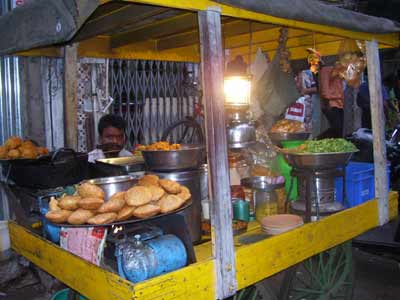 Chaat, in various variations, has been an indispensable part of north Indian street culture. It is believed that a large variety of these mouth watering temptations were originally produced in streets from Rajasthan to UP and Gujarat and spreading to all corners of the country.
Chaat, eaten as a snack food in India, is all manner of piquant, tangy, composed small plates that have a variety of ingredients that blend together on the plate, not in a pan. They are usually vegetarian and are typically served at road-side tracks from stalls or carts in India and the rest of South Asia. The word derives from Hindi cāṭ चाट (tasting, a delicacy), from cāṭnā चाटना (to taste), from Prakrit caṭṭei चट्टेइ (to devour with relish, eat noisily). These are snacks that are meant to deliver a rave of tastes and sensations to the tongue, from crunchy to soft, tart to hot and sweet.
Many chaats are deep-fried, like pakoras and samosas, and they may be sweet or savory. They are designed as finger food and many chaats are self-contained, like stuffed breads, while others come with a side of soft bread which is used to scoop up the chaat. A variety of dipping sauces like yogurt raita and spicy ground chili dips are served with chaat, along with relishes and various garnishes.
The chaat variants are all based on fried dough, with various other ingredients. The original chaat is a mixture of potato pieces, crispy fried bread, gram bean and spices, but other popular variants included Aloo Tikkis (garnished with onion, coriander, hot spices and a dash of curd, which is yogurt), bhel puri, dahi puri, panipuri, dahi vada, papdi chaat, and sev puri. There are common elements among these variants including dahi, or yogurt; chopped onions and coriander; sev (small dried yellow noodles); and chaat masala. This is a masala, or spice mix, typically consisting of amchoor (dried mango powder), cumin, Kala Namak (black salt), coriander, dried ginger, salt, black pepper, and red pepper. The ingredients are combined and served on a small metal plate or a banana leaf, dried and formed into a bowl.
At its core, any chaat dish is just a combination of a five essential components, each of which contributes to creating an addictive mash-up of flavors and textures:
- The Base: This is usually a carb, be it a samosa, a papdi (fried flour cracker), or puffed rice—but it’s often crispy. This is the base upon which all other flavors will be piled on. Sometimes the base will be neutral (puffed rice, papdi), or it will already be spiced (samosa)—either way, more seasonings will be added.
- The Sauces: Cilantro-mint chutney and tamarind chutney are the two most common sauces in chaat, as they lend spicy and tangy/sweet elements, respectively. Plain yogurt also joins the party, to add a cooling, refreshing note.
- The Crunch: Besides the base (which often gets soft when loaded up with chutneys), chaat dishes will have other crunchy ingredients like thin sev—little spicy bits of fried potato or deep-fried noodle —or masala chana—fried, spiced chickpeas.
- The Vegetables: Diced onions, tomatoes, and potatoes figure heavily in chaat. The potatoes are usually simply boiled, and the tomatoes and onions are raw—these are meant to add texture.
- The Umami: Almost all chaat includes a sprinkling of chaat masala, a ubiquitous Indian spice blend that smells like rotten eggs but adds a jolt of umami to any dish.
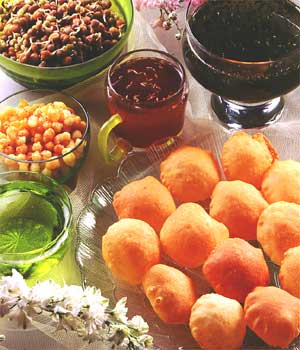 With its origins in the northwestern state of Gujarat, chaat has become immensely popular in the rest of north India and the rest of South Asia. Chaat specialities vary from city to city and are essential items at every Indian party or wedding. Some cities in India have become famous for a particular kind of Chaat, for example, Calcutta is well known for pani poori and jhaal muri, Mumbai for pau bhaji, Jaipur for papri chaat and Delhi for all. Delhi is a haven for Chaat and surpasses all cities in terms of taste and variety.
A single item can be served as a starter to a Mughlai meal or eaten as a fast inexpensive snack between meals. A combination of Chaat items can make a complete meal.
A major part of the planning involves combining these snacks appropriately into what is today popularly-known as a "platter". Platters are a dominant phenomenon today. They ensure guests a well-chosen selection of snacks replete with rotis, a salad or two and suitable chutneys and sauces. A well-planned platter is wholesome and nutritious and capable of serving as a meal in itself for the snack-lover, while serving as a starter for the rest.
Here are a few tips for an Indian Chaat Party:
- Organize a chaat party when there are going to be at least 15-20 guests. There is no point in putting in so much effort for a smaller crowd.
- Keep everything chopped before hand; do not leave any chopping for the last minute.
- Assemble the chaat just before serving, as it will get soggy. Or have your guests build their own chaats.
- Traditional Indian sweets are a good dessert idea for this meal.
Bhajias - http://indianfood.about.com/od/snacks/tp/topfingerfoods.htm
Aloo Bonda, Aloo Pakora, Bread Pakora, Fresh Corn Bhel, Gobi Pakora, Kachori, Kulcha Chana, Methi Pakora, Missal Pav, Paav Bhaji, Palak Pakora, Raj Kachori, Vada Pav - http://www.indobase.com/recipes/category/chaat.php
Cocktail Samosa, Palak Pakora Chaat, Khasta Kachori, Palak Chaat, Aloo Matar Chaat, Matar Ki Kachori - http://www.indianrelish.com/main/recipe/chaat/
The King of Chaat - http://www.chow.com/stories/10119
masala vada, pav bhaji, mirchi bajji, kebabs - http://www.sailusfood.com/2006/02/18/aloo-tikki-corn-bhel-indian-street-food-fare/
Various Chaats
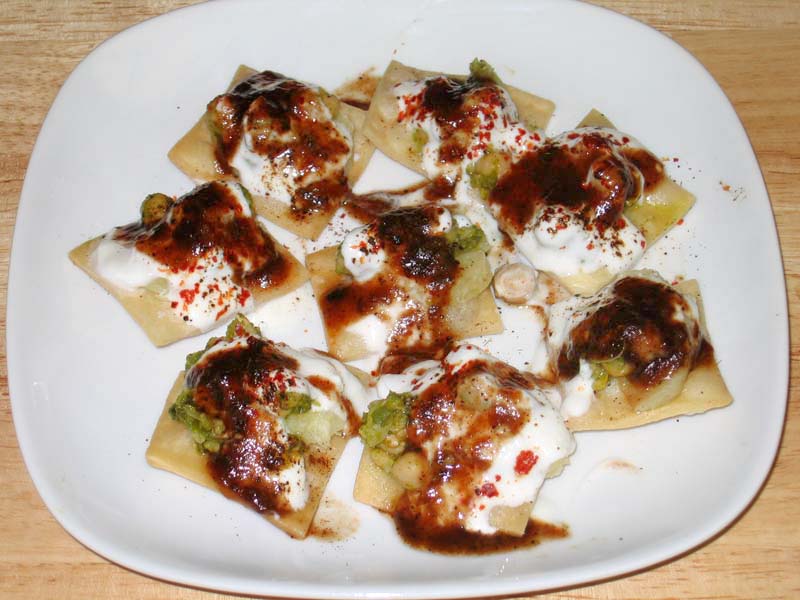
Papdi Chaat
|
Papdi Chaat, is made of crispy wafers garnished with a delicious combination of potatoes, tomatoes, chickpeas, yogurt and flavored with spices and red & green chutneys. |
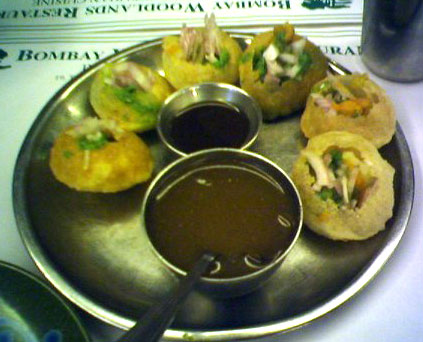
Pani Puri
|
Pani puri is a fried hollow crisp ball made from dough. The shell by itself is not tasty, unless it is filled with a spicy potato-based mixture and dipped in masala water. The puri used are bite-size and the snack is meant to be eaten whole in one bite. The stuffing is prepared separately, and inserted into the pani puri through a hole made in the shell. It is then dipped in the masala water and served. It is the associated stuffing and recipe of the masala water that makes it unique. Also called Golgappe in Delhi, it is known as Puchka in Eastern Indian states like Bihar, Jharkhand and West Bengal and in Bangladesh. In Gujarat it is called Pani Puri and in central parts of India and Orissa, it is called Gup-Chup. |
Dahi Puri
|
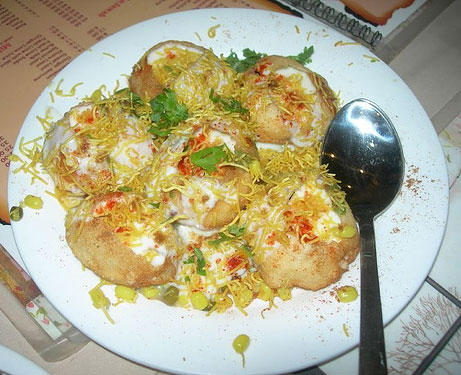
Dahi Puri is a type of chaat that is based on the mini-puri shell (golgappa) used for the more popular pani puri (above); the two variations are often sold at the same chaat stand. The round, hard, puffy puri shell is first broken on top and partially filled with the main stuffing of mashed potatoes or chickpeas. A little haldi powder and/or chilli powder may be added for taste, as well as a pinch of salt. Sweet tamarind chutney and spicy green chutney are poured into the shell on top of the stuffing. Finally, sweetened beaten yoghurt is generously poured over the shell, and the finished product is garnished with sprinklings of crushed sev, moong dal and finely chopped coriander leaves. Dahi puri typically comes 5 or 6 dahi puris per plate. Unlike pani puri, dahi puri is not served one morsel at a time, but all at once. Each dahi puri is intended to be eaten whole, like the pani puri, so that the spectrum of flavors and textures within may hit the mouth together for full effect. |
Sev Puri
|
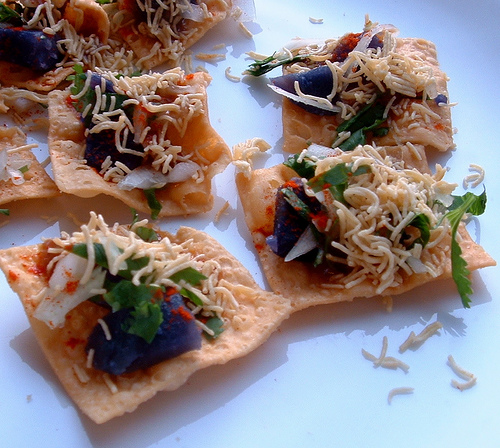
This is another favourite chaat sold on Mumbai streets. Every bhelwala has his own recipe of sevpuri. Sev puri is a savory preparation made using small crisp flat puri layered with deep fried besan noodles called sev. Each flat puri is topped with mashed potato along with lots of fine sev. Later sev puri is drizzled with various chaat chutneys and garnished with chopped cilantro. |
Bhel Puri |
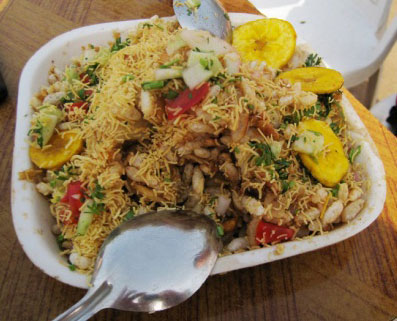
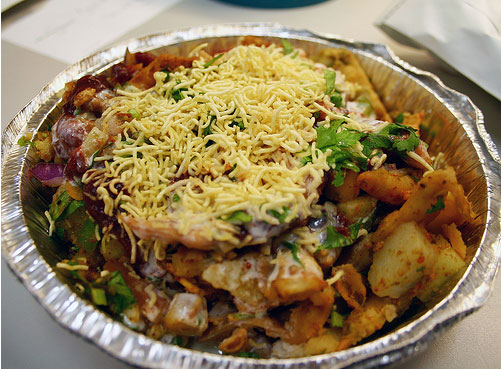
Bhelpuri is a puffed rice snack dish with potatoes and a tangy tamarind sauce. It is a type of Chaat particularly identified with the beaches of Mumbai (Bombay). Most recipes include puffed rice and sev (a fried snack shaped like thin noodles made from besan flour) as the base. Other commonly used ingredients include tomatoes, onions and chilis added to the base; northern recipes also add boiled and cut potatoes. Different chutneys impart a sweet or spicy flavour. There are two popular chutneys used, a dark purple sweet one made mainly of dates and tamarind, and a green spicy chutney made of coriander leaves and green chilis. Another variation is to sprinkle the chaat with chunks of diced sweet mango. The finished snack is often garnished with a combination of diced onions, coriander leaves and chopped green chilis. It is sometimes served with papri puris, a deep fried small round and crispy wheat bread. Bhelpuri may be known by different names - Bhelpuri in Mumbai, Jhaal Muri in Kolkata. Jhaal Muri (literally "hot puffed rice") is different in that it does not use any tamarind-based chutney in the mix. Other Bhelpuri ingredients include diced boiled potatoes, chutney, dal, coriander powder, grated coconut, and mustard oil. Bhelpuri was originally a Gujarati snack. It is best consumed as soon as it is made. If left for a while, the juices from the tomatoes, chutneys, etc. combine to render the sev and murmura soggy. Much of the fun of eating bhel puri is in the crunchiness. |
Aloo Chaat
|
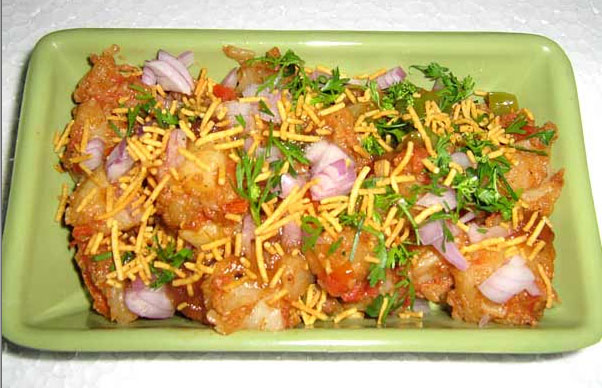
A dish of diced potatoes spiced with chili, cumin, chaat masala, chutney and coriander, it is the simplest (preparation wise) form of chaat available in Delhi. |
Papri Chaat
|
The most well known street food dish enjoyed all over Delhi. A tantalizing mix of crispy puris or papris, 'sev, 'boiled potatoes, chick peas, tangy chutneys, freshly made yoghurt and blend of pepper, chat masala, ground red chilies etc. |
Pav Bhaji
|
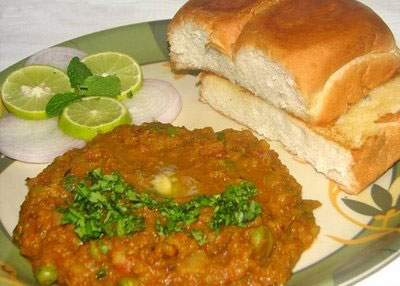
Pav bhaji is another such concoction. It acquired the status of restaurant food but had humble beginnings as street food. It has retained its original roadside availability despite this. |
| Poori-Subzie (or Bhaji) | The curry (subzie) consists usually of potatoes in gravy. Sometimes, especially in the southern part of the country the potatoes do not have gravy and the poories are exclusively made up of refined flour (maida). |
Dahi Vada
|
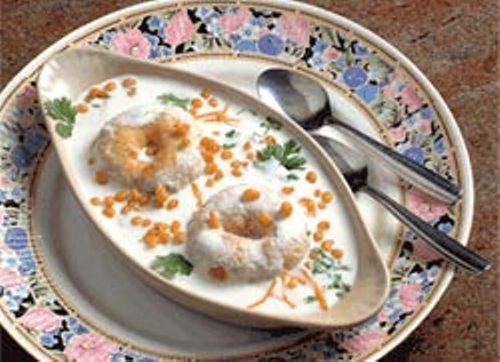
Dahi vada (also known as thayir vadai in Tamil and perugu vada in Telugu, mosaru vade in Kannada and Doi Bora in Bengali) is an Indian chaat, prepared by soaking vadas (savory "donuts" made from urad dal/black lentils) in thick yogurt (dahi). The hot deep fried vadas are first put in water and then transferred to thick beaten yogurt. For best results, the vadas have to soak for at least a couple of hours before serving. To add more flavor it can be topped with coriander or mint leaves, chili powder, crushed black pepper, chaat masala, cumin, shredded coconut, green chilis or boondi. A sweeter dahi is preferred in some places in India, especially in Maharashtra and Gujarat, although the garnishing remains the same. In Gujarat a combination of coriander and tamarind chutneys are often used as garnishments in addition to those mentioned above. Sambhar vadas and Rasam vadas are also popular snacks in southern India. |
Dahi Bhalla
|
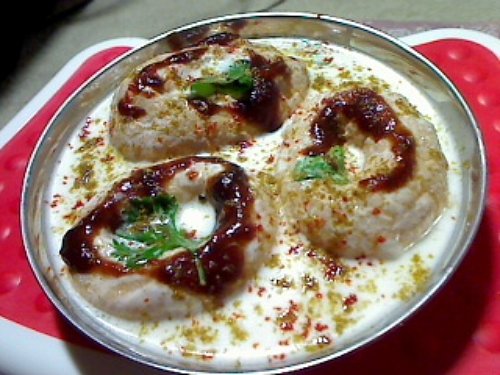
Similar to Papri chat, Dahi Bhalla is a concoction
of churned yogurt or Dahi with small fried balls
of dal (Vada) soaked overnight. Vadas are dipped in sweetish, salty, spicy curds (yogurt) garnished with roasted cumin powder, chili powder and Date-Tamarind sweet and sour chutney. |
| Samosa Chaat | This is a dish that would have to try very hard to be bad. It’s made of a base of chopped up samosas (savory fried pastries filled with spicy potatoes and peas), and topped with chutney, yogurt, and sev (those thin fried potato bits). Each component is wonderful in and of itself, but in this case, the whole is greater than the sum of its parts. To eat, scarf down with a spoon. |
Other street foods include kebabs. Cooked in a tandoor, this is one of the most famous tandoori dishes, besides tandoori chicken, which has made tandoori cuisine famous worldwide. Made with beef, chicken or lamb meat, it is mostly prepared with a mix of spices, and cooked in a tandoor with skewers. The radiant heat from the tandoor slowly cooks the meat and due to the lack of direct heat from the fire, the juices remain inside while adding flavour, keeping the meat's moisture intact. It is usually served with rice or as an appetizer with chutneys.
Street vendors also sell drinks including Lassi (yogurt drink sold plain/salty/sweet, or fruit flavored), Sherbet and Jaljeera.
