Mexican Cuisine
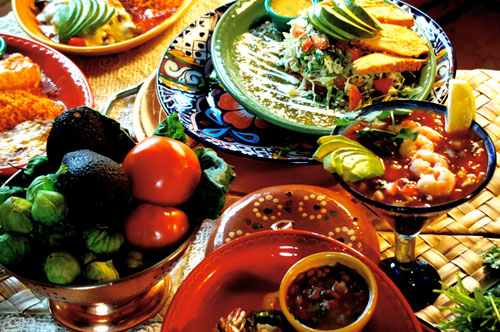
Mexican cuisine is much more than tacos and burritos. It's every bit as varied as most cuisines, although you wouldn't know that if all you've eaten is Taco Bell and Chili's. Coastal regions lean heavily on seafood, while in northern areas, where cattle is king, the cow is relied upon — all of the cow. Some places swim in tropical flavors — papaya and mango, habañero peppers and yucca. Other parts of Mexico take enormous care with their range of mole sauces. Where Tex-Mex is confined to a relatively tight corral of dishes, the food of Mexico is a wide-open range.
Staples
Mexican cuisine is known for its varied flavors, colorful decoration, and variety of spices and ingredients, many of which are native to the country. The staples of Mexican cuisine are typically corn and beans. Corn, traditionally Mexico's staple grain, is eaten fresh, on the cob, and as a component of a number of dishes. Most corn, however, is used to make masa, a dough for tamales, tortillas, gorditas, and many other corn-based foods. Squash and peppers also play important roles in Mexican cuisine.
The most important and frequently used spices in Mexican cuisine are chile powder, cumin, oregano, cilantro, epazote, cinnamon, and cocoa. Chipotle, a smoke-dried jalapeño chili, is also common in Mexican cuisine. Many Mexican dishes also contain garlic and onions.
Next to corn, rice is the most common grain in Mexican cuisine. According to food writer Karen Hursh Graber, the initial introduction of rice to Spain from North Africa in the 4th Century led to the Spanish introduction of rice into Mexico at the port of Veracruz in the 1520s. This, Graber says, created one of the earliest instances of the world's greatest fusion cuisines.
History
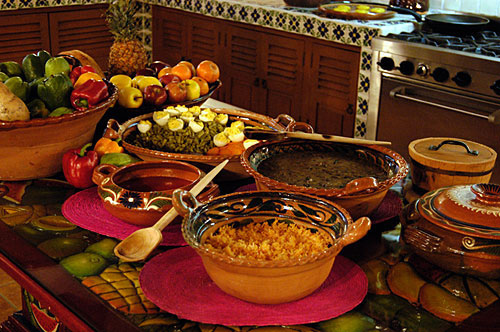
Mexico food history goes back to the Mayas in the 1300s in a time where the resources they had were considered gifts from the gods. The Mayas were a creative people, using corn as their basic staple; they made flour, dough, drinks, side dishes and main dishes out of maize by itself. Later on came the invention of what we call the tortilla, which became their bread. Corn is the major crop of Mexico and the Aztecs used corn to their advantage as well. Tamales can be traced back farther than pre Colombus times. Chocolate was introduced to Europe in 1567; salsa was a staple in the Aztec diet, whether it was raw or cooked, pureed, or just chopped.
They did not have ovens, so food was cooked over open flame, on ceramic ware or cast iron skillets. They would use tools such as the mocaite (like a mortar and pestle) to grind grains and spices. Frying was a popular method, as was steaming. They would use banana leaves and hang the foods over a boiling pot of water to steam the food.
When Spanish conquistadores arrived in the Aztec capital Tenochtitlan (now Mexico City), they found that the people's diet consisted largely of corn-based dishes with chiles and herbs, usually complemented with beans and tomatoes or nopales. The diet of the indigenous peoples of Pre-Columbian Mexico also included chocolate, tomatillos, huitlacoche, vanilla, avocado, guava, papaya, sapote, mamey, pineapple, soursop, jicama, squash, sweet potato, peanuts, achiote, turkey and fish. In the 1520s, while Spanish conquistadors were invading Mexico, they introduced a variety of animals, including cattle, chickens, goats, sheep, and pigs. Rice, wheat, and barley were also introduced as were olive oil, almonds, wine, parsley, garlic, dairy products and many spices. The imported Spanish cuisine was eventually incorporated into the indigenous cuisine.
Regional Cuisine
Mexican food varies by region, because of local climate and geography and ethnic differences among the indigenous inhabitants and because these different populations were influenced by the Spaniards in varying degrees. The north of Mexico is known for its beef, goat and ostrich production and meat dishes, in particular the well-known Arrachera cut.
The six cultural regions of Mexico (Greater Mexico City, Central Interior, Oil Coast, Southern Mexico, Northern Mexico, and the Yucatan) differ greatly in their cuisines. In the Yucatan, for instance, a unique, natural sweetness (instead of spiciness) exists in the widely used local produce along with an unusual love for achiote seasoning. In contrast, the Oaxacan region is known for its savory tamales and celebratory moles, while the mountainous regions of the West (Jalisco, etc) are known for goat birria (goat in a spicy tomato-based sauce).
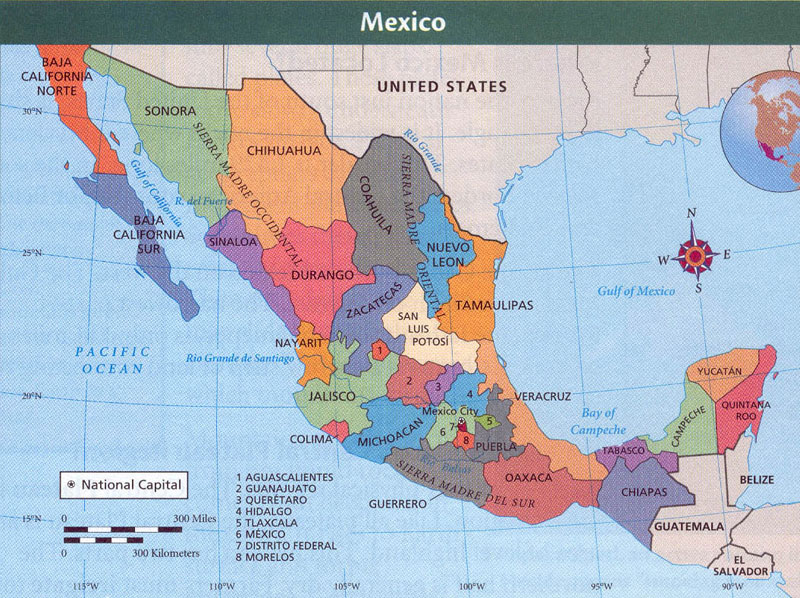
The traditional dishes of Northern Mexico include many that Mexican cuisine is known for. Items such as large, burrito sized flour tortillas and beef are readily used in this area. Pinto Refried Beans are a popular side dish as well as Spanish rice. Dried meat is common to this area as well as burritos which are not common in the south.
The Baja California Peninsula is where the Caesar Salad was born. There are many stories surrounding the salads inception, but the ingredients are always the same. This area has a lot of Spanish influenced food and another dish this area is known for is it's paella. Fresh seafood gives the paella impeccable flavor. Baja California is also Mexico's primary wine growing region icluding Santo Tomas, San Antonio and San Vicente. You'll find Los Cabos on the Baja Peninsula which is where Fish Tacos became famous.
Southeastern Mexico, on the other hand, is known for its spicy vegetable and chicken-based dishes. The cuisine of Southeastern Mexico has a considerable Caribbean influence due to its location. Corn tortillas are a staple to this area and are served at almost every meal. Black bean dishes are also a common find as well as dishes featuring plantains. Coming from the coastal areas of Mexico is another common style of Mexican cuisine, called Veracruz. This style of cuisine, which was named after a state in Mexico and its largest city, consists of seafood such as fish and shrimp.
In the Yucatán, the Mayan people have practiced beekeeping for thousands of years. Honey is an important ingredient in many Mexican dishes, such as the rosca de miel, a bundt-like cake, and in beverages such as balché.
Central Mexico's cuisine is largely influenced by the rest of the country, but has unique dishes such as barbacoa, pozole, menudo and carnitas.
In Pueblos or villages, there are also more exotic dishes, cooked in the Aztec or Mayan style (known as comida prehispánica) with ingredients ranging from iguana to rattlesnake, deer, spider monkey, grasshoppers, ant eggs, and other kinds of insects.
Recently other cuisines of the world have acquired popularity in Mexico, thus adopting a Mexican fusion. For example, sushi in Mexico is often made with a variety of sauces based on mango or tamarind, and very often served with serrano-chili-blended soy sauce, or complimented with habanero and chipotle peppers.
Soups and Stews
Few, if any, cuisines shrink from soups and stews. Mexican is no exception. Posole, a warm ambrosia of hominy, pork, green chile and chicken broth, belongs in every cook's repertoire. Everybody (well, most of us) loves meatballs, and albondigas (meatballs) gives you a most excellent combination: Albondigas Soup. Many cuisines add bits of bread to their soup — think dumplings. In Mexico, it's popular to sprinkle soups with strips of fried tortillas, giving us the aptly named Tortilla Soup. Emeril has a wonderful version of this soup, Tortilla Soup w/ Fire-Roasted Corn & Chipotle Crema, which Brian and I love. Another version by Ellie Krieger is Tomato Tortilla Soup.
Casseroles
Mexican noodle casserole uses fried pasta — called fideo — to add heft to a mix of vegetables, broth, meat and cheese, which is baked until bubbly. Corn tortillas obviously figure large in the Mexican pantry, and they are leveraged in chilaquiles con pollo, or tortilla casserole with chicken breast.
Chicken
Mexican chicken can be slathered in adobo sauce and grilled, stewed with chiles, baked with mole sauce, shredded and added to everything: tacos, enchiladas, burritos and more. Chicken mole has many variations across Mexico. In the Yucatan Peninsula, chicken is marinated in citrus, banana, herbs and spices, and grilled. Mexicans cook rice too, of course, and Arroz Con Pollo — chicken with rice — is a classic.
Seafood
In the Mexican food most of us in North America grew up with, seafood is entirely absent. But in Mexico, particularly if you're near a coastline (Mexico has several), seafood rules. Shrimp are everywhere, frequently lathered in spices and grilled or eaten as shrimp cocktail with a chile dipping sauce. Fish Tacos are staples in Mexico as well as Southern California. Whole fish is common too, including Veracruz style: perfumed with lime, oregano and garlic, shrouded in tomatoes, studded with olives, pickled jalapenos and capers, drizzled with olive oil, and more.
Beef
Tacos, burritos, enchiladas and the rest of the Mexican standards often rely on beef, which in Mexico is usually shredded rather than ground. Short ribs get a royal treatment, marinated in chiles, vinegar, herbs and spices, and then grilled. Carne asada — flank or skirt steak marinated in citrus, jalapeno, garlic and olive oil, and grilled — is another Mexican standby that you should master. See Carne Asada Mojo Marinade
Pork
Carnitas is cubed pork shoulder that is slow roasted — for hours — then finished in a pot of hot lard, making them crispy on the outside and succulent everywhere else. Carnitas are used as fillings for tacos, burritos and other dishes, and they're great by themselves. Pork also gets paired with mole sauces, and it's the standard filling for tamales.
Al pastor: Crisp-thin shavings of vertical spit-roasted pork, marinated with guajillo chiles and achiote, then served on tortillas. Pastor means "shepherd," the name given to Lebanese merchants who immigrated to Mexico City in the early 1900s, bringing the concept of shawarma (cooking technique of spit-roasting, like Greek gyros) with them
Cochinita pibil: Whole suckling pig or pork shoulder that's marinated in citrus with achiote, then wrapped in banana leaves and roasted. Historically, it's buried in a pit with a fire at the bottom. See Puerco Pibil (roast pork butt)
Salsa
The spicy sauce we buy in jars on supermarket shelves used to taste all the same, but now, at least, there are choices beyond mild, medium and hot. There is green salsa, and salsa punched up with chipotle. You can find habanero-smacked salsa, garlic-heavy salsa and roasted tomatillo salsa. And in Mexico, of course, there are more salsas than could fit in an entire aisle of one of our grocery stores. But then again, in Mexico most of them aren't things you buy in jars; they are things you make.
Salsa means "sauce" in Spanish. Which means it's a much broader category than the thing usually plonked on the table at a Mexican restaurant: a blend of tomatoes, onions, peppers and cilantro. In Mexico — and increasingly in the United States — a salsa comes either raw or cooked, and its based on either red tomatoes or tomatillos, a cousin to the red tomato that is green and comes off the vine encased in a papery shell.
There's nothing wrong with the standard-issue blend of tomatoes, onions, peppers and cilantro. It can be sublime. But the same goes for an earthy, cooked tomatillo salsa with dried arbol chiles, or a Salsa Ranchera, a mix of roasted tomatoes and onions, fresh chiles, vinegar and more. Even Guacamole counts as salsa, as well as Mole. If you really want to understand Mexican food, to dive into the cuisine and make it something you can explore a few times a week without growing bored (Not burritos again!), then start practicing with salsas.
Desserts
Many Mexican desserts trace their origins to Spain; dessert was a European concept brought over by the Spaniards and not part of the pre-Columbian diet. In modern Mexican restaurants and homes, meals are finished with puddings, candies and the ever-present Flan, featuring new-world flavors of tropical fruits, like coconut, guava and mango, and spiced up with cinnamon or chocolate.
