Vietnamese Banh (Cakes, or Bread)
Bánh is a Vietnamese term, translating loosely as "cake" or "bread", that refers to a wide variety of prepared foods. With the addition of qualifying adjectives, bánh refers to a wide variety of sweet or savoury, distinct cakes, buns, pastries, sandwiches, and food items from Vietnamese cuisine, which may be cooked by steaming, baking, frying, deep-frying, or boiling. Foods made from rice or wheat flour are generally called bánh, but the term may also refer to certain varieties of noodle and fish cake dishes, such as bánh canh and bánh hỏi.
Each variety of bánh is designated by a descriptive word or phrase that follows the word bánh, such as bánh bò (literally "cow cake") or bánh chuối (literally "banana cake"). Bánh that are wrapped in leaves before steaming are called bánh lá (literally "leaf cakes").
Noodles
Bánh Canh
|
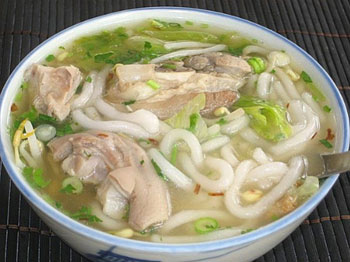
Not a steamed cake but a kind of noodle. Thick, round, almost translucent noodles (made of tapioca flour) with a springy texture. Bánh canh (literally "soup cake") is a thick Vietnamese noodle that can be made from a mixture of rice and tapioca flour. In bánh canh soup dishes, the noodles are combined with one of several soup bases, such as:
The Vietnamese word bánh refers to items such as noodles or cakes that are made from flour, and canh means "soup." |
Bánh hỏi
|
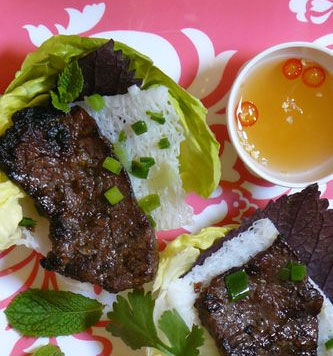
Extremely thin noodles, sometimes called rice vermicelli, that are woven into intricate bundles and often topped with chopped scallions and a complementary meat dish. What is Bánh Hỏi? |
Bánh phở
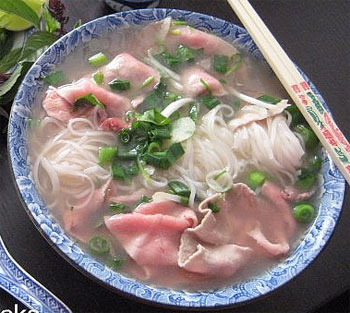
Pho Bo (Vietnamese Beef Noodle Soup) |
Flat rice noodles used in phở. While most non-Vietnamese associate the word pho with Pho Bo (Vietnamese Beef Noodle Soup), banh pho actually refers to the flat, thin rice noodles. There are two types of banh pho noodles, which are sometimes called rice sticks: fresh and dried. The fresh rice noodles only have to be plunged in boiling water for mere seconds before they are soft. The dried noodles need to be boiled for several minutes longer. Banh pho is made with just rice and water, suitable for the gluten-free trend that seems to be popular lately. The width of the noodles may vary from very thin to about 1/4-inch, but banh pho will always refer to flat rice noodles. Round rice noodles are called Bun. These are also the same noodles used in Pad Thai and sometime substituted in Hu Tieu Saigon (Vietnamese Clear Noodle Soup with Barbecued Pork and Shrimp), although some prefer clear tapioca noodles for that. Recipes that feature banh pho: Pho Ap Chao Bo (Vietnamese Pan-Fried Rice Noodles Sauteed with Beef) |
Dumplings
| Bánh bá trạng (Bak Chang dumplings) - like Chinese zongzi | |
Bánh Bao
|
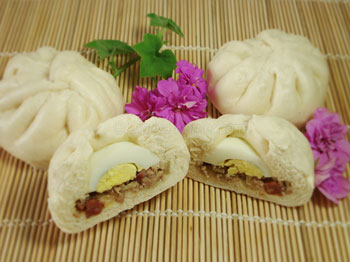
Same thing as char siu bao. Filling is usually lap chung, char siu and egg. Bánh bao (literally "covering cake") is a ball-shaped dumpling with pork or chicken meat, onions, eggs, mushrooms and vegetables inside, in Vietnamese cuisine. The steamed bun often has ground pork or chicken, Chinese sausage, and a portion of a hard-boiled egg inside. This delicacy originated with the baozi from China but was adapted by the Vietnamese and is also available in most other countries with Vietnamese populations. Bánh bao are generally smaller than baozi, and are filled with savory fillings, the most popular of which is seasoned ground pork. As in China, pork is the most popular kind of meat in Vietnam. |
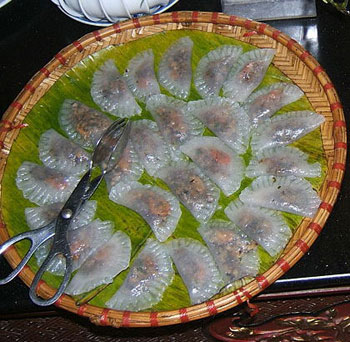
| Bánh bột lọc, dumplings Bánh bột lọc trần - dumplings with wrappers made of tapioca starch; similar to Chaozhou fun guo Bánh bột lọc láp - tiny rice flour dumplings stuffed with shrimp and ground pork and wrapped in a banana leaf; from Hue |
|
| Bánh cam - deep-fried glutinous rice sesame balls filled with sweetened mung bean paste; from southern Vietnam | |
| Bánh ít - small stuffed glutinous rice flour balls Bánh ít trần - "naked" small stuffed glutinous rice flour balls |
|
| Bánh khúc - glutinous rice ball | |
| Bánh nậm - flat rice flour dumpling from Hue stuffed with minced pork and mushroom, and seasoned with pepper and spices; wrapped in a banana leaf | |
| Bánh phu thê - (literally "husband and wife cake"; a sweet cake made of rice or tapioca flour and gelatin, filled with mung bean paste; also spelled bánh xu xê) Bánh phu thê bột bán (husband and wife cakes made with tapioca pearls) |
|
| Bánh rán - deep-fried glutinous rice sesame balls filled with sweetened mung bean paste; from northern Vietnam | |
| Bánh tẻ, small steamed rice cake wrapped with leaves of some local trees into a long, thin cylindrical shape, and boiled thoroughly. |
Pancakes
Bánh Bèo ("water fern cake") - appetizer
|
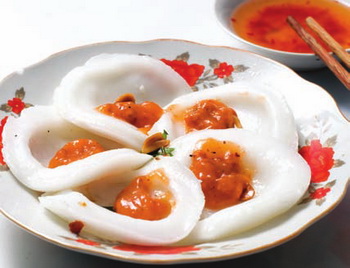
Silver-dollar disks of rice flour. Topped with mung bean powder, ground shrimp, and oil-moistened green onions. Served with nuoc cham. A bánh bèo (literally "water fern cake") is a variety of small steamed rice cake or rice pancake finger food in Vietnamese cuisine. It is white in color and typically features a dimple in the center, which is filled with savory ingredients including chopped dried or fresh shrimp, scallions, mung bean paste, crispy fried shallots, fish sauce, rice vinegar, and oil. It is considered most typical of the cuisine of Huế, the ancient royal capital located in the center of Vietnam. The dish's name is believed to derive from the fact that it is shaped like a water fern (bèo in Vietnamese). Banh Beo Xu Hue (Hue bloating fern-shaped cake - finger food) |
| Bánh căn - a southern specialty consisting of small pancakes made with quail eggs, cooked in small clay pans | |
| Bánh đúc, rice cake or corn cake eaten as a dessert or savory meal | |
| Bánh rế - deep-fried pancake | |
Banh khot, aka Banh can
|
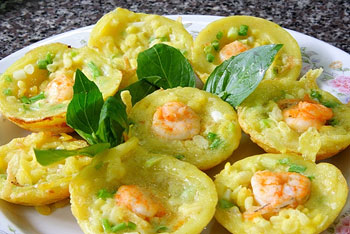
Mini-cupcakes made of a batter of rice flour, coconut milk and turmeric and topped with shrimp and green onion. A southern specialty. |
Bánh Xèo
|
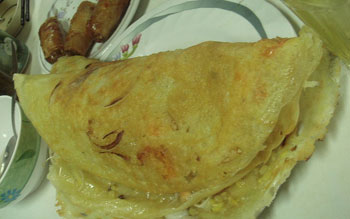
Half moon crepes made of rice flour, coconut milk and turmeric. Fried until crunchy and filled with bean sprouts, pork and shrimp. Almost similar to Indian dosa. A type of crepe made out of rice flour with tumeric, shrimps with shells on, slivers of fatty pork, sliced onions, and sometimes button mushrooms, fried in one or two teaspoons of oil, usually coconut oil, which is the most popular oil used in Vietnam. It is eaten with lettuce and various local herbs and dipped in Nước chấm or sweet fermented peanut butter sauce. Rice papers are sometimes used as wrappers to contain banh xeo and the accompanying vegetables. |
Rolls
Banh Cuon - breakfast dish
|
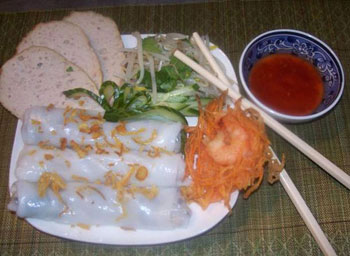
Literally: rolled cake. Steamed rice flour sheets around a filling of ground pork and wood ear fungus. Banh cuon thanh tri are the sheets served scrunched in a pile without filling. Bánh cuốn (literally "rolled cake") is a dish from northern Vietnam. It is a crêpe-like roll made from a thin, wide sheet of rice flour filled with ground pork, minced wood ear mushroom, and other ingredients. Sides for this dish usually consist of chả lụa (Vietnamese pork sausage) and bean sprouts, with the dipping sauce called nước chấm. Unlike shahe fen, the rice sheet in bánh cuốn is extremely thin and delicate. It is a light dish, and is generally eaten for breakfast everywhere in Vietnam. A different version of bánh cuốn, called bánh cuốn Thanh Trì and bánh cuốn làng Kênh, may be found in Thanh Trì, a southern district of Hanoi and Kênh village of Nam Định, an ancient village in the centre of Nam Định city. Bánh cuốn Thanh Trì or Bánh cuốn làng Kênh are not rolls, but just rice sheets eaten with chả lụa, fried shallots, or prawns. Bánh Cuốn (Rolling Cake) |
| Bánh tôm - shrimp patties Bánh tôm Hồ Tây - a shrimp patty specialty originating from the area around West Lake (Hồ Tây), Hanoi |
Rice Paper
| Bánh tráng - rice paper | |
| Bánh ướt - steamed rice paper |
Sandwiches
Bánh Mì
|
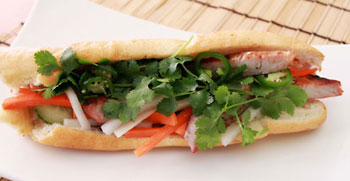
Vietnamese sandwiches Bánh Mì Sandwich |
Sweet Cakes
Bánh Bò - a dessert
|
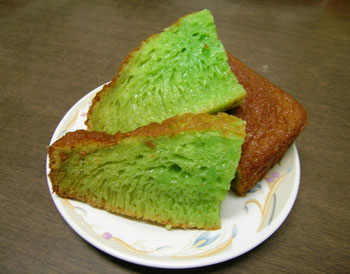
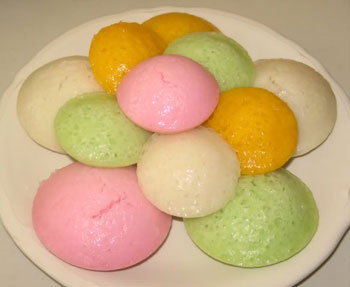
Literally: cow cake. Spongey/springy muffin made of leavened flour and coconut milk. Usually colored and steamed in Jello molds. Bánh bò is a sweet, chewy sponge cake from Vietnam. It is made from rice flour, water, sugar, and yeast, and has a honeycomb-like appearance on the inside due to the presence of numerous small air bubbles. Coconut milk is also usually a part of the batter, imparting a slight flavor and aroma of coconut. The cake is of Southern Chinese origin, although the Chinese version, called bái táng gāo (白糖糕), omits the coconut. Bánh bò are generally eaten as a dessert, although they may also be consumed as an accompaniment to a meal. There are two varieties of bánh bò:
|
| Bánh cáy, rectangular-shaped sweet dessert made by roasting and grinding glutinous rice and other ingredients | |
| Bánh da lợn - colored steamed layer cake made from tapioca starch, rice flour, coconut milk and/or water, sugar, and other ingredients | |
| Bánh đúc - rice cake or corn cake eaten as a dessert or savory meal | |
| Bánh chuối - banana cake | |
| Bánh khoai môn - taro cake | |
| Bánh tiêu - hollow doughnuts | |
| Bánh trung thu - mooncake | |
| Bánh khoai mì - sweet cassava cake |
Dishes for special occasions
| Bánh chưng - square-shaped steamed glutinous rice dumpling wrapped in a dong leaf (lá dong) | |
| Bánh tét - log-shaped cylindrical glutinous rice cake, wrapped in a banana leaf and filled with a meat or vegetarian filling | |
| Bánh trôi (also called bánh chay; literally "floating cake") - served together with bánh chay | |
| Bánh tô - a round, golden/taupe colored, sticky cake served for new years. It's made of glutinous rice flour, sugar, water, and soybean oil. Like the Chinese new year cake, neen gow, the bánh tô is cut into thin slices then dipped in egg and fried before serving. This is an uncommon pastry and it's said the shape represents a wheel. It is sometimes decorated with white sesame seeds and red food coloring. |
Others
| Bánh bông hồng | |
| Bánh bông lan | |
| Bánh chay - served together with bánh trôi | |
| Bánh cốm | |
| Bánh đa | |
| Bánh đậu xanh | |
| Bánh dứa | |
| Bánh gai | |
| Bánh giầy, also written as bánh dầy | |
| Bánh giò | |
| Bánh ít lá gai | |
| Bánh kẹp | |
| Bánh mật | |
| Bánh lá dừa | |
| Bánh phồng tôm - prawn cracker | |
| Bánh phục linh | |
| Bánh quế | |
| Bánh tráng mè | |
| Bánh tráng nướng |
Banh bot loc - hors d'œuvre
|
Translucent, almost gelatinous tubes of sticky tapioca flour. Filling consists of whole shrimps and sliced boiled fatty pork. A Huế food, consisting of tiny rice dumplings made in a clear rice flour batter, often in a small flattish tube shape. Stuffed with shrimp and ground pork. It is wrapped and cooked inside a banana leaf, served often as Vietnamese hors d'œuvres at more casual buffet-type parties. |
Banh chay
|
Literally: vegetarian cake. Mochi balls made of sticky rice flour, filled with sweetened mung bean paste, in sugar syrup. |
| Banh chung | A cake with layers consisting of pressed grains of sticky rice, fatty pork and ground mung bean. Traditionally eaten at Tet. |
Banh dau xanh literally: green bean cake |
|
Banh day literally: thick cake |
|
Banh it Very sticky rice flour balls. Filling of ground or cubed pork. Garnished with oil moistened green onions and sometimes fried shallots. |
|
Banh it la gai Very dark green cake made of sticky rice flour with la gai leaf in the dough, filled with sweetened ground mung beans. Wrapped & steamed in banana leaf. |
|
Banh nam Flat rectangular packets of banana leaf. Inside is a base of steamed rice flour, ground pork, shrimp, and wood ear fungus.� Served with nuoc cham. |
|
Banh phong tom literally: puffed shrimp cake |
|
Banh ran literally: fried cake |
|
Banh tom literally: shrimp cake |
|
Banh trung thu Just like Chinese moon cake. |
|
Banh uot Literally: wet cake. The name for the rice flour sheets in the dish called banh cuon. Or a variation that's thicker (not sure). |
|
Banh xu xe Sweet cake made of rice or tapioca flour and gelatin, with filling of ground mung beans. Wrapped in banana leaf shaped into a little box. |