Popular Vietnamese Dishes
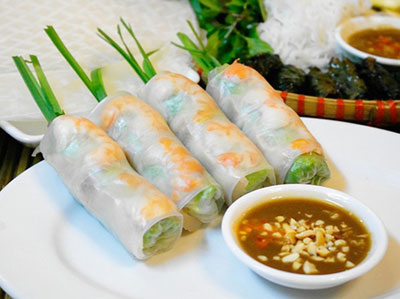
Gỏi cuốn / spring rolls
Pronounced: goy coo-un
You know spring rolls: Those soft, bouncy, wiggly rice paper wraps filled with crunchy vegetables, vermicelli noodles and sauteed shrimp or pork. These are typically served with peanut sauce, and one of the most commonly encountered appetizers on any Vietnamese menu -- as well as one of the most accessible.
Gỏi cuốn (summer rolls)
Vietnamese Summer Rolls with Shrimp and Ground Pork
Bì Cuốn (Shredded Pork Roll)
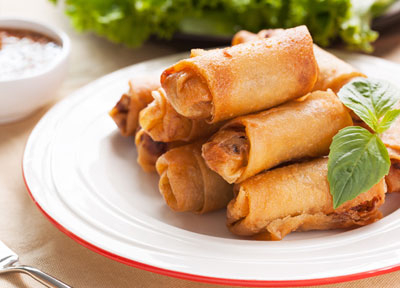
Chả giò / rice paper egg rolls
Pronounced: chah zoh
First off: These aren't really egg rolls. But that's what they look like, only smaller and packed into deep-fried sheets of thin, crispy, crackly rice paper. Cha gio are typically filled with ground pork, mushrooms, carrots and other vegetables, depending on the restaurant. As with many other Vietnamese dishes, there's no "official" recipe (although many of those dishes have become somewhat standardized in America). Dip your cha gio into the fish sauce that accompanies them, or chop them up and toss them with your favorite bun dish.
Crispy Spring Roll w/ Minced Pork (Chả Giò - fried )
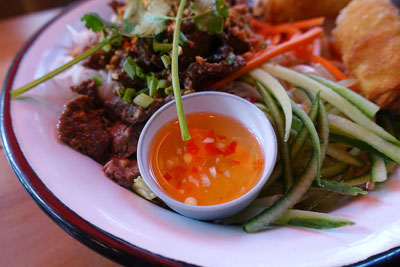
Nước Chấm / fish dipping sauce
Pronounced: nook chum
Nước mắm / fish sauce Pronounced: nook mom. Fish sauce is exactly what it sounds like: a sauce made from fish that have been fermented and then slowly pressed to extract the briny liquid. Basic nuoc mam is usually jazzed up with chiles, lime juice and/or sugar to create other sauces such as Nước Chấm, which has a complex flavor that's salty, sour, spicy and sweet (and goes great on top of everything from bun to banh bot chien).
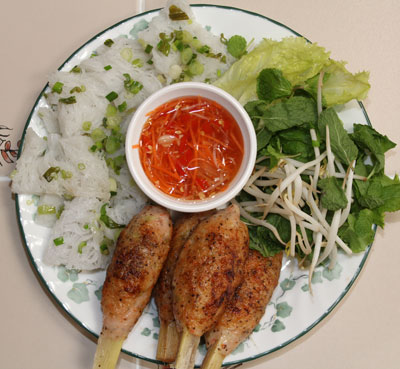
Bánh hỏi Chạo Tôm (Bánh Hỏi w/ Grilled Shrimp on Sugarcane)
Bánh Hỏi (woven rice vermicelli served with meats or seafood and herbs and wrapped in lettuce leaf or rice paper)
Bánh hỏi is a Vietnamese dish consisting of rice vermicelli woven into intricate bundles and often topped with chopped scallions or garlic chives that have been sauteed in oil, served with a complementary meat dish. Bánh hỏi are not eaten alone, but rather served at room temperature alongside rich foods such as crisp Chinese roast pork, duck and grilled foods such as shrimp on sugarcane (Chạo Tôm) and meats such as lemongrass pork and beef. Right before serving, the noodles are always topped with rich scallion oil garnish, which adds richness and verdant color. At the table, guests encase the noodles and protein in lettuce with fresh herbs. A quick dunk in nuoc cham dipping sauce is the usual final touch before the bundle is eaten
A lot of traditional Vietnamese restaurants let you roll your own spring rolls or summer rolls at the table. You’re served a pile of meats or seafood, vegetables, herbs, and sauces—plus a pile of dry, brittle pieces of rice paper about six inches in diameter, and a bowl of water for soaking them. A common mistake is oversoaking—all they need is a quick dip. You actually don’t soak them at all, just give them enough liquid to seep in fast. And if the bowl of water isn’t big enough to moisten a whole wrapper at once, just dip an edge in and spin the wrapper around until the whole thing’s moist. They will still feel stiff, but will continue to soften as you fill them. If you keep them in the water until they feel soft, they will be too soft.
What is Bánh Hỏi (Rice Vermicelli Bundles used in lettuce wraps with meats, seafood, etc.)
Bánh Hỏi w/ Grilled Beef (Bánh Hỏi Thịt Bò Nướng)
Bánh Hỏi w/ Beef in Wild Betel Leaf (sub. grape leaves)
Bánh Hỏi w/ Grilled Shrimp on Sugarcane (Chạo Tôm)
Bánh Hỏi w/ Crispy Spring Roll w/ Minced Pork (Chả Giò)
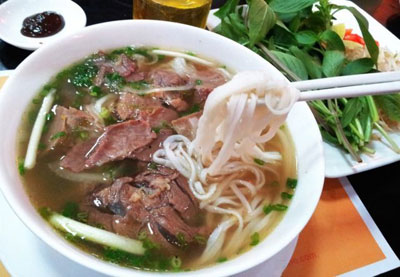
Phở / noodle soup
Pronounced: fuh (with a slight upward inflection at the end)
Phở is one of Vietnam’s most famous noodle soups. From a linguistic point of view, Phở refers to the long, flat rice noodle. It is so famous that anyone who says Pho immediately associates it with this noodle soup. In its main preparation, Phở is served in an aromatic broth with pieces of meat and fresh herbs. The secret of this Vietnamese dish is in the broth, a slow-cooking stew with bone, meats, and spices.
Arguably the most popular Vietnamese dish in Houston, pho -- or rice noodle soup -- is a relatively new dish by Viet standards. Believe it or not, this very Vietnamese dish has Chinese and French roots: Chinese influence in northern Vietnam brought rice noodle and the signature pho spices such as anise, ginger and cinnamon, while French occupation of what was then called "Indochina" encouraged the consumption of beef.
Pho is made by boiling animal bones down into a rich stock, then adding in rice noodles, spices, meat and vegetables. Although most pho has a beef base, pho ga (chicken pho) is gaining in popularity. A bowl of pho comes with garnishes and sauces that allow you to customize it to your taste. Typical garnishes include basil, lime, cilantro, jalapeños, crunchy bean sprouts, sweet hoisin sauce and spicy Sriracha. Popular combinations like pho bo vien add spongy beef meatballs to the soup. Pho tai adds thinly sliced rare steak which cooks in the broth and pho nam adds slices of brisket.
Vietnamese Noodle Soup (Easy)
Beef Pho Noodle Soup (Phở Bò)
Chicken Pho Noodle Soup (Phở Gà)
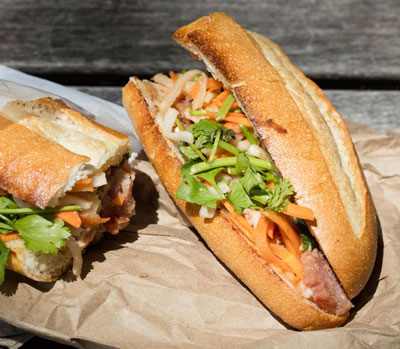
Bánh mì / French baguette sandwich
Pronounced: bahn mee
Though "banh mi" itself simply the Vietnamese term for baguette bread (also introduced by the French), the term has come to be synonymous with baguette-style sandwiches. As with any sandwich, the variations on banh mi are endless but most are garnished with cucumber, pickled carrots and daikon radish, cilantro and jalapeños as well as French-supplied pâté and mayonnaise. In Houston, banh mi range between $2 and $5 each depending on the meat you get inside. Chargrilled pork (thit nuong) is a favorite, while a banh mi dac biet gets you a cold-cut combo.
Bánh Mì Master Recipe (w/ suggested fillings)
Pork Meatball Bánh Mì (Bánh Mì Nem Nướng)
Pork Meatball in Tomato Sauce (Banh Mi Xiu Mai)
Grilled Vietnamese Banh Mi Sandwiches
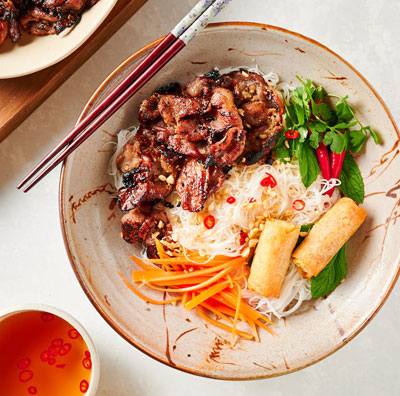
Bún Thịt Nướng
Bún / vermicelli (served cold with meats and seafood, pickled vegetables and herbs)
Pronounced: boon
Bún noodles, round rice noodles, are served cool atop a bed of greens (typically shredded lettuce and cucumber) to make sort of a rice noodle salad. Bún is usually topped with hot meat (chargrilled pork is a popular choice) for a nice contrast in textures and temperatures, then tossed with fish sauce and whatever else you decide to jazz it up with. As with pho, hoisin sauce and Sriracha are popular additions.
Bún Thịt Nướng is one of the great Vietnamese noodle salads. Lemongrass marinated pork. Fresh herbs. Cool rice noodles. And a big drizzle of hot, sour, sweet and salty nuoc cham dipping sauce. Contrasting flavours that come together together in a big bowl of delicious. The smoky, super flavourful pork. Red chili adds bite. Mint and cilantro brighten everything. The crunch of a good spring roll for contrasting texture. And a great sauce to tie it all together. Perfect. Bún Thịt Nướng.
Bún & Bún Dishes
Master Recipe for Vietnamese Bún Dishes
Vietnamese Noodle Salad w/ Lemongrass Shrimp
Vietnamese Shrimp & Glass Noodle Salad
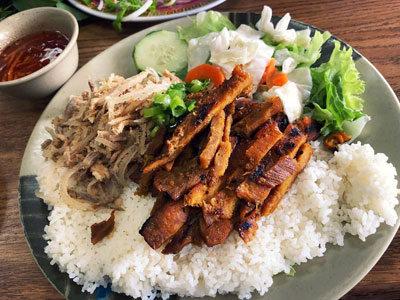
Cơm thịt nướng / chargrilled pork and rice
Pronounced: gum tit noon
Com dia refers to a rice plate, while anything after "com" on a menu refers to the type of meat and other toppings that come with the rice. Again, thit nuong is common. But other favorites include ga nuong and bo nuong (chargrilled chicken and beef, respectively) as well as the fancier ga ro ti: a tiny, roasted Cornish game hen. All rice plates also come with nuoc cham to perk up the rice and a bowl of broth laced with garlic and/or scallions to sip between bites of the sticky rice and cleanse the throat.
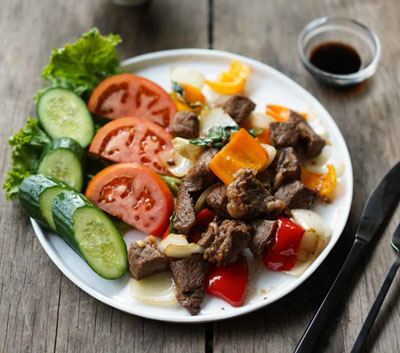
Bò lúc lắc / grilled beef with garlic, onion and bell peppers
Pronounced: buh luke lock
Bò lúc lắc (sauté diced beef) is a dish of French-inspired Vietnamese cuisine that consists of beef - typically cuts of beef filet or tenderloin - sauteed with red onion, pepper and served with fresh cucumber, lettuce, tomatoes, and soy sauce. The beef is cut into small cubes the size of playing dice (hột lúc lắc) and marinated before being sauteed.
Beef used to be a luxury ingredient in Vietnamese cuisine, therefore the dish was mostly served at formal events, such as wedding banquets and anniversaries. Nowadays, it is a common food eaten by locals in Vietnam. In the USA it is often called "shaking beef", which is the literal translation of the Vietnamese name and refers to part of the cooking process.
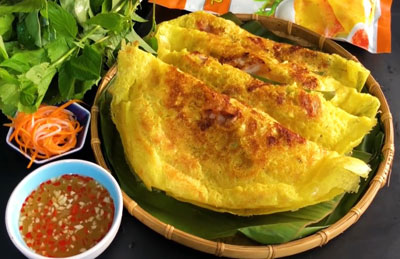
Banh Xeo
Banh Xeo is often referred to as the Vietnamese omelette because it looks like an omlette. In fact, it is not made of egg at all. It melds together a delicious mixture of rice flour, turmeric, pork belly, shrimp and bean sprouts that is then drizzled with nuoc mam sauce. Banh Xeo batter is made of rice flour, turmeric, tapioca starch and coconut milk. "Xeo" refers to the sound of the sizzle of the pan and the batter when you cook it, so banh xeo literally means "sizzling cake." The filling generally has bean sprouts, cooked shrimp, cooked pork belly, and bean sprouts. The outer shell is typically cooked with shallots and onions melded into the shell. It is cooked with a frying pan with vegetable oil in it.
Once the pancake is crispy on all sides, it’s folded over with a spatula and slide onto a serving platter and served with a variety of fresh vegetables and Vietnamese herbs and a side of fish sauce dipping sauce.
Bánh xèo is food meant to be eaten with your hands. Break off a piece of your steaming hot crispy crepe and wrap some fresh greens around it, then dip the entire concoction into the sweet, sour and zesty nuoc cham sauce. Rice paper can be used to eat Banh Xeo as well. While rice paper is most commonly known for making delicious Vietnamese Goi Cuon, it is also a great way to eat Banh Xeo. First, cut your folded banh xeo pancake into manageable sized pieces and lay it flat on a moistened piece of rice paper. Select leaves and herbs (like basil, mint, sprouts, and lettuce) and lay these on top. Roll the pancake into a tight wrap, dip into the nuoc mam sauce and eat.
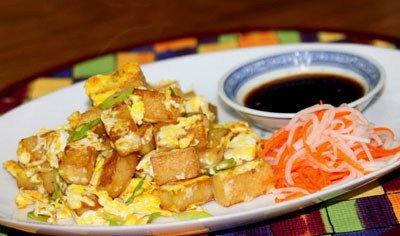
Bánh bột chiên / rice flour cake omelet
Pronounced: bahn bot chen
Often served as a morning snack or appetizer, ban bot chien is crispy pieces of fried rice flour cake covered in eggs and topped with scallions and garlic. As simple as that sounds, presentation can vary widely from restaurant to restaurant and may include turnips and onions among other ingredients. Top it with nuoc mam (fish sauce) for an addictive sweet-and-savory treat.
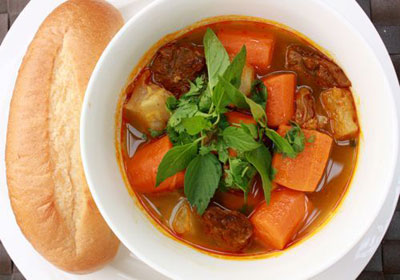
Bánh mì bò kho / beef stew with carrots
Pronounced: bahn mee buh koh
If someone brought you a bowl of banh mi bo kho and you didn't know its origins, you may have a hard time guessing it's Vietnamese. This hearty winter stew of beef, carrots and onions in a black pepper-spiced broth could be equally at home on a French or American table, save for the hints of lemongrass and fish sauce in the background. It's served with a crusty hunk of French baguette (the banh mi part) for sopping up the broth when you've finished all the meat and veg.
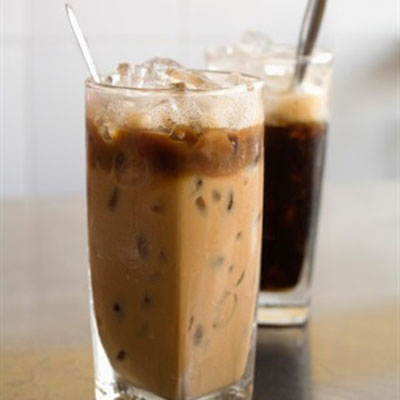
Cà phê sữa đá / iced coffee with milk
Pronounced: caf-fay su-ah da (the final "da" is pronounced like "dad" without a "d" at the end
Called "the undisputed king of coffee" by Digest NY, Vietnamese iced coffee truly is a drink of the gods. This isn't ordinary coffee, however. Really good Vietnamese coffee starts with beans roasted in clarified butter. The finely ground beans are steeped in hot water for a slow extraction, and the resulting coffee is much darker and thicker than typical American coffee. Into the hot coffee, sweetened condensed milk is poured -- no sugar required after that shot of creamy goodness -- and the entire affair is then stirred well and poured over ice.
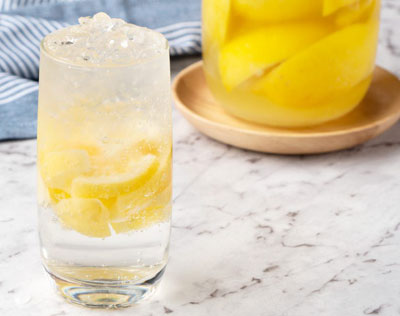
Soda chanh muối / salted lemon soda
Pronounced: soda chain moo-ee
Chanh muối is a salted, pickled lime in Vietnamese cuisine. Its name comes from the Vietnamese words chanh (meaning "lime" or "lemon") and muối (meaning "salt"). To make the chanh muối, many limes (often key limes) are packed tightly in salt in a glass container and placed in the sun until they are pickled. During the process, juices are drawn off the limes, which dissolves the salt and produces a pickling liquid which immerses the finished chanh muối.
Chanh muối are used to make a drink (with added sugar and water or carbonated water) that is called nước chanh muối or soda chanh muối, if made with carbonated water. Nước means water or "drink" in this context, when combined as nước chanh it means lemonade. The name of the drink is usually shortened to just chanh muối when the context is beverages and often appears on the menus of Vietnamese restaurants translated as "salty lemonade" or "salty limeade." To prepare the drink, a small piece of chanh muối (containing both rind and flesh) is cut, placed in a glass, and crushed slightly with a spoon or other utensil to release its juices, then the other ingredients are added.
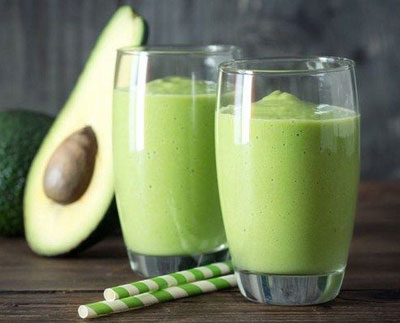
Sinh tố bơ / avocado shake
Pronounced: sin toh boh
Unlike western usage, where avocados are found in savory applications like guacamole, avocados in Vietnam are more often found in desserts and sweets. Avocados grow well in southern Vietnam, sinh to bo is used to beat the heat. It's as simple as pureeing avocado and sweetened condensed milk together, then pouring over crushed ice (although you can also drink it in fluffy smoothie form too). The avocado's flavor isn't the star here, but rather it's silky, creamy texture.
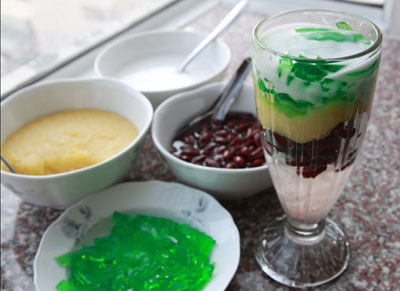
Chè ba màu / sweet bean dessert
Pronounced: chay baa mao (the last word is pronounced like "mouse" without the "se")
Like soda chahn, che ba mau is refreshing on a hot day. Like sinh to bo, it's not too sweet. But unlike most American desserts (not counting the miraculous bean pie), it's made with beans. You'll often find it listed on menus as "sweet bean combination with grass jelly and coconut milk," hinting at the dessert's tropical southern Vietnamese roots. Che ba mau means "three colours che" ("che" itself meaning a dessert drink or pudding), referring both to the three colors of beans used in the dessert and the lucky number three. You'll usually find mung beans, black-eyed peas and red azuki or kidney beans in the dessert, and/or gelatin colored green with pandan extract (the "grass jelly" part). It's all mixed up with crushed ice and sometimes served with a coconut milk topping.
