Types of Lettuces and Salad Greens
from https://www.thespruceeats.com/
Salad greens are cool weather crops, at their best in spring and early summer before high heat and long days make them bolt and turn bitter. Look for lettuce at farmer's markets year-round in ultra-temperate climates, fall and spring in mainly temperate areas, and in the late spring through the summer months in cooler climates. Many lettuce varieties, like leaf lettuce and iceberg, can be found year-round at most supermarkets.
The multitude of lettuce varieties available at the grocery store and farmer's markets offer a wide range of textures, colors, and flavors, from frilly red leaf lettuce to tender and soft butter lettuce. Instead of a generic looking and tasting salad you're just eating for some roughage, you can toss together a beautiful and flavorful salad worthy of a fine dining restaurant in your own home kitchen.
Some lettuces (especially iceberg) have been specifically bred to remove the bitterness from their leaves. These lettuces have a high water content with very little nutrient value. The more bitter lettuces and the ones with pigmented leaves contain antioxidants.
Lettuce is a fat free, low calorie food and is good for a well balanced diet. It is a valuable source of vitamin A and folic acid. Lactucarium (or “Lettuce Opium”) is a mild opiate-like substance that is contained in all types of lettuce. Both the Romans and Egyptians took advantage of this property eating lettuce at the end of a meal to induce sleep.
Other greens featured here, including arugula, spinach, and watercress, are not in the lettuce family at all. However, we include them because they make salads more interesting. Arugula and watercress, for example, bring the peppery character of the mustard family to mild lettuce-based salads. Spinach, part of the amaranth family, has a slight acidic tang. By sprinkling these kinds of greens into your salads, you can "season" them before you even add dressing.
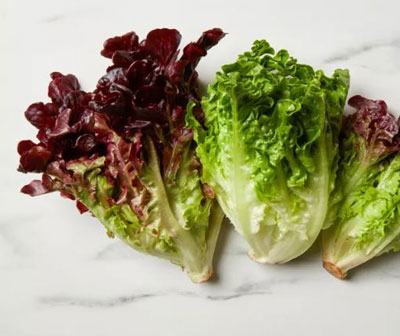
Green and Red Leaf Lettuce
Also Known As: Batavia lettuce, French crisp, summer crisp, leaf lettuce, looseleaf lettuce. Batavian, also called Summer Crisp, forms moderately dense heads with a crunchy texture. This type is intermediate between iceberg and looseleaf types.
What It's Like: Perhaps the best-known variety of lettuce, leaf lettuce is characterized by large heads of loosely arranged leaves (as opposed to the tight heads of, say, romaine) with ruffled tips. Mild-tasting, with only the slightest hint of bitterness, these greens have both tender leaves and pleasantly crunchy stems.
Where To Buy It: Red and green heads of this lettuce variety can be found at practically every grocery store.
How To Use It: This is the most versatile lettuce variety due to its mild flavor and can be added to any salad or piled inside sandwiches.
*Brian's Red Leaf Lettuce & Avocado Salad
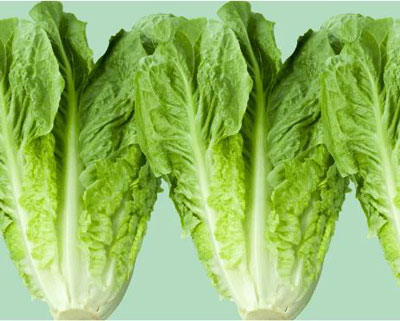
Romaine Lettuce
Also Known As: Cos lettuce
What It's Like: Romaine grows in a long head of sturdy leaves with a firm rib down the center. Romaine lettuce is hale and hearty and crispy crunchy. Generally mild with just a touch of bitterness, romaine's long slender leaves are perhaps even more versatile than looseleaf lettuce.
Where To Buy It: Like red and green leaf lettuces, romaine is available in supermarkets everywhere. You can find it in larger heads or sold as "hearts" with the large outermost leaves trimmed off.
How To Use It: Romaine is the ubiquitous lettuce in both Caesar salads and Greek salads. Its crunchy texture can stand up to any dressing, from a light gingery vinaigrette to a full-blown thick and creamy blue cheese dressing. Due to its sturdy texture, it can even be grilled.
*Caesar Salad
*Grilled Chicken
Caesar Salad (or shrimp)
*Greek Salad
*Antipasto Salad
*Salad Bar
*Grilled Romaine
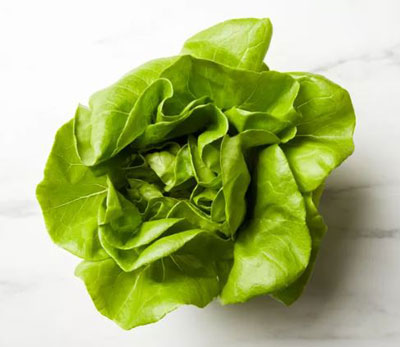
Butter Lettuce
Also Known As: Bibb lettuce, Boston lettuce, butterhead lettuce
What It's Like: Butter lettuce is a crisp-head lettuce, meaning its leaves form a compact head as it grows—although its head is much less compact than iceberg lettuce. Butter lettuce has a tender texture, mild flavor (perhaps the mildest among all lettuces), and large, cupped leaves.
Where To Buy It: Butter lettuce is commonly available at most supermarkets. You often find it sold in clamshells with the roots still attached to prolong its shelf life and protect the tender heads from damage during shipping.
How To Use It: Butter lettuce's soft leaves work beautifully in salads, especially with delicately flavored dressings. The leaves are perfectly shaped to hold fillings as in lettuce cups.
*Holiday Pomegranate Salad (Butterhead lettuce, radicchio, Belgian endive, arugula)
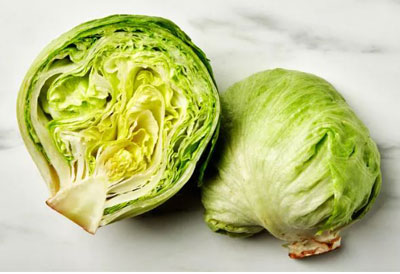
Iceberg Lettuce
Also Known As: Crisphead lettuce
What It's Like: Sold in tight, round heads that resemble cabbage, iceberg lettuce has an undeniable crispness that gives it a satisfying crunch in the mouth. Very light tasting, this lettuce has a mild, sweet flavor. They are generally the mildest of the lettuces, valued more for their crunchy texture than for flavour. The name Iceberg refers to the crisp, cold, clean characteristics of the leaves.
Where To Buy It: Iceberg is perhaps the most ubiquitous lettuce variety, available at nearly every supermarket.
How To Use It: The classic mid-century American salad lettuce, iceberg has fallen out of favor as a salad green, but it's still unbeatable in a wedge salad and its crunch works wonders as a burger or sandwich topper.
Classic Tossed Salad
Iceberg Lettuce Wedges
*The Iceberg Wedge (w/ blue cheese, crisped bacon, tomatoes)
*Salad Bar
+*Salad Julienne (Chef Salad Supreme)
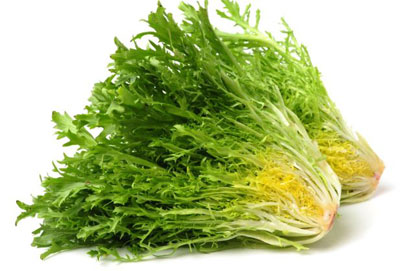
Frisée
Also Known As: Curly or curled endive
What It's Like: A beautiful whorl of pale to dark green leaves, this curly, frizzled green is a member of the endive family, and has all the bright bitterness and delicious crunch that goes along with that class of greens. Endives are part of the same family as lettuce (Asteraceae) but are in a different genus (Cichorium).
Where To Buy It: Frisée is available at some supermarkets, particularly those that offer more specialty produce.
How To Use It: Frisée is best known as the base for a classic French bistro salad that includes bacon and a poached egg on top and is also delicious in pear salads with blue cheese and walnuts. Frisée doesn't hold up to cooking like escarole and is best served raw in salads.
*Mom's Wilted Endive Salad
*Frisee (Endive) Salad w/ Pears, Blue Cheese, & Port Vinaigrette (Curly endive, radicchio)
Harvest Salad of Bitter Greens, Caramelized Pears, & Blue Cheese (endive, radicchio, mesclun, watercress, walnuts)
*Winter Greens Salad w/ Oranges & Goat Cheese (Curly endive, radicchio, Belgian endive)
Endive, Beet & Red-Onion Salad
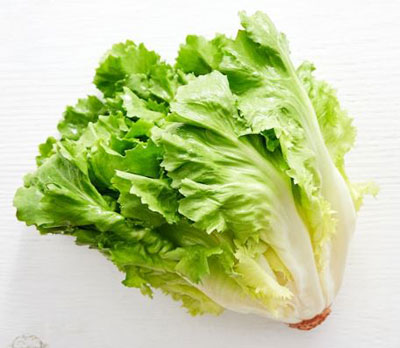
Escarole
Also Known As: broad-leaved endive, Bavarian endive, Batavian endive
What It's Like: Escarole has broad, curly green leaves, and a slightly bitter flavor, although escarole is slightly less bitter than its endive kin. The outer leaves tend to be darker in color and more bitter, while the inner leaves are more tender.
Where To Buy It: Escarole can be found at well-stocked grocery stores and specialty markets priced by the pound or by the head. Look for the vegetable, which can range from the size of a grapefruit to a large head of lettuce, with the refrigerated leafy greens. For the freshest escarole or when buying locally, look for it in the cold weather months. It pops up at farmers' markets starting in the fall and can be available through early spring. Choose heads that have firm, bright leaves without brown spots or wilting.
How To Use It: Escarole can be used in a variety of ways, both raw and cooked. For a salad, tear the leaves into pieces and toss with other ingredients and vinaigrette. Raw escarole pairs well with fruit in salads as well as cheese, including strongly flavored varieties such as blue cheese and goat cheese.
One popular use for the leafy green is wilted in Italian wedding soup. It's frequently paired with white beans, whether in soup form or as a side dish with bacon or ham. Escarole can also be sautéed or grilled for a simple side dish. Whether cooked or raw, escarole pairs well with strong salty and sweet flavors which balance its bitterness nicely.
*Wilted Escarole w/ Garlic & Lemon
*Grilled Romaine Salad w/ Blue Cheese
Wilted Escarole w/ Pine Nuts
Escarole Braised w/ Cannellini Beans
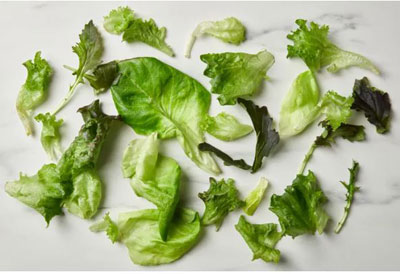
Spring Mix
Also Known As: Mesclun
What It's Like: Spring mix is a mix of lettuces and other greens and can include baby romaine, spinach, mizuna, baby chard, and arugula, among other varieties. Most mesclun is planted as beds of mixed lettuce seeds and harvested when the leaves reach the desired size of 3 to 6 inches. This is an excellent mixed green to buy to get a variety of colors, textures, and flavors in one package.
Where To Buy It: All supermarkets carry spring mix, usually in clamshells. Look for mixes that contain young, sweet leaves from a variety of tender lettuces—maybe a bit of curly endive for texture, some peppery watercress or arugula for bite, and a few herbs. Some farms and markets sell special "spicy" mixtures that have more arugula, watercress, mizuna, and mustard leaves.
How To Use It: Mesclun is often dressed with a classic French vinaigrette, but it's a forgiving mix that works well with a wide range of dressings.
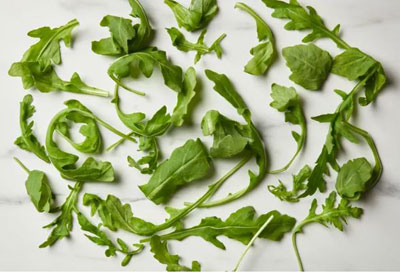
Arugula
Also Known As: Rocket, rucola, rugula, roquette
What It's Like: Arugula has dark green leaves and a peppery flavor. The leaves can be long and spiked or shorter and more rounded, but they all share that dark green color. In general, larger leaves tend to be stronger tasting, but if pungency is a concern, be sure to taste the batch before using.
Where To Buy It: Baby arugula is widely available at grocery stores. You may also find bunches of large arugula leaves at farmer's markets.
How To Use It: Use arugula alone to stand up to tangy dressings such as lemon garlic vinaigrette and bold flavors such as blue cheese, or mix it with other lettuces as an accent note. Arugula makes a bold and vibrant pesto and can be chopped up and used like an herb wherever a peppery flavor is desired.
*Holiday Pomegranate Salad (Butterhead lettuce, radicchio, Belgian endive, arugula)
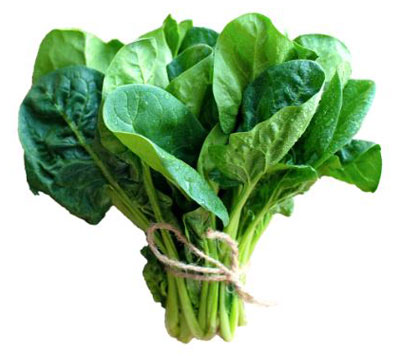
Spinach
What It's Like: A relative of buckwheat and rhubarb, spinach is available in baby and mature varieties. Baby spinach is usually sold in clamshells and has tender leaves. Mature spinach is sold in bunches, has tougher, thicker stems, and is more suited to cooking.
Spinach has a mild flavor with a slight acidity. If you eat a lot of spinach, you may have noticed that it can make your mouth feel dry or chalky. This is because spinach is high in oxalates, a compound that, when combined with the calcium in your saliva, forms calcium oxalate crystals that do not dissolve in water.
Where To Buy It: Baby spinach is available at nearly every grocery store. Mature spinach can be a little harder to find, but it is commonly available at natural foods grocery stores or specialty grocers.
How To Use It: Baby spinach is best used in salads, and mature spinach is best cooked, though either can be used for salads and cooked applications. If you plan to cook with spinach, keep in mind that it shrinks down to a fraction of the volume. You'll need a pound of spinach for four servings of cooked spinach.
*Mom's Wilted Spinach Salad
Spinach Salad with Feta, Dried Cranberries, and Sliced Almonds
*Spinach & Grilled Portabella Mushroom Salad
Roasted Beet & Spinach Salad with Toasted Walnuts & Goat Cheese
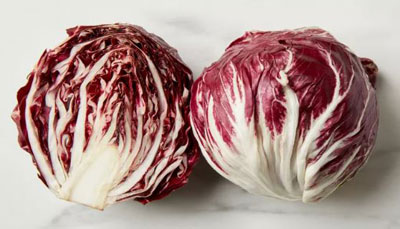
Radicchio
Also Known As: Italian chicory, radicchio di Chioggia
What It's Like: Radicchio is a type of chicory, belonging to the same genus as frisée. A visual standout in the produce department, radicchio's tight heads of deep purple leaves with white veining are rich in anthocyanins, compounds that help protect the plant from environmental stress.
Radicchio is bitter and there's no way around it. However, its bitterness can be tempered by quartering the head of radicchio and soaking it in cold water for up to an hour.
Where To Buy It: Radicchio is the most widely available of the chicories and can be found at most supermarkets. You can find more niche varieties of chicory, like treviso and la Rosa del Veneto (pink radicchio) at some farmer's markets.
How To Use It: If you're on the fence about radicchio's bitterness, quarter the radicchio, shred it, and add it in moderation to salads made mostly with other mild greens. If you can't get enough, you can make a radicchio-only salad by tearing the leaves in irregular pieces.
Radicchio is a hearty salad green (does that term still apply to a purple vegetable?) that can stand up to flavorful creamy dressings like Caesar or green goddess. It can even be braised or grilled.
*Holiday Pomegranate Salad (Butterhead lettuce, radicchio, Belgian endive, arugula)
*Frisee (Endive) Salad w/ Pears, Blue Cheese, & Port Vinaigrette (Curly endive, radicchio)
Harvest Salad of Bitter Greens, Caramelized Pears, & Blue Cheese (endive, radicchio, mesclun, watercress)
*Winter Greens Salad w/ Oranges & Goat Cheese (Curly endive, radicchio, Belgian endive)
Grilled Radicchio Salads
*Brussels Sprouts w/ Radicchio & Pancetta
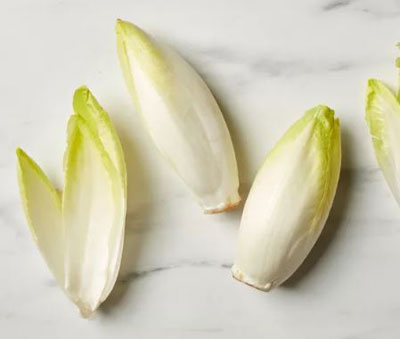
Belgian Endive
Also Known As: Witloof chicory, chicory, witlof
What It's Like: Belgian endive is in the same genus as radicchio but it couldn't look more different! Instead of round, purple heads, this green comes in small, tightly packed heads that are wider at the base than at the tip. The leaves have wide, white central veins and delicate, pale green tips.
These tight, compact heads are packed with flavor and crunch. While they are bitter like other chicories, their bitterness is more delicate than that of radicchio.
Where To Buy It: Belgian endive is more of a specialty green, available at some high-end grocery stores.
How To Use It: While a popular way to eat endive is slowly and carefully braised to caramelized brown perfection, endive also adds a solid crunch to any salad, whether on its own or mixed with other greens. It tends to have a bit of a bitter edge, so know your audience or use them sparingly with other salad greens.
*Holiday Pomegranate Salad (Butterhead lettuce, radicchio, Belgian endive, arugula)
*Winter Greens Salad w/ Oranges & Goat Cheese (Curly endive, radicchio, Belgian endive)
Braised Belgian Endive w/ Prosciutto
Endive, Beet & Red-Onion Salad
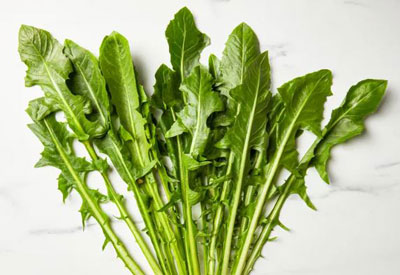
Dandelion Greens
What It's Like: Believe it or not, dandelions are in the lettuce family. While you are likely very familiar with this plant thanks to its tenacity in lawns across the nation, there is also a variety of dandelion that is cultivated explicitly for use as a culinary green.
Cultivated dandelion greens have larger, longer leaves and tend to be less bitter than their wild counterparts, though they are still quite bitter. You may even find dandelion greens with purple veins.
If you're interested in harvesting wild dandelion greens, look for them in early spring when the leaves are still small and tender. Very large, tough dandelion greens are not very good to eat. Make sure the location you are harvesting them from has not been sprayed with pesticides or herbicides.
Where To Buy It: If you're not up for a foraging adventure, find cultivated dandelion greens at some specialty supermarkets.
How To Use It: You can blanch and braise this dark leaf to tame its intense flavor, but if you like the strong taste, match it with strong acidic and/or pungent dressings.
Watercress
Also Known As: Yellowcress, cress, garden cress, upland cress, creasy greens
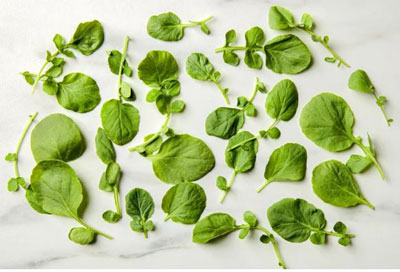
What It's Like: All cresses are members of the mustard family. Watercress has a bright, peppery flavor very similar to arugula. The leaves are tiny and the stems are thick and crunchy. The older watercress gets, the sharper its flavor becomes.
Watercress grows wild in streams in North America and Europe but is easily cultivated with the right irrigation. Much cultivated "watercress" is actually garden cress, which has slightly less bite and crunch than its watercress cousin.
Use cress as soon as possible, removing any yellowed or wilted leaves and making sure to dry it well before refrigerating it. This leafy green has a short shelf life.
Where To Buy It: A less common salad green, find watercress at some specialty stores or farmer's markets.
How To Use It: Watercress is prized for salads and gently wilted preparations. Tender stalks and roots are perfectly edible along with the dark green leaves.
