Beef Steaks
Steaks are among the most popular fresh beef cuts. The best steaks, in terms of tenderness, are from the short loin, sirloin, and rib sections—the middle of the cow (or steer) where muscle movement is minimal and include the Filet mignon, Porterhouse, T-bone, and top loin strip. Steaks cut from the chuck, round, and flank are much less expensive and less tender, but they are very flavorful.
| Beef Primal Cut | Steak | Also known as & Description |
Short Loin |
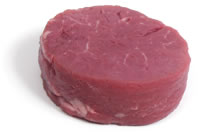
Tenderloin Steak
|
Known for it's thick cut and fork tenderness, the Tenderloin Steak is cut from the heart of the tenderloin (which runs through both the short loin and the sirloin) for a light marbling and mild flavor. Grilling, broiling, and sautéing are the best methods for cooking tenderloin steaks. One of the most popular steaks on steakhouse menus. The steak called Filet Mignon comes from the small end of the tenderloin (called the short loin) which is found on the back rib cage of the animal. True mignons are no more than 1 inch in diameter. Although this cut is very tender, the beef flavor is proportionately lessened. As such, it is often served with an accompanying sauce incorporating the pan juices. Filet mignon is French, with filet meaning "thick slice" and mignon meaning "dainty." It first appears in American print in 1899. Various names for tenderloin steaks include:
|
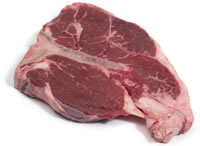
Porterhouse Steak
|
The Porterhouse steak is a crosscut steak containing part of the tenderloin and part of the top loin, which are separated from each other with a "T" shaped bone. It is similar to a T-bone steak except that it is thicker and the proportion of the tenderloin to the top loin is greater. The flavor and tenderness of the steak is enhanced with grilling, broiling, sautéing, and pan-frying. This steak is quite large. Porterhouse - the small piece of meat on one side of the "t" shaped bone is the filet mignon. The long strip of meat on the other side of the bone is known as the New York strip, shell, club or Delmonico steak when detached from the bone. Porterhouse has more of the filet mignon on it than does the T-Bone. Excellent Steak for Grilling |
|
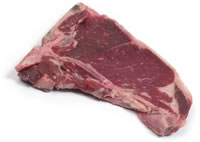
T-Bone Steak
|
Like the Porterhouse, the T-bone steak is a crosscut steak containing part of the tenderloin and part of the top loin. The main difference between it and the Porterhouse is that the T-bone contains less of the tenderloin. A T-bone steak is best when is is grilled, broiled, sautéed, or pan-fried. Excellent Steak for Grilling |
|
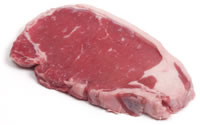
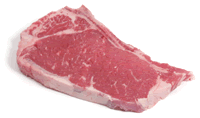
Top Loin Steak, boneless (Strip Steak)
|
Boneless top loin steaks are tender and flavorful and are best prepared using grilling, broiling, sautéing, or pan-frying cooking methods. The boneless top loin steak is known by different names depending on the area of the country it is purchased. Various names for boneless top loin steak include:
Excellent Steak for Grilling |
|
Top Loin Steak, bone-in (Club Steak, Strip Steak)
|
Bone-in top loin steaks are tender and flavorful and are much like a Porterhouse or T-bone, but with the tenderloin portion removed. The best methods for cooking bone-in top loin steaks are grilling, broiling, sautéing, and pan-frying. The bone-in top loin steak is known by different names depending on the area of the country it is purchased. With the bone, it is a shell steak; boned it is a strip, a hotel steak, a Kansas City steak (in said town and elsewhere) or a New York steak (everywhere but New York). Various names for bone-in top loin steak include:
Excellent Steak for Grilling *The term Delmonico steak can mean a lot of things, and there is little agreement about precisely what steak it correctly refers to. In fact, about the only thing people seem to agree on is that it's named for Delmonico's, a steak house in New York where it's said to originate. Unfortunately, no one can say for sure exactly what cut of meat Delmonico's was serving when it created the Delmonico steak, because it happened in around 1840, and there's no one around who remembers. At its most basic, though, a Delmonico steak is a big steak — possibly up to two inches thick. And it should be a very high-quality piece of meat, with plenty of marbling. Furthermore, it needs come from somewhere in the rib or short loin section of the beef. It might be a bone-in or boneless ribeye steak, or a boneless or bone-in strip steak. For what it's worth, Delmonico's Restaurant is still in business, and on their menu, the Delmonico steak is a boneless ribeye. |
|
| Ribs | Ribeye Steak (boneless)
|
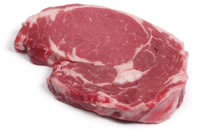
When a rib steak is boned, it is then called a ribeye steak. Cut from the center of the Prime Rib (rib-eye roast), the Ribeye is considered by many to be the juiciest and most flavorful of all steaks. Meat from the rib section is more tender and fattier (the meat is said to be "marbled") than most other cuts of beef. This extra fat makes ribeye steaks and roasts especially tender and flavorsome, and well suited to dry heat cookery. It is best when grilled or broiled. Other names for the rib-eye steak include:
Excellent Steak for Grilling |
Rib Steak (bone-in)
|
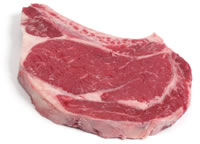
A rib steak is cut from the rib roast. It is the same steak as the rib-eye, except that it contains the bone. It is best when grilled or broiled. (The French name Entrecôte, refers to a rib-eye or rib steak cut from ribs 9 to 11.) Excellent Steak for Grilling |
|
| Sirloin | Sirloin Steak, bone-in
|
The top butt of the sirloin section. Butchers differentiate between the pin bone, flat bone, round bone, and wedge steak, all named for the shape of the hip bone.
|
Top Sirloin Steak, boneless
|
The boneless sirloin is a flavorful and somewhat tender steak obtained from the top butt muscle of the sirloin. It can be grilled, broiled, sautéed, or pan-fried and is even better if it is marinated first. The sirloin steak is a beef steak cut from the rear back portion of the animal, continuing off the short loin from which T-bone, porterhouse, and club steaks are cut. The sirloin is actually divided into several types of steak. The top sirloin is the most prized of these. The bottom sirloin is less tender, much larger, and is typically what is offered when one just buys sirloin steaks instead of steaks specifically marked top sirloin. The bottom sirloin in turn connects to the sirloin tip roast. Teriyaki Beef |
|
Petite Sirloin Steak
|
From all the different cuts of steak Petite sirloin steak is cheaper and tougher than most would choose or enjoy. It comes from the tail end of the Sirloin primal, almost into the rump area, has flavor but lacks tenderness. When cooked well, it can be a delightful steak. And with its coarse grain, it takes well to rubs and marinades, which means there are many ways to turn this average steak into a good steak. Weighing in at an average of 6 to 8 oz. per steak, it’s on the smaller end of the steak size scale. The Sirloin primal is separated into the Top Sirloin Butt and Bottom Sirloin Butt. The Petite Sirloin is part of the Bottom Sirloin Butt and is closer to the Rump primal than the Loin. Typically used as a good value stand-alone steak, the Petite Sirloin can be grilled, broiled, or braised. The best marinade time for grilling (in oil, Worcestershire sauce and other seasonings) is at least 24 hours. Any less and the Petite Sirloin will still be tough. Cook until internal temperature is 125 degrees F. Recipes that call for steaks to be slow-cooked in stock or a rich sauce are popular with those that are looking to cook the Petite Sirloin. As always, extra moisture means extra tenderness
|
|
Tri-Tip Steak
|
The tri-tip is a triangular shaped cut at the tip of the sirloin and is surrounded by the sirloin, round, and flank primals. It can be used as a roast or it can be cut into steaks. It is a small steak from the bottom butt of the sirloin, known as the triangle steak because of the shape of the muscle. The tri-tip steak is excellent when it is grilled or broiled, but it can easily become very tough if it is overcooked. The fat should not be trimmed until after cooking because it helps to seal in the juices, keeping the meat somewhat tender. The tri-tip is also known as:
|
|
| Round | Eye Round Steak
|
The boneless eye round steak is a small cut obtained from the eye round roast. It is lean and tough and should be braised for the best results. |
Round or Sirloin Tip Steak, Thin Cut
|
The round tip steak is cut from the untrimmed round tip roast. If the steak is obtained from the trimmed roast, it is known as a trimmed tip steak or a ball tip steak. It can be quite good when it is grilled or broiled, especially if it is marinated first. Other names for this cut of meat include:
|
|
Round Steak
|
A round steak often refers to a thin steak that is cut from the top round roast. A thicker steak cut from the top round roast is known as a top round steak. Round steak is a bit tough, so it is best to braise it. A round steak may also refer to a cross cut steak from the round that includes parts of the eye, top, and bottom round. |
|
Top Round Steak, London Broil
|
The top round steak is a thick steak that is cut from the top round roast. A thinner steak cut from the top round roast is simply called a round steak. The top round is flavorful and a bit more tender than other round cuts, but it should still be marinated first if it is to be grilled or broiled. It is sometimes referred to as a London Broil, which also is a name given to a flank steak. *Madeira Wine Marinade for London Broil |
|
Bottom Round Steak
|
The bottom round steak is often referred to as a Swiss steak (as is a chuck arm steak). Braising is the best cooking method for this tougher cut. Other names for the bottom round steak include:
|
|
| Chuck | Top Blade Steak, boneless
|
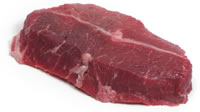
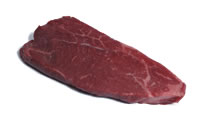
The top blade steak is a smaller cut from the top blade roast and is also known as the "Flatiron Steak". It is called the flatiron steak because when the top blade roast is cut horizontally into two pieces, the resulting shapes resemble an old fashioned flatiron. Other names for the flatiron or top blade steak include:
The top blade, or flatiron steak, is quite tender, flavorful, and well marbled, and it is much less expensive than similar cuts. It is an excellent candidate for grilling or broiling and does not require marinating or any other mechanical tenderizing. It should not be cooked beyond medium or it will quickly toughen. |
Shouder Steak, boneless
|
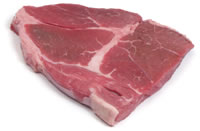
A boneless chuck shoulder steak is cut from the larger boneless chuck shoulder roast. It is usually cut no thicker than one inch, weighs 10 ounces or less, and is usually trimmed of all excess fat. Since it is from the chuck primal, it is very flavorful, but it is a bit tough. It is best when it is braised, however it is excellent when grilled, broiled, or pan-fried if it is marinated first and if it is not overcooked. The best results are achieved if the steak is not cooked beyond medium when using dry heat cooking methods. A center cut steak from the boneless chuck shoulder is known as a "Ranch Steak" (which is pictured on the left). Other names for this cut of meat include:
|
|
Chuck Arm Steak (Swiss Steak)
|
Chuck Steak A steak cut from the arm roast is often referred to as a Swiss steak (as is a steak from the bottom round). Braising is the best cooking method for this tougher cut. |
|
Chuck-Eye Steak, boneless
|
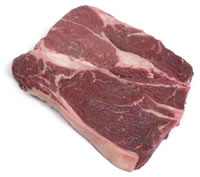
Bottom Chuck
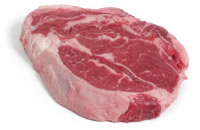
The Chuck Eye Steak is cut from the chuck eye roast (Chuck Primal), lower down from the rib primal. This means that this steak is a similar cousin to a Rib-Eye Steak, but isn't as tender or flavorful. It is best when braised, but it can be grilled or broiled if it is not overcooked. A good lower cost alternative but will dry out quicker than a rib eye. The chuck eye steak is also known as:
|
|
Chuck Mock Tender Steak
|
The mock tender is often sold as a roast and is a cone shaped cut next to the top blade in the chuck primal. It can also be cut into steaks. The name "mock tender" is misleading because the meat is rather tough and it is best when it is braised. It is also known as:
|
|
Chuck 7-Bone Steak
|
The 7-bone steak is a cross cut steak of the shoulder blade. It gets its name from the cross cut of bone that is shaped like a "7". It is a bit tough, so it is best to braise it. | |
Under Blade Steak
|
The under blade is directly below the shoulder blade and can be cut into steaks. It is not suitable for grilling or broiling, but is quite good when it is braised. | |
| Flank | Flank Steak
|
A flank steak is a long, flat muscle, very lean and full of flavor. It is delicious when grilled, but it will become very tough if cooked too long. It is best to marinate it before cooking. The flank steak is also known by the following names:
|
| Plate | Skirt Steak
|
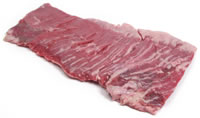
A skirt steak has much more marbling than a flank steak and as a result, it is more juicy and very flavorful. It can be prepared with almost any type of cooking method, but it should be marinated first if using a dry heat cooking method such as grilling or broiling. The skirt steak is also known by the following names:
|
Hanger Steak
|
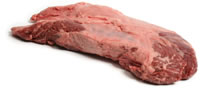
The hanger steak, or hanging tenderloin, is the thick strip of meat that is located on the underside of the carcass and hangs between the last rib and the loin. It is actually part of the diaphragm. Like the skirt steak, it is very flavorful and it can be prepared with almost any type of cooking method, but it should be marinated first if using a dry heat cooking method such as grilling or broiling. The hanger steak is also known by the following names:
|
Tips for Cooking Steaks:
- Turn your steak when the meat juices start to bubble up through the meat to the top of the steak.
- To test for doneness, press the meat with your finger. Rare meat will be soft and wobbly, medium will have a springy firmness and well done will feel very firm and unyielding. A steak will cook a little after you remove it from the grill or oven, so stop broiling when the steak tests slightly less done than desired.
- For great results every time, use an instant read kitchen thermometer . Insert the thermometer in the thickest part of your steak, hamburger or chops away from any bone or marbling. Thermometer readings should be: 120°F to 125°F for rare; 130°F to 135°F. for medium rare and 140°F to 145°F for medium .
- Although steaks are optimum in flavor and texture when cooked to no more than medium doneness, some people prefer their steaks well done. The internal temperature for medium well steak is 155°F and well done 160°F. Keep in mind that overcooking causes greater shrinkage and decreased tenderness.
- The usual cooking time for this over a hot fire on your grill is 10 to 12 minutes.
- When turning the steak - on a skillet, in the oven, or on the grill; NEVER use a fork, only use tongs. The fork punctures will release the meats juices, and leave the steak dry and tough. You only need to turn the steak over once as it cooks.
- Leave the fat on the steak while it is cooking to preserve juiciness. Trim the fat off AFTER it is done cooking.
- Salt your steak after cooking. Not before. Salt draws out the meats juices.
- Keep the steaks at least 2 to 3 inches above the heat when grilling outdoors or broiling in the oven. "The closer the heat, the tougher the meat".
