Types of Doughnuts
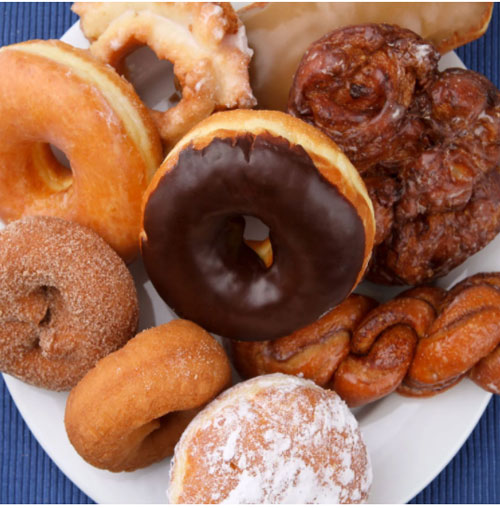
Various types of doughnuts
The earliest origins of modern doughnuts are generally traced back to the olykoek ("oil(y) cake") Dutch settlers brought with them to early New York (or New Amsterdam). These doughnuts closely resembled later ones but did not yet have their current ring shape. One of the earliest mentions of "doughnut" was in Washington Irving's 1809 book A History of New York, from the Beginning of the World to the End of the Dutch Dynasty: "Sometimes the table was graced with immense apple-pies, or saucers full of preserved peaches and pears; but it was always sure to boast of an enormous dish of balls of sweetened dough, fried in hog’s fat, and called dough-nuts, or oly koeks: a delicious kind of cake, at present scarce known in this city, excepting in genuine Dutch families." The name oly koeks was almost certainly related to the oliekoek: a Dutch delicacy of "sweetened cake fried in fat."
Serious Eats defines doughnuts as such "A doughnut is a deep-fried piece of enriched dough, traditionally (but not always) sweet and traditionally (but not always) ring-shaped. Once fried, that dough is often then finished with sugar, frosting, or glaze; or filled with cream, jelly, or another sweet element." It is under this "sweet fried dough" umbrella that churros and fried dough (beaver tails) can be counted as doughnuts.
Two Main Types of Doughnuts
In general, there are two main categories of doughnuts: yeast doughnuts and cake doughnuts. Yeast doughnuts, as the name clearly spells out, are made from dough leavened with yeast, whereas cake doughnuts are traditionally made from a kind of cake batter that uses a chemical leavener (i.e. baking powder or baking soda). Yeast doughnuts predate cake doughnuts by quite some time (their history goes all the way back to ancient Rome and Greece), likely first introduced to the States by Dutch immigrants. Cake doughnuts, meanwhile, didn’t start popping up in cookbooks here until the 1830s—a wondrous byproduct of the avant garde technology that was chemical leavener at the time.
The difference in leavening agent dramatically impacts texture and flavor. Yeast doughnuts are lighter: Once cooked, a cross-section reveals a mosaic of air pockets, giving the style a puffy, malleable quality, and a slightly chewy texture. Cake doughnuts, on the other hand, have a dense, more compact crumb, and a sturdy, crisp exterior shell.
In most cases, filled donuts are yeast-raised donuts injected with cream, curd, or jelly. The airy nature of yeast donuts provides space for fillings to occupy, and their light consistencies nicely contrast thick custards and sugary fruit fillings. You can fill chemically leavened donuts, but it’s far more labor-intensive. Because of their density, chemically leavened donuts must have their filling layered into their dough/batter before they’re cooked.
On the other hand, cake-style doughnuts can handle a thicker coating of icing better suited to secure all your favorite fixin’s: sprinkles, nuts, and coconut, for instance. All those colorful doughnuts you see with different frostings and toppings are cake-style doughnuts.
These versatile deep-fried dough balls have come to take on many different forms. Of course— this isn't an exhaustive list. There are literally endless types of doughnuts in the world.
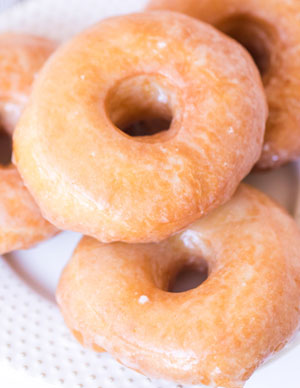
Glazed donuts
Yeast Doughnuts
Also referred to as "raised doughnuts," this doughnut type uses yeast as a leavener, giving it a light and airy interior. Some other types of doughnuts, such as jelly or cream-filled, often have a yeast doughnut base. Yeast doughnuts are full of air pockets and less likely to leave crumbs.
Glazed Doughnuts are one of the more popular ring shaped yeast doughnuts. Most glazed doughnuts use a vanilla glaze, but a chocolate or maple glaze is nice for a change.
Yeast-leavened donuts can come in many different shapes and sizes. Common shapes include:
- Donut Rings: conventional donut with a hole in the middle, often glazed
- Twists: made by braiding or twisting one or two pieces of dough together, often dusted with cinnamon sugar
- Honey buns: deep fried donut with a thin cinnamon swirl, like a cinnamon bun, and topped with a honey glaze
- Round, no hole: round bun shaped donuts filled with jelly and topped with confectioners' sugar, others filled with custard and topped with chocolate glaze (Boston cream)
- Long johns: a bar-shaped, yeast risen doughnut either coated with a glaze or cake icing. Popular types are the maple bar and the chocolate bar (depending on the frosting). Long Johns are usually not filled or in some regions are filled with custard or pudding. Filled Long John donuts are sometimes referred to as filled bars or filled bar donuts.
- Bomboloni: Italian donuts filled with either custard, mascarpone, Nutella, ricotta, hazelnut, pistachio cream, raspberry or other preserve, or a ricotta filling. What makes them different from American-style doughnuts is that the creamy filling is visible from the top rather than hidden inside.
See below for some of these shapes.
Recipes for Yeast Raised Doughnuts (glazed, cinnamon twists, Boston cream, jelly filled, Bomboloni)
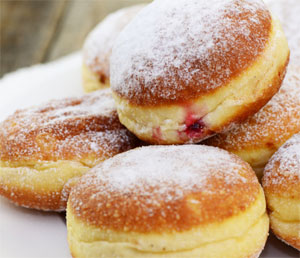
Jelly Doughnuts
These classic doughnuts are typically round without a hole in the middle, and generally leavened with yeast. The center is stuffed with jelly, jam, or preserves (and sometimes chocolate!), giving you a burst of flavor with each bite. You will usually find them with a confectioner’s sugar dusting. There are several variations of the jelly doughnut, including Berliners, bomboloni, paczki, and sufganiyot.
Instead of jelly or preserves, these doughnuts can be stuffed with a filling made from fresh fruit. Some popular types of filling include apple, raspberry, lemon (lemon curd?), strawberry, and blueberry.
Recipes for Yeast Raised Doughnuts (Jelly doughnut variation)
Berliners: Unlike the American doughnut, Berliners are made into balls, but don't get a hole in the middle before they are deep fried. In both cases, the dough is typically elevated with yeast. American doughnuts are made from flattened dough and have the centers cut out, which are then fried to make doughnut holes. Traditional Berliners most closely resemble America's jelly doughnut. In the U.S., another doughnut that resembles a Berliner filled with custard is the Boston cream doughnut, which is Massachusetts' official state doughnut. In some parts of the U.S. and Canada people call Berliners Bismarks, or Bismarcks, after Otto von Bismarck, the first chancellor of the German Empire. Typically, the jam inside of the doughnut is raspberry and apricot. Other variations include marmalade, chocolate, vanilla pudding, and plum butter.
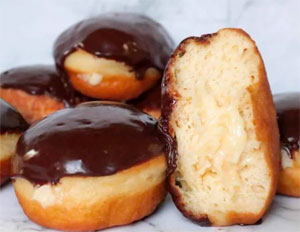
Boston Cream Doughnut
Boston cream doughnuts are yeast doughnuts filled with custard (egg yolk, cream, and sugar) and topped with chocolate frosting. It's the doughnut version of the Boston Cream Pie. Thank you, Massachusetts. Once the dough has been fried, the custard filling is piped into them and the top is then frosted for an irresistible treat.
Note: There are also Crème filled doughnuts where the filling is made by whipping sugar and vegetable shortening until fluffy. From what I found, this is called Holland Cream and is white in color being often referenced as a white cream filling. These are very sweet and I prefer the custard filled ones.
Recipes for Yeast Raised Doughnuts (Boston Cream doughnut variation)
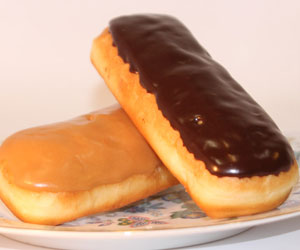
Long John
This unusual rectangular doughnut is risen with yeast, frosted, and is sometimes filled with custard or jelly. If filled with custard with a chocolate topping, it's similar to an eclair (and is referred to as one in some parts of the U.S. It’s only in the Midwest that they are called Long Johns. On the West Coast, they are called Bar Doughnuts, and on the East Coast they are called eclairs), but it's fried rather than baked as an eclair is which is made with pâte à choux dough . Because America.
When it's topped with a maple flavored glaze, it's known simply as a maple bar, and is sometimes topped with chopped nuts.
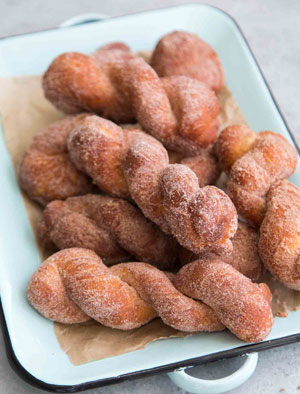
Twists
These oddly shaped yeast doughnuts are long and twisted. Cinnamon Twists are a popular rendition of this doughnut, with a delectable cinnamon-sugar coating. They may also have a classic glaze, chocolate glaze, maple glaze, or plain sugar coating.
Recipes for Yeast Raised Doughnuts (Twists doughnut variation)
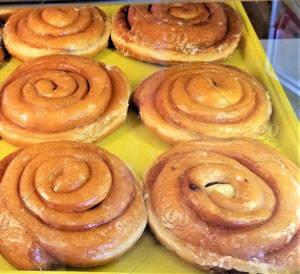
Cinnamon Roll Doughnuts (Honey Buns)
Cinnamon Roll Doughnuts are fluffy, brown sugary cinnamon rolls made from yeast doughnut dough, fried ‘til golden and dunked in a classic sugar glaze. They are both a cinnamon roll and a doughnut and they are exactly as delicious as they sound.
These doughnuts are marketed as Honey buns. Honey buns are made from a honey-cinnamon, yeast-raised dough. Bakers form honey bun dough into the same swirled shape as a cinnamon roll before frying and topping their honey buns with a glaze or icing.
While honey buns may contain some honey, it seems the name has more to do with this definition as they don‘t have a pronounced honey flavor: affectionate term meaning dear or darling (from Your Dictionary web site)
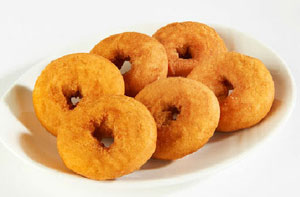
Cake Doughnuts
Unlike yeast doughnuts, these have a dense base that will hold all your favorite toppings, from sprinkles to bacon (if you're into that). The consistency of these doughnuts resembles cake, but drier, and crumbs are a given. They are leavened using baking powder, and then dunked into oil to cook.
Doughnut Holes are made from the dough cut out from the center of the doughnut. They are often sprinkled with powdered sugar, or glazed. These bite-sized treats are perfect for hosting brunch or for being the favorite coworker at early morning meetings.
Cake doughnuts can be eaten plain or there are several options for coating or topping them:
- Sugar doughnuts - entire doughnut is covered with granulated sugar
- Powdered sugar doughnuts - entire doughnut is covered with powdered sugar
- Cinnamon sugar doughnuts - entire doughnut is covered with cinnamon sugar
- Glazed doughnuts (doughnuts made with yeast are also glazed) - entire doughnut is dipped in a sugar glaze
- Chocolate glaze
- Chocolate covered doughnuts
- Peanut doughnuts - glazed doughnuts that are then covered with finely chopped peanuts
- Coconut doughnuts - glazed doughnuts that are then covered with finely shredded toasted coconut
- Frosted doughnuts - top of the dough only is dipped in some type of frosting (vanilla, chocolate, strawberry, etc.) and often covered with sprinkes or other toppings
Variations include Chocolate or Devil’s Food Cake Donuts, Red Velvet Donuts, Sour Cream Donuts, Buttermilk Donuts
Recipe for Cake Doughnuts
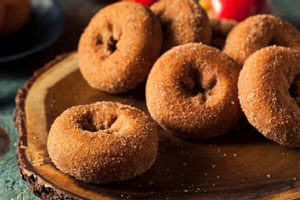
Apple Cider Doughnuts
These fabulous fall doughnuts are round with a hole in the middle, but are typically smaller in size and more dense. Cider doughnuts fall within the cake doughnut category. They're infused with apple-cider and sprinkled generously with cinnamon or sugar (and perfect for dunking in coffee!). Synonymous with apple orchards, fall festivals, and hayrides—cider doughnuts are like a warm hug on a cool fall day.
Recipe for Apple Cider Doughnuts
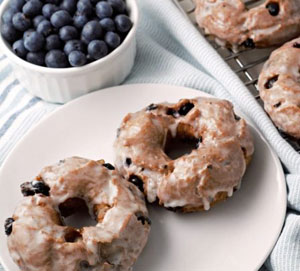
Blueberry Cake Doughnuts
Blueberry doughnuts have an unassuming exterior, but they're one of the most beloved types. They are similar to old-fashioned doughnuts, with a hard exterior and a soft exterior. Blueberry doughnuts are glazed with a light, sugar glaze and packed with blueberry galore!
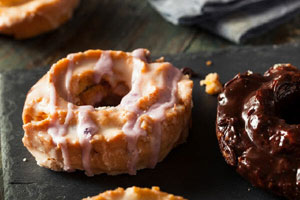
Old Fashioned Doughnuts
The old-fashioned doughnut is a variety of cake doughnut prepared in the shape of a ring with tapered edges around it. Cake doughnuts originated in the United States circa 1829. Primary ingredients in the old-fashioned doughnut include flour, sugar, eggs, sour cream or buttermilk and leavener.
It is typically deep fried, may have a crunchier or crisper texture compared to other styles of cake doughnuts, and typically has cracks and pores on its surface. It has a larger hole in the center than most doughnuts. After being fried, it is glazed, dusted with sugar, or served plain.
Besides the usual vanilla glaze, you can get them with chocolate glaze. There are also recipes for chocolate flavored old fashioned doughnuts.
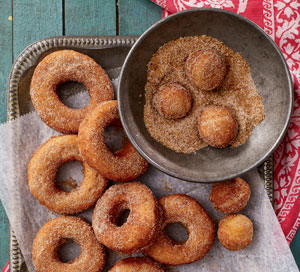
Potato Doughnuts
These doughnuts have a similar texture to cake doughnuts, but they're made with mashed potatoes or potato starch added to the batter in place of some of the flour. This gives them that crispy texture on the outside while keeping it soft and light on the inside. Sometimes referred to as a Spudnut, these doughnuts were introduced in the mid-1900s, with a chain of Spudnut shops spreading across the United States. Today, the chain no longer exists but a few dozen shops have kept the name.
Fastnachts - Fastnachts are heavy, yeast-raised potato doughnuts shaped into squares or triangles. Fastnachts are an Easter tradition in Pennsylvania Dutch country prepared on Fat Tuesday before the start of the Lenten season.
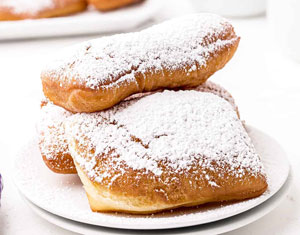
Beignet
Similar to a fritter, this deep-fried yeasted doughnut is of French origin. It's made with a dough that puffs up as it fries. They're particularly popular in the U.S. in New Orleans, where they're usually served with a heavy sprinkle of powdered sugar. Sometimes they're stuffed with a fruit filling or chocolate. However they're served, nothing beats these pillowy French delicacies. French beignets are different from the French Quarter-style beignets that are so familiar in New Orleans and are made with a yeast dough. Instead, it is made with choux pastry dough, which is the dough used in cream puffs and éclairs.
It is best to serve them hot and are usually paired with a warm drink. These are known to be a breakfast or a dessert.
Recipe for Beignets
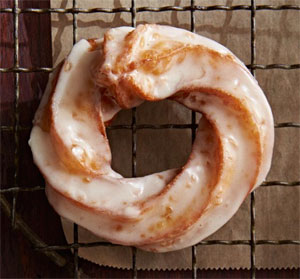
French Cruller
This doughnut has a unique, twisted shape that may be rectangular or circular. In New England, these beloved doughnuts tend to be of the rectangular variety. But the French Cruller is generally ring-shaped. French crullers are made from pâte à choux, the same dough that is used for Eclairs and Profiteroles, and typically comes with a honey or vanilla glaze.
Crullers are characterized by their twisted/fluted shapes achieved by piping rich batter into a fluted mold or hand twisting sweetened dough strips together. Crullers exist in many forms throughout the world, and US regions reinterpret them in unique ways. Technically, the most renowned version of the cruller, the French cruller, is a fried pastry.
Cruller donuts found throughout the US and sold at popular donut chains are typically dense cake donuts formed in a ridged/fluted mold. French crullers are pastries made from stiff choux dough piped into circles, fried, and glazed.
Recipe for French Cruller
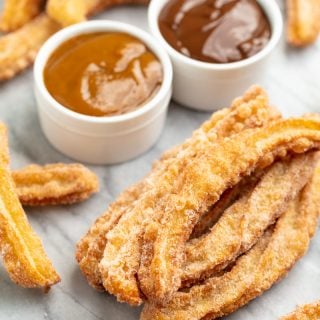
Churros
Do churros count as doughnuts? I dare say yes. Churros are long sticks of choux dough fried to perfection and sprinkled with sugar. They're often served with chocolate or caramel sauce for dipping. Depending on where you are, you may be able to find them stuffed with dulce de leche or fruit filling. They're popular in Spain and much of the Spanish-speaking world.
Churros originated in Spain and Portugal, but made their way to Mexico and other former Spanish colonies and settlements as well. Spanish churros and Mexican churros are very similar. Spanish churros are coated in sugar and served with a thick dipping chocolate. Mexican churros are coated in a cinnamon sugar mixture and served with chocolate, caramel, or whipped cream or eaten plain.
Recipe for Churros
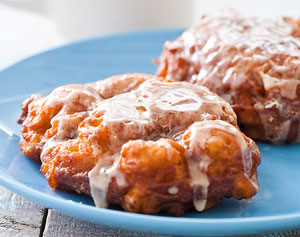
Apple Fritters
Apple fritters are made from yeast-raised dough that gets mixed with cooked apple chunks and cinnamon. Once fried, they have a lovely browned outside with a light and fluffy inside. They are normally glazed or topped with sugar.
Recipe for Apple Fritters (uses baking powder instead of yeast)
Recipe for Yeast-raised Apple Fritters
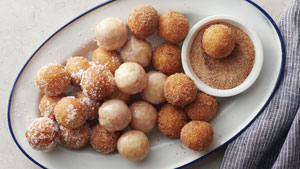
Types of Donut Holes
Donut holes are bite sized pieces of perfectly fried dough covered in a variety of toppings. They are a great way to try all the different coatings and glazes without having to eat a whole donut each time.
Doughnut holes are small, bite-sized doughnuts that were traditionally made from the dough taken from the center of ring doughnuts. However, doughnut holes can also be made by dropping a small ball of dough into hot oil. Before long, doughnut sellers saw the opportunity to market "holes" as a novelty and many chains offer their own variety.
There are many traditional small fried dough balls made in other countries. These are some of them:
Loukoumades - Loukoumades are Greek bite-size, fried dough delicacies characterized by their crispy, golden exteriors and soft, airy interiors. Soak your deep-fried Loukoumades in hot honey syrup, sprinkle chopped walnuts on top, and garnish with cinnamon before serving.
Nun’s Puffs - Nun’s Puffs are small French donuts made of rich, rummy choux dough measuring 1 1/2 inches across. Nun’s puffs are rolled in sugar (and sometimes, cinnamon) before they’re served. While they’re eaten year-round, Nun’s Puffs are the treat of choice during Mardi Gras in France, making them the predecessor of the New Orleans beignet
Zeppole - Zeppole are an Italian pastry similar to Bomboloni and are basically fried donut balls made out of Cream Puff dough. They are very popular during St. Josephs Day in Italy which is also Italian Father’s Day. These fried pastries are traditionally served at Italian carnivals or festivals in simple paper bags, dusted with powdered sugar.
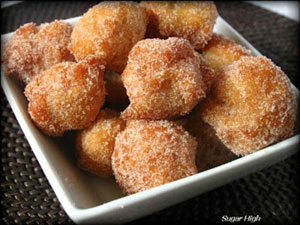
Drop Doughnuts
While their ingredients may vary, drop doughnuts’ singular dense and doughy textures created by dropping loose batters into hot oil make them the biscuits of the donut world.
Drop doughnuts are made from a loose batter. They may be dropped from a spoon so the results are dough balls, or there is a kitchen gadget that you can fill with the doughnut batter and then dispense doughnuts into the hot oil in ring shape. These doughnuts haven a crispy outer layer and doughy interior.
You can make drop doughnut batter with either a chemical or natural leavening agent, however, chemical yeast substitutes are more common.
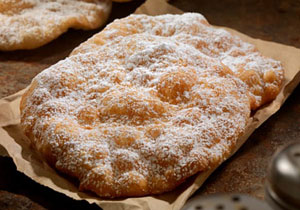
Fried Dough (Fry Bread)
Fried dough of various types is ubiquitous nationwide (as well as around the world), whether made at home or acquired at one of countless county fairs. Fry bread (or frybread) is a version which has been a key part of Navajo tribal tradition since the 19th century. Other cultures have their own names for this crispy/tender treat, including frogs, beaver tails, elephant ears, and pizza fritta (made with yeast).
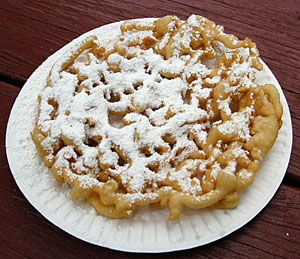
Funnel Cakes
Funnel cake (Pennsylvania German: Drechderkuche) is a regional sweet food popular in North America, found mainly at carnivals and amusement parks. Funnel cakes are made by creating a batter of eggs, milk, flour, salt and baking powder, then using a funnel to pour the batter into the oil in a circular, web-like pattern, resulting in a light, crispy, delicate nest of heavenly goodness. The cake is then dusted with a healthy amount of powdered sugar.
Recipe for Funnel Cakes
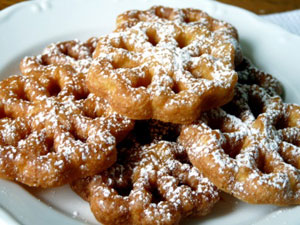
Rosettes
While Rosettes are often described as pastries or cookies and are not usually served for breakfast as most doughnuts are, I added them to this list because they are a fried dough similar to Funnel Cakes and Fried Dough.
Fried pastries known as rosettes are common around the world. In Poland, Russia, and Ukraine, they are known as rozetki, rozetták in Hungary, rozety in the Czech Republic and Slovakia, rozete in Croatia, Romania, Serbia and Slovenia, and rozetės in Lithuania. Rosettes are crispy and typified by their lacy pattern.
These delicate pastries are made by heating a rosette iron to a very high temperature in oil, dipping it into the batter, then placing it in the hot oil to create a crisp shell around the metal. The iron is lifted from the oil after a short time and the rosette is separated from the iron. Rosettes are then dusted with confectioners' sugar.
Recipe for Rosettes
