Mustard Varieties
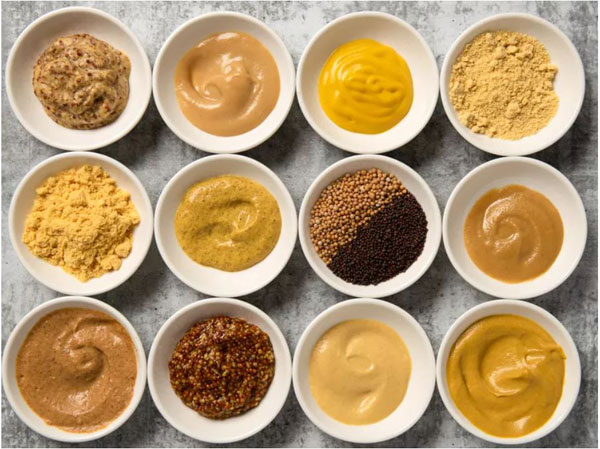
Mustard Varieties
The term "mustard" is used to describe several plants in the Brassica and Sinapis genera which are used as sources of food. The incredible diversity and flexibility of mustard plants can cause them to pop up in a wide variety of places, from traditional American Southern cuisine to fiery Indian curries.
Three different types of mustard are used as a source of seeds, which can be ground up and used as a condiment, added to pickling mixtures, or included whole in an assortment of marinades, sauces, and curries.
- S. albis produces "white" mustard seeds, which are actually yellow; these seeds provide the most mild flavor, and they are used to make classic mild and table mustard. The electric yellow condiment used on hot dogs in the United States is derived from white mustard seeds.
- B. juncea produces brown seeds which are hotter than white mustard seeds.
- B. nigra produces black seeds with a very strong and distinctive flavor. Black mustard is often used in Indian and Southeast Asian cooking, where it is incredibly popular; you may have encountered whole mustard seeds in marinades and curries if you eat a lot of Southeast Asian food.
At its most basic, mustard is made by mixing the ground seeds of the mustard plant with liquid, but it's the choice of seeds and type of liquid used that creates the varieties of mustard we know today. The magic of mustard's pungency and heat comes from enzymes that convert into mustard oil once the seed is broken. When mixed with a liquid, this reaction can be stabilized to varying degrees, resulting in a condiment that can add the right bite to complete hot dogs, burgers, sandwiches, and so much more.
The level of heat in a given mustard is directly related to the specific type of seed used. Yellow mustard seeds (also called white) are the mildest, while brown and black seeds much hotter and more pungent. That said, the liquid used to moisten those seeds and bind the mustard also has a large impact on its pungency. The more acidic the liquid, the slower this reaction will take place, and the longer the final heat will last. Mustards made with vinegar will have a long-lasting, slow burn, while those made with less acidic liquids like pure water, will be extremely pungent when freshly prepared, but lose that punch more quickly.
The temperature of the water can also affect heat level—hot water will deactivate mustard enzymes and break down some of the pungent compounds, while cold water will keep them all intact.
Prepared mustards usually consist of a combination of any variety of mustard seeds with vinegar or wine as a acidic fixative, plus salt and various spices, depending on the blend. Prepared mustard generally has about one-third to one-half the strength of dry mustard. There are hundreds of varieties of prepared mustards, including many specialty blends which include a fruit, herb, or spice base.
Making mustards at home is relatively quick and easy, and will result in a more pungent product than what you can get off the shelf because mustard oils are at their most potent right after the seeds have been ground. With homemade mustards, though, you'll encounter another byproduct of breaking a mustard seed—bitterness. Mustards are naturally slightly bitter, but if you've ever tasted a freshly ground mustard, you know how unpleasant it can be at the extreme. Fortunately, it only takes two to three days for this bitterness to mellow and the mustard to be usable.
Historical Notes:
Mustard is one of the world's oldest condiments. The Greeks and Romans used mustard both as a condiment and a medicine. They even made mustard plasters. Mustard plasters work because the mustard oils irritate the skin, drawing blood to the surface, and relieving deeper inflammations. The Romans mixed ground mustard with mustum (unfermented grape juice not aged to become wine). It is Rome that gives us our name for mustard: It is a contraction of mustum ardens, or “hot must;” the Romans often added crushed mustard seeds to unfermented crushed grapes.
After the Romans, Europe lost the habit of making prepared mustard. Mustard seeds were just put on your dinner plate, where you crushed and mixed them yourself with water and vinegar; this would have been a very coarse mustard. Mustard makers started to re-appear in the 1200s. Mustard laws were enacted in several jurisdictions in the mid 1500s to ensure the purity, and then in 1658 additional laws in Britain gave a monopoly to mustard makers.
Mustard was very popular because the cracked seeds could give a kick to food like black peppercorns can. But unlike peppercorns, which were expensive and exotic and imported from somewhere in the east, mustard plants would grow like weeds anywhere and would therefore accessible to everyone. In fact, mustard took a dive in popularity in the early 1700s when, owing to expanded trade, black peppercorns started to became more broadly accessible.
Keens Mustard was founded in 1747. Colman’s Mustard, made by Jeremiah Colman, was founded in 1814. In 1877, Heinz added mustard to its product line. Henry Heinz imported his own mustard seeds from England, France and Italy and built his own mill to grind them. The mustard was sold in barrels, wooden buckets, and crocks. In addition to yellow mustard, they also introduced a brown, sweet-and-sour version they called “Düsseldorf mustard.” Owing to its popularity with German immigrants to America, Heinz was able to sell it for twice the price of the yellow mustard.
Here are some of the more popular types of mustard:
French Mustards
Dijon MustardDijon Mustard: This variety was the first to be regulated. It originates in Dijon, France, and is made with brown and/or black seeds, seasonings, and verjuice (juice of unripened grapes), white wine, wine vinegar or a combination of all three. Pale tan to yellow in color and usually smooth in texture. If it is labeled Dijon-style, it is most likely made in the same manner but it is not from Dijon, France.
Dijon mustard originated in 1856, when Jean Naigeon of Dijon substituted verjuice, the acidic "green" juice of not-quite-ripe grapes, for vinegar in the traditional mustard recipe. Today, most Dijon mustards are made with other low acidity liquids—most commonly white wine and red wine. Mustards marketed as Dijon-style may contain one or both of these wines or may substitute vinegar or another acid in order to conform to local laws.
Dijon has a more pungent, spicy flavor than yellow mustard. The sharp taste pairs particularly well with vinaigrettes, sandwich spreads, mayonnaise, or homemade sauces.
Bordeaux Mustard: Bordeaux Mustard is made from brown or black unhusked mustard seeds ground into a fine flour, mixed with sugar, tarragon, and white verjuice. Made with white verjuice (unfermented wine grape juice), it is usually pale yellow in color. It has a sweet taste (sweeter than Dijon) with just a tang of sourness to it. The heat is relatively mild. The mustard is a pale yellow colour (though darker than Dijon.)
Beaujolais Mustard: Beaujolais Mustard is made the same as Bordeaux mustard is, except red wine and ground red mustard seeds are used giving it its claret colour.
Meaux Mustard: Meaux is a cathedral town. The Monks there were amongst the first to make mustard their business in the 1600s. The Pommery family has been making it since 1760. Meaux is 37 miles (60 km) from Paris. Also called whole-grain mustard. Roughly crushed, multi-colored mustard seeds mixed with vinegar and spices. Meaux Mustard tastes very similar to Dijon, but has a grainy texture because it’s made with cracked seeds. To make the mustard, black mustard seeds are roughly crushed, then mixed with vinegar and spices.
German Mustards
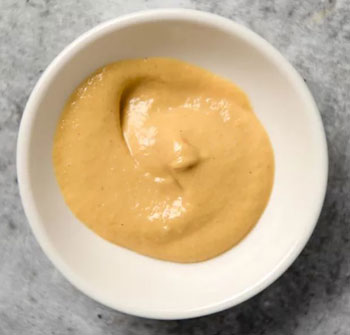
German MustardGerman Mustard: The Germans don’t have any mustard they refer to in particular as “German mustard”, in the way that the British do have and refer to an “English” mustard. Germany loves its mustard, to the point that it defies classification. You can't judge a mustard merely by the "German" label, because mustards from this country can range from spicy to sweet and coarse to fine. Some German mustards also involve extra ingredients, like horseradish, to enhance their flavor.
Most German mustards are coarsely-ground, sweet and mild, though there are some smooth ones as well as hot ones. If people say “German-style” mustard, they probably mean the sweet, coarsely-ground ones, though they will be in for a surprise when they go to Germany and get a sausage served with a very hot mustard! Brown mustard seed is preferred, though black is also used. German mustards are often flavoured with herbs.
The most prolific type of mustard in Germany is a mix of yellow and brown mustard seeds called Mittelscharf, or medium hot, for a distinctive spiciness that's a step up from a Dijon. If you head West to Düsseldorf, the mustard heats up, thanks to a pinch more brown mustard seeds, a less acidic spirit vinegar, and more spices. Travel south to Bavaria and the mustard gets sweeter with the addition of honey, brown sugar, or applesauce.
Weisswurstsenf is a pale mild mustard. Hot mustard is described as “scharfer Senf.”
Bavarian style mustards are sweet and dark, and often have brown sugar in them.
Düsseldorf mustards are somewhat like Dijon Mustard, but tend to be somewhat more pungent than Dijon, being made with vinegar instead of verjuice, and darker. Dusseldorf Mustards won’t be as sweet as Bavarian mustards; instead, they will have a bit of a sweet and sour taste. Düsseldorf had Germany’s first mustard factory in 1726, and is still a centre of mustard production.
English Mustard
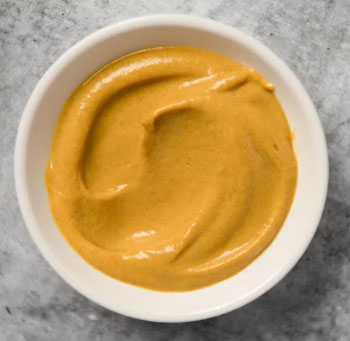
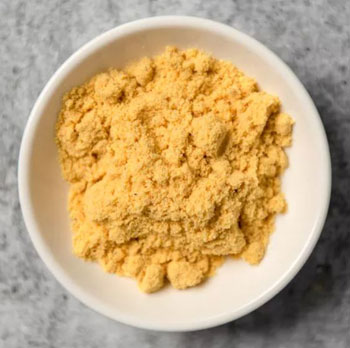
English Mustard (powdered form)English Mustard: English mustard is just one variety of hot mustard. Most commonly seen under the Colman's brand, English mustard is a mix of yellow and brown mustard seeds. It forgoes the vinegar to unleash as much heat as possible (an acid is added to stabilize jarred English mustards), but since it folds in the more subdued yellow seeds, it's not quite as hot as a Chinese hot mustard.
The most famous brand, Colman’s, is sold only as a powder in North America, but in the UK you can also buy Colman’s as a prepared mustard in a jar.
English mustard is best bought in powdered form and mixed with cold water about 15 minutes prior to use, to unleash its full flavor and heat. You simply add cold water to the mustard powder and mix up as you need it. Mix to a thick paste. Let stand between 10 and 30 minutes for the flavour to develop. Make only as much as you plan to use up in a few hours, because after that the flavour starts to weaken. Cider or beer can be used in place of the water.
American Mustards
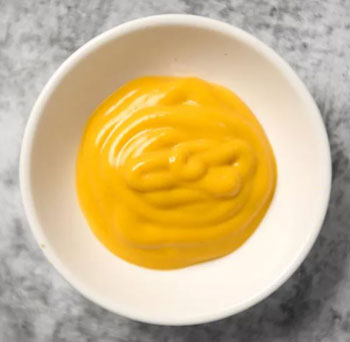
Yellow MustardYellow Mustard: American mustard is the most commonly used mustard in the United States and Canada, where it is sometimes referred to simply as "mustard". Also called ballpark mustard or yellow mustard due to its bright color, this mildest-flavored mustard is popular at ball parks as a favored condiment for hot dogs. It is also commonly used on sandwiches, such as ham sandwiches, pretzels and hamburgers,
It is made with white mustard seeds mixed with salt, spices and vinegar, usually with turmeric added to enhance the bright color. This style was first manufactured in 1904 by George T. French as "Cream Salad Mustard," and has become the standard for yellow mustard in America. Yellow mustard has a crisp, tart-and-tangy flavor that won’t be clearing anyone’s sinuses with spice.
The yellow type of American mustard, first made by the R.T. French company in 1904, was introduced that year at the World’s Fair in St Louis. From 1912 to 1973 it was made in Rochester, New York. Since then, it has been made in Springfield, Missouri.
Along with its use on various sandwiches, yellow mustard is a key ingredient in many potato salads, barbecue sauces, and salad dressings. Yellow mustard can be rubbed on barbecue meat prior to applying a dry rub, to form a crust, called bark, on the meat.
Recipe for South Carolina Mustard Barbecue Sauce
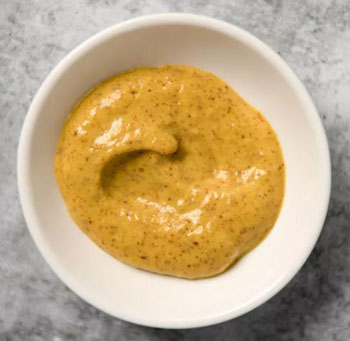
Spicy Brown/Deli-style MustardSpicy Brown/Deli-style Mustard: Spicy brown or "deli style" mustard is also commonly used in the United States. The seeds are coarsely ground, giving it a speckled brownish-yellow appearance. In general, it is spicier than yellow mustard. Spicy brown or "deli-style" or Indian mustard is used in the cuisine of India.
Spicy brown mustards typically use a slightly coarser grind than yellow or Dijon, and many bottled brands combine brown seeds, yellow seeds, and spices like ginger, nutmeg, or cinnamon. Spicy brown mustards have a deeply complex, hot, earthy flavor profile that’s favorited by many delis, New York City hot dog carts, and sandwich stands alike. Why? Because it’s made to stand up against rich, salty meats like pastrami, corned beef, and sausage.
Creole Mustard: Creole mustard is a condiment found most commonly in the Southeastern region of the United States, specifically Louisiana. A staple in New Orleans-style cuisine, which is a blend of Spanish, French, African and German influences. The mustard is traditionally made with brown mustard seeds which have been marinated in vinegar, often white wine vinegar, horseradish and assorted spices before being packed or ground. It owes its grainy appearance to the use of whole mustard seeds instead of ground mustard seeds.
The condiment is similar to the French Dijon mustard but it is made with vinegar instead of white wine, and is spicier and coarser due to its method of preparation.
Creole mustard is a versatile condiment featured on po' boy sandwiches and used in sauces, dressings and dips for everything from vegetables to salads to pretzels and chips. It can be used to create a marinade for meats, and can be incorporated into seafood dishes, such as crab cakes, battered seafood or served as a glaze or dipping sauce, as well. It is also the key ingredient found in New Orleans-style or Creole-style remoulade sauce.
Chinese Mustard
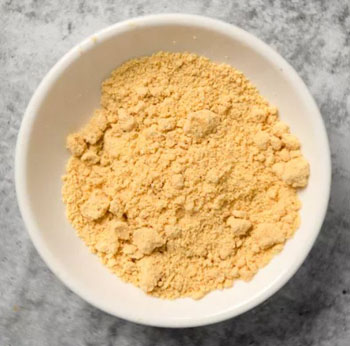
Hot Chinese Mustard (powdered form)Chinese Hot Mustard: Normally served as a dipping sauce with Chinese foods. Super hot. Like, clear-your-sinuses hot, but in the best way possible. A little bit of this on your egg roll is highly recommended. Made from mustard powder and water or wine mixed to a paste. There's nothing fancy about it, making it easy to prepare at home. Be sure to let homemade Chinese mustard rest about 15 minutes for flavor and heat level to develop fully, but no longer as it rapidly loses both within about an hour.
Recipe for Hot Chinese Mustard
Whole Grain Mustard
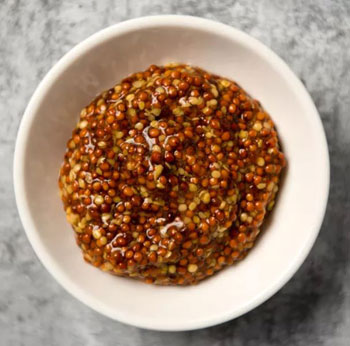
Whole Grain MustardWhole Grain Mustard: Whole grain mustard is simply a mustard that has been ground just enough to to form a paste, but not so much that it fully breaks down all the mustard seeds, creating a thick, coarse texture. Whole grain mustard is not beholden to any formula per se, but most that you pull off the shelf are of Dijon influence, or a variation on that. The use of wine instead of vinegar, and brown and black seeds instead of yellow, makes many whole grain mustards pack a punch.
The extra texture and bite of a whole grain mustard make them a great choice for cheese plates or ham sandwiches. It also works well in dressings, giving an otherwise smooth sauce a bit of texture.
Other Mustards
Indian Mustards: Varieties of mustard that include Madras, a fairly hot curry sauce, or Indian curry powder.
Sweet Mustard: These are mustards sweetened with honey, syrup, or sugar, and can begin with a base of hot or mild mustard seeds depending on personal tastes. Sweetness is usually achieved by adding honey; an American “honey mustard” can be a 1:1 ratio of mustard to honey. A Bavarian sweet mustard, however, uses only sugar and water: no acid, no honey. Italians put fruit preserves in their mustard.
Honey Mustard: Honey mustard, as the name suggests, is a blend of mustard and honey, usually 1:1. It is most often used as a topping for sandwiches and as a dip for chicken strips, french fries, onion rings, and other finger foods. It can also be combined with vinegar and/or olive oil to make a salad dressing. The most basic honey mustard is a mixture of equal amounts of honey and mustard; however, most varieties include other ingredients to modify the flavor and texture. Combinations of English mustard with honey or demerara sugar are popularly used in British cuisine to coat grilled lamb cutlets or pork chops. Peppers and spices are sometimes added to give honey mustard a distinct spicy taste.
Recipe Honey Mustard Vinaigrette
Recipe for Honey Mustard Sauce at end of Chicken Strips with 3 Sauces (Chicken Fingers) recipe
Beer & Spirit Mustards: Beer mustard is said to have been born in the Midwestern United States around the 20th century. As its name implies, this mustard uses beer as the liquid base in place of, or sometimes in addition to, vinegar. Having less acidity, beer mustard usually delivers heat in a big way, which can end up masking the flavor of the beer when mellow brews are used. Fuller flavored beers, on the other hand, like porters, dark ales, and stouts, can impart their character on the mustard and create complexity beyond what you'd find in a standard vinegar-based mustard.
Similar to beer mustard, spirits can be added into the mix, although this is typically done in addition to vinegar instead of in place of it. Since they're stronger than beer, spirits can quickly add depth and character to a mustard. Whiskeys and bourbons are popular choices for spirit-based mustards, since their distinct flavors pair well with the pungency of mustard seeds. Beer and spirit mustards can be subbed in most mustard situations, but they are best when used as dip rather than slathered on sandwiches or in dressings, in order to best taste the entire range of flavors that the beer or spirit has added to the mustard.
Hot Mustards: Variations of hot mustards include chipotle pepper, habanero pepper, horseradish, and jalapeño mustards. However, in general, "hot mustards" do not refer to mustards with chili peppers added. Instead, the term usually refers to the mustards that have been prepared in such a way to bring out the natural piquancy created by the myrosinase and two sulfur compounds, myrosin and sinigrin, that are naturally present in mustard seeds. Hot Chinese Mustard and English Mustard (see above) are two types of hot mustards.
When mustard seeds are crushed and mixed with cold water, these compounds break down to form a volatile oil that vaporizes to produce the "hot" sensation one experiences when consuming hot mustards. Usually, additives like flour are used by manufacturers to tone down this natural spicy/pungent flavor to produce the milder mustards popularly consumed. However, certain brands and manufacturers strive for mustards that produce a pungent and sharp flavor by using the more pungent black or brown mustard seeds rather than the white mustard seeds used to make mild mustards.
The heat of mustard also dissipates with time and if the mustard is exposed to heat. That is why hot mustard manufacturers often use cold water and/or add an acidic agent to preserve the heat of the mustard. Hot mustard can also be made from dried mustard powder. In its powder form, the chemicals responsible for mustard's pungent flavor do not evaporate or disappear and can, thus, be stored for much longer periods of time.
Flavored Mustard: The addition of various individual herbs, spices, vegetables, and fruits result in such mustards as horseradish, chili, lemon, raspberry and even blueberry flavored mustards. There are literally hundreds to choose from and make, limited only by your imagination.
Horseradish Mustard: Horseradish mustard contains horseradish as well as mustard. The horseradish adds a sour flavor plus additional heat. In general, horseradish mustard is available as either mild or hotter than English mustard.
Fruit mustards: Fruit and mustard have been combined since the Lombard creation of mostarda di frutta in the 14th century. Large chunks of fruit preserved in a sweet, hot mustard syrup were served with meat and game, and were said to be a favorite of the Dukes of Milan. Variations of fruit mustards include apple mustard, apricot-ginger mustard, berry mustard, cranberry mustard, lemon mustard, orange and honey mustard, and pineapple and honey mustard.
