Corned Beef and Cabbage (aka New England Boiled Dinner)
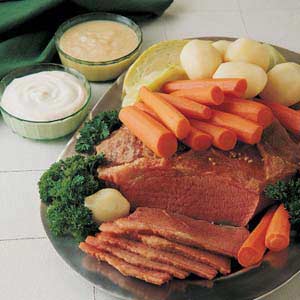
In North America corned beef dishes are associated with traditional Irish cuisine. In the U.S. and Canada, consumption of corned beef is often associated with Saint Patrick's Day.
However there is considerable debate about the association of corned beef with Ireland. Mark Kurlansky in his book Salt states that the Irish produced a salted beef around the Middle Ages that was the "forerunner of what today is known as Irish corned beef" and in the seventeenth century the English named the Irish salted beef, corned beef.
Although the curing of beef was practiced locally in many cultures, the industrial production of corned beef started in the English Industrial Revolution. Irish corned beef was used and traded extensively from the 17th century to the mid 19th century for English civilian consumption and as provisions for the British naval fleets and North American armies due to its non-perishable nature. The product was also traded to the French for use in Caribbean sugar plantations as sustenance for the colonist, the slave labor, and for control of the slave population.
Despite being a major producer of beef, most Irish during this time did not regularly consume the meat product in either fresh or salted form. This was due in large part to its prohibitive cost in Ireland, the fact that the beef cattle were owned by the British colonisers and not by the Irish, and that most if not all of the corned beef was exported.
Some say it was not until the wave of 18th century Irish immigration to the United States that much of the ethnic Irish first began to consume corned beef dishes seen today. The popularity of corned beef over bacon to the immigrated Irish was likely due to corned beef in their native land being considered a luxury product, while it was cheaply and readily available in America. In Ireland today, the serving of corned beef is geared toward tourist consumption and most Irish in Ireland do not identify the ingredient as native cuisine.
This recipe suggests serving the corned beef with Horseradish-Mustard Sauce (Dijon mustard with seeds, maple syrup or honey, and horseradish), which is excellent, but other sauces that would also be good are Horseradish Cream or Mustard Sauce, both of which are made with sour cream.
Note: pickling spice can be used in place of the peppercorns, allspice, and bay leaf.
1 corned-beef brisket (about 4 1/2 pounds), trimmed of excess
fat
20 whole black peppercorns
5 whole allspice
5 garlic cloves, unpeeled
2 bay leaves
4 pounds all-purpose potatoes, peeled and each cut into quarters
1 pound carrots, peeled
1 pound parsnips, peeled (optional)
1 medium head green cabbage (about 3 pounds), cut into 8 wedges,
with core attached
Parsley for garnish
Horseradish-Mustard Sauce, for serving
- In 8-quart Dutch oven or saucepot, place brisket, peppercorns, allspice, garlic, bay leaves, and enough water to cover; heat to boiling over high heat. Reduce heat to low; cover and simmer 50 minutes per pound or until the meat is tender. A fork will pierce the meat easily.
- Add quartered potatoes, whole carrots, and parsnips to the Dutch oven during the last 30 minutes of cooking, cover and simmer vegetables to desired tenderness. Remove meat and root vegetables, cover and keep warm.
- Add cabbage to liquid in Dutch oven, cover and simmer 5 minutes or until cabbage is tender. Alternatively, steam the cabbage over some of the corned beef broth until tender, 10 - 12 minutes. This keeps the cabbage from getting too soft and overcooked.
- Meanwhile, prepare Horseradish-Mustard Sauce: In small bowl, with fork, mix mustard, maple syrup, and horseradish until smooth; set sauce aside.
- Drain meat and vegetables. Thinly slice meat against the grain and serve with vegetables and horseradish-mustard sauce. Garnish with chopped parsley. Goes well with Irish Soda Bread or a rye or pumpernickel bread.
Also see Leftover Ideas
