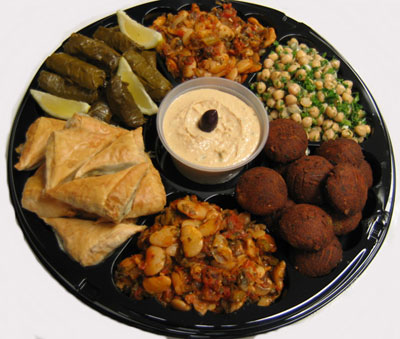
From top, clockwise: Fasolia (Greek bean recipe with tomatoes),
chick pea salad, falafel (deep fried chickpea balls), fasolia,
spanakopitta (spinach pies), dolmathes (stuffed grape leaves),
and hummus (bowl in center).
The Greek Meze Table
In Greek: μεζέ, plural μεζέδες (mezethes, pronounced meh-ZEH-thes)
Definition: A word with its roots in antiquity, the word and usage came to Greece from Turkey. A meze is not a meal course like an appetizer (although meze dishes can be served as appetizers), but rather a dish, hot or cold, spicy or savory, often salty, that is served, alone or with other mezethes, as a separate eating experience.
Translated literally, the word meze (meh-ZEH) means a taste or a bite. It is used to describe small plates of savory snacks that are served as a compliment to drinks. There are many different types of mezethes (meh-ZEH-thes) and the menu will vary according to locale.
The purpose of the meze is two-fold: to complement and enhance the taste of the drink (wines, ouzo, raki, etc.), and to provide the backdrop for a social gathering.
Unlike appetizers (orektika in Greek) which are intended to whet the appetite for the meal to come, it is common for groups of family and friends to gather or go out for mezethes, share several of these delightful dishes, a drink, conversation, and laughter. The little plates are shared by everyone at the table, which not only provides a wonderful variety of flavor and texture sensations, but also creates the kind of happy, convivial (perhaps noisy) atmosphere for which Greeks are well known.
The meze table is a traditional gathering place - warm, inviting, and always casual. It is an atmosphere where the plates are communal, the conversation is spirited, and the pace is leisurely. This style of entertaining encourages people to come and join the party. Tables are pushed together to accommodate newcomers and more plates and drinks are ordered.
Ouzo and Meze - Perfect Partners
The perfect partner to the Greek meze is the anise-flavored aperitif known as ouzo (OO-zoh). It opens up the appetite or orexi (oh-RE-ksi) and blends well with many different flavors. Traditionally, ouzo bars or ouzeries (oo-zeh-REE-es) will offer a long list of mezethes to go along with the drink.
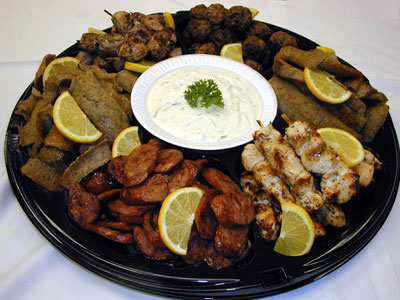
Sliced yero (gyro), loukaniko sausage slices, kefte meatballs, chicken
and/or pork souvlaki (skewers) served with tzatziki dip and pitta bread.
What's on the Table?
A typical meze table will contain a mixture of hot and cold snacks. You could start with a small plate of crisp sliced cucumber and some olives. Add some small chunks of Feta cheese or another great table cheese like kasseri (kah-SEH-ree), and tomato wedges drizzled with olive oil and sprinkled with dried oregano and sea salt. A dip or spread like the delicious carp roe spread called taramosalata (tah-rah-moh-sah-LAH-tah) with pita bread triangles for dipping is also a great addition.
Meze offerings can be simple or elaborate. In seaside villages, you will find small plates of grilled octopus or fried smelts called marithes (mah-REE-thes). In other parts of Greece, small meatballs or keftedakia (keh-fte-THA-kya) are served along with some fried potatoes drizzled with lemon, or quartered pita bread rounds and tzatziki sauce. Savory phyllo triangles filled with cheese called tiropites (tee-ROH-pee-tes) are also served as well as a skillet-fried cheese dish known as saganaki (sah-gah-NAH-kee).
Many villages are known for making their own sausages that are seasoned with orange peel and flavored with fennel seed. The sausages are grilled and then sliced and served with lemon. Another great meze to serve, if you can plan ahead, are rice-stuffed grape leaves called dolmathakia (dol-mah-THA-kya). These small packages of rice flavored with lemon, dill, and pine nuts can be made vegetarian-style called yialantzi (yah-lan-TSEE) or with ground beef or lamb.
When putting together your next gathering, remember, the meze table is not about the courses and seating, it more about simply being together to enjoy the parea (pah-REH-ah) or company.
Pita Bread
Homemade Pita Bread, toasted
Pita ChipsRiganatha - Grilled Bread with Feta and Tomatoes
This is a version of Greek Bruschetta and an easy recipe for a quick appetizer or accompaniment to drinks.
Olives & Nuts
Pistachio Nuts
Kalamata Olives
Zesty Lemon Olives
Cheeses
Feta cheese
Sliced Feta w/ Oregano & Olive Oil
Marinated Feta
Tirokafteri (feta cheese spread w/ roasted hot peppers)Grilled Halloumi Cheese
Halloumi or hellim is a Cypriot semi-hard, unripened brined cheese made from a mixture of goat's and sheep's milk, and sometimes also cow's milk. It has a high melting point and so can easily be fried or grilled.
How to Grill Halloumi Cheese
Saganaki: Pan-Seared Greek Cheese - Flour dredged kefalotyri or kasseri cheese fried in olive oil.
Saganaki.
Phyllo Pies (Pites):
Tiropites - Phyllo Cheese Triangles
Delicious packets of crisp phyllo pastry wrapped around a savory cheese filling. Greek tiropites (tee-ROH-pee-tes) or cheese triangles are a delicious and finger-friendly appetizer for your next gathering.
Tiropites.Spanakopita - Spinach and Feta Cheese Pita
Flaky phyllo sheets are layered with a savory spinach and feta cheese filling. Spanakopita can be made as a "pie" or pita, or as individual phyllo triangles.
Spanakopita.
Dips and Spreads for Pita Bread and Fresh Vegetables
Tsatziki - Cool Cucumber Yogurt Dip
Cool and creamy, this tangy cucumber yogurt dip flavored with garlic is perfect served with pita bread triangles for dipping. It's also great for dipping raw veggies.
Tsatziki
Hummus - Chickpeas
A pureed garbanzo bean, or chickpea, dip served with toasted pita bread and an assortment of fresh vegetables.
Hummus
Roasted Pepper Hummus.Baba Ghanoush - Eggplant
A roasted eggplant dip or spread that is delicious served with toasted pita bread or vegetables.
Baba Ghanoush.Feta Cheese Spreads (Tirokafteri, Htipiti, Kopanisti)
Tirokafteri translates as ‘Spicy Cheese’ from tiri for cheese and kafteri for spicy, while kopanisti is used to describe something that has been beaten.
Either of these three could obviously be referred to as tirokafteri since they are each spicy cheese dips in their own right, and in-fact each are ‘beaten,’ however it seems that the specific additions to the base of feta and olive oil are what make the separate names so common.
- Tirokafteri (roasted hot peppers and yogurt)
- Htipiti (roasted sweet red peppers)
- Kopanisti Dip (pepperoncinis)
Kopanisti is a spicy cheese with a pungent, intense peppery taste, reminiscent of Roquefort and Munster-Géromé but also distinct, since it has no particular shape and is spreadable, with a characteristic tan and, sometimes, a pale pink color that darkens as it matures. The spicy taste comes from the fungal growth that occurs with this cheese. In the Greek language, the word kopanisti refers to something that has been beaten, which is a technique of preparation of this cheese. The most famous of these cheeses is Kopanisti of Mykonos island. Kopanisti Spread mimics the flavor of the cheese. Since milk is scarce throughout the Cyclades, production of Kopanisti cheese is small and considered a luxury in Mykonos. It is not a well-known cheese, even in other areas of Greece.
Tirokafteri (teer-oh-kaaf-tehr-ee) - Feta cheese spread
A spicy feta spread made with roasted spicy peppers, feta cheese and yogurt.
Tirokafteri
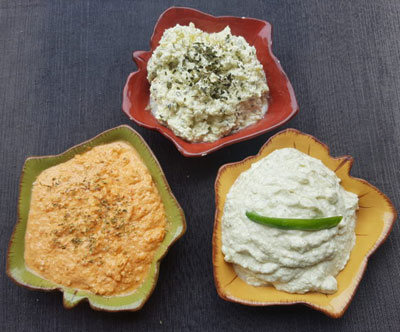
Htipiti (ktee-pee-tee) - Feta and Roasted Red Pepper spread
A quick and easy dip that combines the sweetness of red peppers and the salty tang of Feta cheese. Great for dipping toasted pita bread triangles.
Htipiti
Kopanisti Spread (cop-en-es-tee)
A spread made from Feta cheese and pepperoncinis to mimic the flavors of the distinctive Kopanisti cheese.
Kopanisti Spread
Kebabs and Meatballs
Keftethes - Greek Meatballs
Savory Greek meatballs that are served as an appetizer or meze (meh-ZEH). The traditional recipe calls for frying the meatballs, but baked versions are also quite good.
KeftethesSouvlakia Arnisia
Souvlakia, chunks of meat on little skewers, are a favorite in Greece, and is a tasty meze to accompany spirits or pre-dinner beverages. This recipe calls for three days of marinating, and cooking on the fourth day, so plan ahead. The end result is worth it.
Beef Souvlakia
Chicken Souvlakia
Pork Souvlaki
Vegetarian
Falafel
Falafel is a traditional Arab food (not Greek) with its origins in Egypt. It is a fried ball or patty made from spiced fava beans and/or chickpeas. These fried vegetarian fritters are often served along with hummus and tahini sauce (known as a “falafel plate”) as a mezze.
FalafelKolokithokeftethes - Zucchini Fritters
These zucchini fritters called kolokithokeftethes (koh-loh-kee-thoh-kef-TEH-thes) are a tasty addition to any meze table. A vegetarian alternative to meatballs, these are delicious topped with fresh tzatziki.Dolmathakia - Stuffed Grape Leaves
Tender grape leaves are used to wrap little parcels stuffed with rice, pine nuts, and fresh herbs. Greek Dolmathakia (dol-mah-THAH-keea) can be served cold or at room temperature and make a great vegetarian addition to your holiday table.
Dolmades.
