Tyropatinam (a Roman custard)
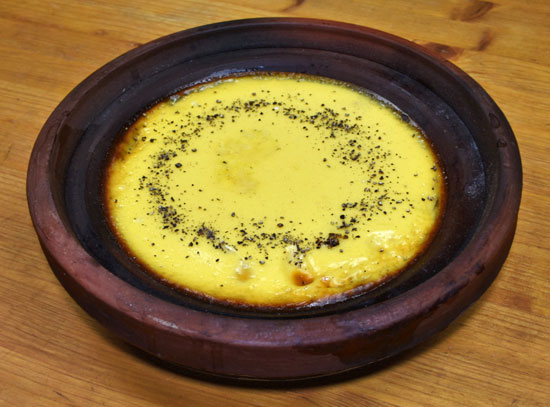
In the 7th book of De Re Coquinaria, we find an interesting series of recipes for dulcia domestica, which we translate as homemade sweets. These dishes are quick and easy to prepare, and probably, they are called domestica in contrast with other kinds of sweets made by a specialized baker called pistor dulciarius by Martial, a role completely different from the cocus’, the Roman cook.
Among the sweets made by the pistores, we find placentae, crustuli, coptoplacentae (mentioned by Petronius and Vespa in his poem Iudicium coci et pistoris iudice Vulcano), mustacia - grape-must bread (which, interestingly, are used as ingredients in some recipes of De Re Coquinaria, meaning that they were bought already prepared and not directly made by the cook), scriblitae and others. Sweets like libum or savillum must be considered kinds of placentae, being listed in this way by Chrysippus of Tyana in a passage reported in Athenaeus’ Deipnosophists. Essentially, most recipes reported in Cato’s De Agri Cultura are for sweets prepared by pistores, whereas the ones in De Re Coquinaria were made by cooks.
There are various kinds of dulcia domestica, for instance stuffed dates, fritters, ova spongia, generally characterized by the use of a few, selected ingredients such as honey, eggs, milk, pepper, olive oil, or nuts. In Cato’s sweets, instead, we also find poppy seeds and lard, but one of the most significant ingredients is cheese, very rare in De Re Coquinaria and common in ancient Greek cuisine.
The name of this recipe, tyropatina is composed of a Greek term, tyros, which means cheese, and patina, which refers to a cooking pan or a plate and to the dish made in that patina. Many patinae that we find in De Re Coquinaria are frittatas, but in this case, by mixing the ingredients in the way recommended by the author, we obtain a pudding. The text, indeed, suggests using three eggs for a hemina (about a quarter of a liter) of milk and five eggs for a sextarium (about half a liter), adapting the quantities to the size of our cooking pan. The reason why it is called tyropatina despite the absence of cheese is probably that the author writes to mix honey to the milk quasi ad lactantia, which means that the outcome must be similar to the one we obtain when we prepare cheese.
The ancient definition of “custard” is “egg cheese,” probably because of the similarity in appearance and texture.
Original text
Accipies lac, quod adversus patinam aestimabis, temperabis lac cum melle quasi ad lactantia, ova quinque ad sextarium mittis, si ad heminam, ova tria. In lacte dissolvis ita ut unum corpus facias, in Cumana colas et igni lento coques. Cum duxerit ad se, piper aspargis et inferes.
Apicius (7.11.7)In this recipe, two volumes are given for milk: the Sextarius and the Hemina, which are measures of capacity of the ancient Rome.
Translation
Take milk, the quantity you deem fit for your pan. Mix the milk with honey as to make cheese, five eggs for one sextarium of milk or three for one hemina. Mix them well with the milk. Pour in a pan and cook at low heat. When it thickens, dust with pepper and serve.
Translation as proposed in its first English rendering by Joseph Dommers Vehling,
"Estimate the amount of milk necessary for this dish and sweeten it with honey to taste; to a pint (sextarius) of fluid take 5 eggs; for half a pint (ad heminam) dissolve 3 eggs in milk and beat well to incorporate thoroughly, strain through a colander into an earthen dish and cook on a slow fire [in hot water bath in oven]. When congealed sprinkle with pepper and serve".
Tyropatinam Recipe
The quantity of honey is up to your taste: we used two tablespoons for three eggs. To obtain a homogeneous texture, we recommend passing the mixture of milk, eggs, and honey through a sieve before cooking it. We used black pepper, but white pepper is a good alternative.
Use either a baking pan (as intended by the author) or small molds to make one-serving puddings to your taste.
¼ liter milk
3 eggs
2 tablespoons honey
black pepper
Mix the honey and milk, then add three beaten eggs. Stir until you obtain a homogeneous mixture. Pour it in a pan, slightly oiled, and cook it at low heat for about 20 minutes. Serve with ground pepper on top.
