French Bistro Food
Bistro description from http://www.easy-french-food.com/french-bistro-recipes.html
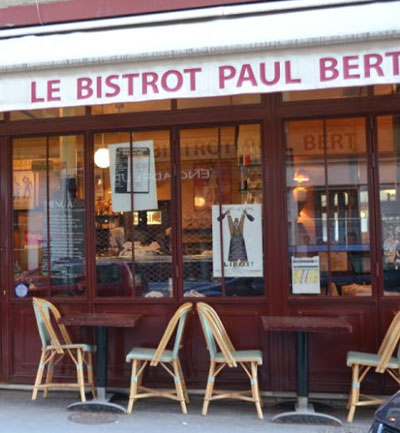
Le Bistrot Paul Bert, Paris, France
A French bistro (bistrot) is traditionally a small, casual restaurant, catering to people who live or work in the neighborhood. It is the place to get a hearty and inexpensive meal without a lot of formality. This hearty, unpretentious restaurant fare is all about humble ingredients prepared simply, using easy techniques like roasting, braising, and simmering — and plenty of butter and cream, which probably explains why this comfort cuisine is so popular. Many restaurants now offer bistro cuisine without the heavier ingredients, such as butter and cream, that are traditionally used in French cooking. A key feature in the preparation of bistro cuisine is the use of fresh, local produce.
To start to get a sense of bistro food, think about the beauty of a bowl of French onion soup, covered with crusty baguette slices and topped with lots of shredded Gruyere cheese, served with coarse sea salt and fresh ground black pepper; the simplicity of chicken roasted with bay leaves, thyme, and lemon tucked under the skin, gently flavoring from the inside out; the comfort of potatoes baked with Reblochon cheese; and the simplicity and elegance of a pear and almond tart. French home-style cooking.
Many bistro cuisine menus include assorted chilled salads, omelets, and traditional French sandwiches. Croque-monsieur is a traditional sandwich made with ham and Gruyère cheese. Some bistros are chef-owned, where specials might include rabbit pot pie or roast chicken with spaetzle. A typical charcuterie plate might include pate, duck prosciutto, and cornichons. Other bistro cuisine dishes include goat cheese and herb spread, salad Nicoise with tuna and quail eggs, grilled steak with béarnaise sauce and sautéed potatoes, and apple tart with crème anglaise or muffins flavored with lemon and almond. Soup and pasta dishes might accompany a tart or quiche of the day on a bistro cuisine menu. Classic dishes include mushroom-filled omelets or mussels in cream sauce or white wine.
Bistro Appetizers
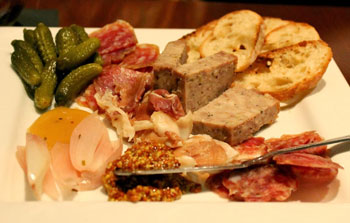
Charcuterie Plate
A typical charcuterie plate might include pate, duck prosciutto, and cornichons.
The plate in the picture includes salami, proscuitto, duck pate, pickled shallots, mustard, truffle honey, whole seed mustard, cornichons and grilled French bread.
Country-Style Pâté
Chicken Liver Pâté
Chicken Pistachio Terrine
Duck Rillettes w/ Green Peppercorns
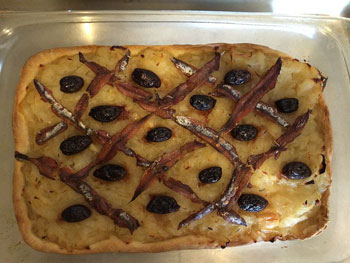
Pissaladière
Pissaladière is a dish which originated from Nice in Southern France. The dough is usually a bread dough thicker than that of the classic Italian pizza, and the traditional topping consists of caramelised (almost pureed) onions, olives, garlic and anchovies (either whole or in the form of pissalat, a type of anchovy paste). Now served as an appetizer, it was traditionally cooked and sold early each morning around Nice.
The etymology of the word seems to be from the Latin piscis, which in turn became pissalat, (via peis salat, "salted fish" in Ligurian and Niçard).
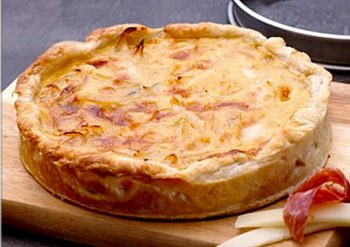
This fabulous pie features onions that have been cooked until they are caramelized. The slightly sweet taste makes a great entree or possibly a main dish for a lighter meal.
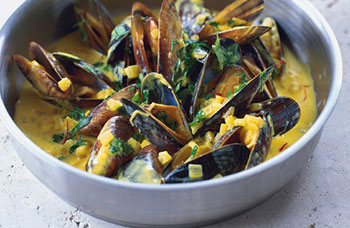
Mussels cooked in cream with fennel bulb and curry powder.
Recipe for Mouclade of Mussels
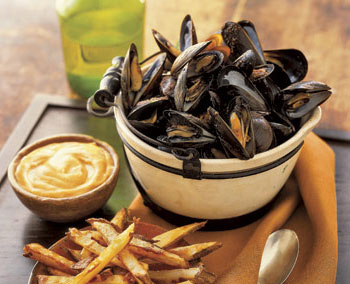
Steamed mussels with white wine sauce, garlic and shallots. Moules marinières are traditionally served with pommes frites (French fries), which can be dipped into the delicious sauce of the mussels. In the picture, mayonnaise has been mixed with some of the mussel cooking liquid to create a dipping sauce.
Bistro Soups and Salads
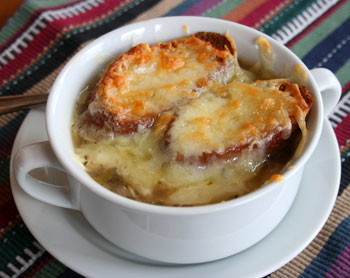
Soupe à l'oignon is frequently offered on bistro menus. A delicious recipe featuring caramelized onions.
Recipe for French Onion Soup
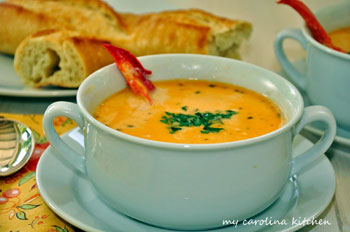
Lobster Bisque
A bisque is a rich, creamy soup made with shellfish — specifically, bisque is traditionally made with the puréed meat of crustaceans, including lobster, crab, shrimp or crayfish. When making bisque, the shells are roasted and then simmered to produce a highly flavorful stock which is then thickened. The meat itself is added to the bisque near the end of cooking. Bisque can be thickened with rice, which is the traditional method. Modern bisques are often thickened with roux.
Recipes:
Lobster Bisque
Maine Lobster Stew - similar to Lobster Bisque, easy and very good
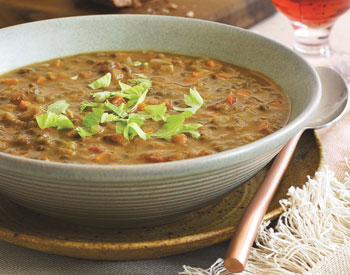
Often called simply Peit Salé aux Lentilles after the meaty French salt pork that is included along with juicy Toulous sausage. Petit salé is the name the French give to cured pork belly that is boiled rather than fried, and that is lightly salted (hence 'petit salé', or 'a little salted'). Serve it with white beans, mushy peas or lentils or, in summer, puréed fresh peas or broad beans. It's a classic of French bourgeois cooking, old-fashioned food of the best kind.
This soup has many layers of flavor: the smokiness of the pork, earthiness of the lentils, mild sweetness of the onions and carrots, and acidity of the tomatoes. It's made with French green lentils (lentilles du Puy), which hold their shape when cooked and thicken the soup
Faith's Lentil Soup - similar to traditional French Lentil, but with the addition of spinach and tiny pasta
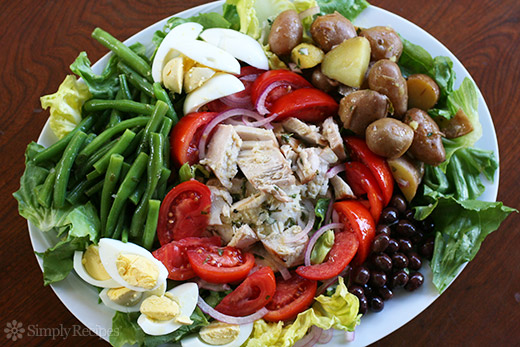
Salad Niçoise (French pronunciation: [niˈswaz]) is a composed salad (meaning the ingredients are arranged separately on the plate instead of being tossed together) of tomatoes, tuna, hard-boiled eggs, Niçoise olives, and anchovies, dressed with a vinaigrette. It is served variously on a plate, platter, or in a bowl, with or without a bed of lettuce. The tuna may be cooked or canned. The salad may include raw red peppers, shallots, and artichoke hearts, but according to many sources, excludes cooked vegetables, except for green beans and potatoes. It is difficult to pinpoint one particular recipe as authentic as the origin of the salad is obscure and remains disputed.
The Americans got to taste the Nicoise salad only after it was introduced by the famous chef Julia Child. The ingredients of the most popular salad recipe are the one prepared by Julia Child. It is particularly colorful with the green beans, ripe red tomatoes and black olives providing the right kind of contrasting colors to the dish. Boiled potatoes, egg slices and shallots are added on as well with a freshly opened can of tuna fortifying the salad dish. Chunks of anchovies in oil add to the flavor and the dish is often served for lunch or the main meal.
Respecting the traditional Provencal gastronomy, the seasoning is made with lemon, olive oil, basil and garlic, but it can also include parsley or mustard to get a French vinaigrette dressing. Regional variations have been created, replacing the beans by fava beans or artichokes, and adding tuna, potatoes, boiled eggs and crispy lettuce.
A fancy restarant version might use seared tuna and quail eggs.
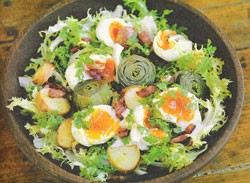
Paris Capital Salad
Frisée, chervil, sliced potatoes, artichoke hearts and lardons salad with soft-boiled egg.
Recipe for Paris Capital Salad
Bistro Egg Dishes
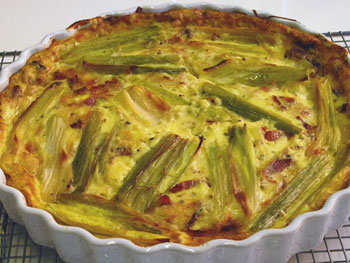
Leek and Gruyère Quiche
Although quiche is now a classic dish of French cuisine, quiche actually originated in Germany, in the medieval kingdom of Lothringen, under German rule, and which the French later renamed Lorraine. The word 'quiche' is from the German 'Kuchen', meaning cake.
However, custards in pastry were known in English cuisine at least as early as the 14th century. Recipes for custards baked in pastry containing meat, fish and fruit are referred to Crustardes of flessh and Crustade in the 14th-century The Forme of Cury and in 15th-century cookbooks as well.
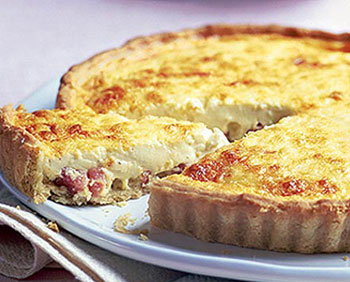
Quiche Lorraine
The original 'quiche Lorraine' was an open pie with a filling consisting of an egg and cream custard with smoked bacon. It was only later that cheese was added to the quiche Lorraine. Add onions and you have quiche Alsacienne. The bottom crust was originally made from bread dough, but that has long since evolved into a short-crust or puff pastry crust.
Recipe for Quiche Lorraine
Bistro Sandwiches
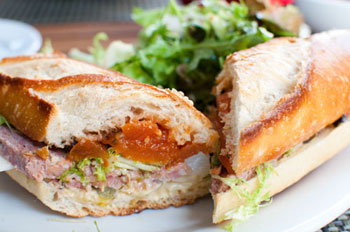
Pate Sandwich
Pate Sandwich with tomato, Dijon mustard and cornichons on a French baguette.
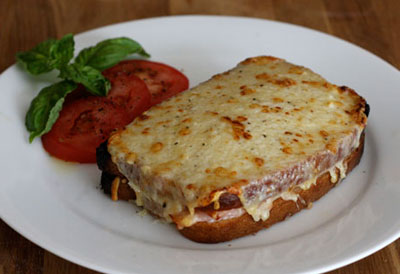
A traditional sandwich made with ham and Gruyère cheese, layered with béchamel sauce and topped with more Gruyère, grated. Served hot from the oven with cheese bubbling and golden-brown, melting over the sides of the bread, and with a rich, creamy center.
Recipe for Croque Monsieur
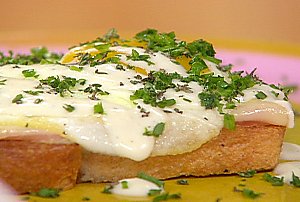
A Croque Monsieur served with a fried egg on top. Sometimes served open-face.
Recipe for Croque Madame
Bistro Stews and Meat & Fish Dishes
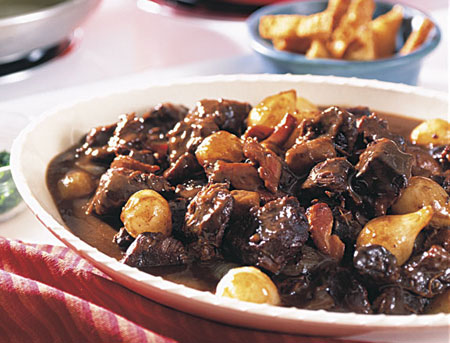
A hearty beef stew made with red wine, onions, carrots, and mushrooms.
Recipe for Beef Bourguignon
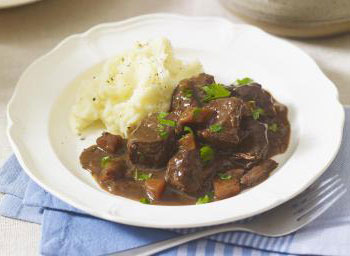
Beef Carbonnade
This classic Belgian beef stew is known for its sweet-sour combination of caramelized onions and beer. Any dark Belgian-style ale would be a good choice here. As with most stews, the dish will taste even better a day or two after it's made.
It hails from the region of French Flanders. If you travel north of Paris, you will come upon a very flat plain, which begins in northern France and stretches the entire length of Belgium and on on up into Holland. It is known as Flanders, and the people who live here speak Flemish.
Unlike French beef stews made with wine, carbonnade relies on the deep, dark flavor of Belgian abbey-style beer. But what really gives carbonnade its distinctive character is the addition of brown sugar and a fillip of cider vinegar, a sweet-sour combination that plays beautifully against the caramelized onions and rich beer.
Recipe for Mom's Beer Stew - similar, but may be of German origin
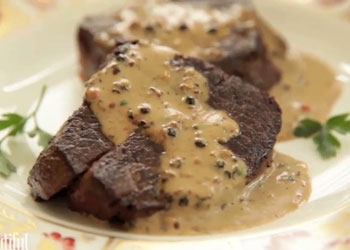
Steak au Poivre
Steak au poivre or pepper steak is a French dish that consists of a steak, traditionally a filet mignon, coated with loosely cracked peppercorns and then seared at a high temperature to cook the outside quickly and form the crust while leaving the interior rare to medium rare. The peppercorns form a crust on the steak when cooked and provide a pungent but complementary counterpoint to the rich flavor of the high-quality beef.
Steak au poivre is often served with pan peppercorn sauce consisting of reduced cognac, heavy cream, and the fond from the bottom of the pan, often including other ingredients such as butter, shallots, and/or Dijon mustard.
Commonly served with Pommes Frites.
Recipe for Steak au Poivre
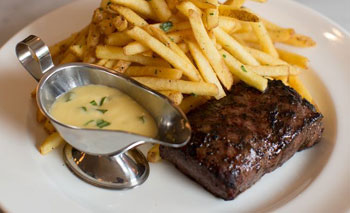
Grilled Steak with Béarnaise sauce and sautéed potatoes
The origin of béarnaise sauce -- a great French classic -- is the province of Bearn in southwest France bordering on the Pyrenees Mountains. This is French Basque country where gastronomy is taken seriously. The sauce is said to date from the time of Henry IV in the late sixteenth century. Serve with asparagus, a mixed green salad or a potato side dish. Consider serving this dish with eggs and toasted English muffins or rustic bread for a hearty brunch or breakfast.
Recipe for Béarnaise sauce
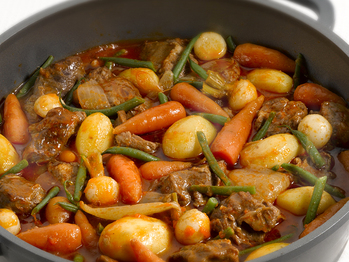
Navarin is a French lamb stew made with root vegetables. Although mutton, or adult sheep meat, can be added instead of lamb, most recipes for this stew call for the more tender lamb pieces. Potatoes and onions are almost always included, as well as a variety of other vegetables and spices. The term navarin is said to come from the French word for turnips: navet.
In addition to potatoes and onions, parsnips, carrots, garlic, and turnips may be included. A green vegetable is also generally added, usually green beans or peas, though celery may be added as well. Although tomatoes are sometimes found in navarin, tomato paste is almost always included. Mustard, often Dijon, is frequently added.
Thyme and bay leaves are the usual spices included. These are normally fresh and are bundled together in a garni, or a small bouquet, so they can be easily extracted from the stew before serving. Navarin's liquid base is usually chicken or beef stock.
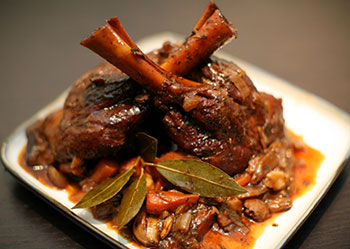
from Provence
Lamb shanks are among the chewier pieces of meat. Like brisket, flank, shoulder, and other tough cuts of meat, shanks react best to long periods of moist heat. Basically, the sort of heat that is created in a large covered pot, i.e., the braising pan.
Braising is perfect for these tougher cuts of meat because of what happens to the meat as it braises. Tougher cuts of meat like shanks are tough because they have a lot more connective tissue. This connective tissue is dry and chewy. As it cooks, though, it is slowly converted from collagen to gelatin, the compound that makes homemade stock and, hopefully, this braising liquid velvety, thick, rich, and delicious. So, as the meat cooks, the fibrous connective tissue becomes tender, and even though the actual meat is dried out from over cooking, it is offset by this new-found delicate tenderness.
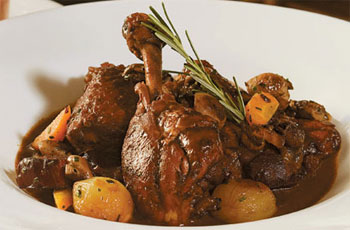
Coq au Vin
Coq au vin is a French dish of chicken braised with wine, lardons, mushrooms, and optionally garlic. Julia Child adds small white onions to her recipe. Although the word "coq" in French means "rooster" or "cock", and tough birds with lots of connective tissue benefit from braising, most coq au vin recipes call for capon or chicken.
Various legends trace coq au vin to ancient Gaul and Julius Caesar, but the recipe was not documented until the early 20th century; it is generally accepted that it existed as a rustic dish long before that. A somewhat similar recipe, poulet au vin blanc, appeared in an 1864 cookbook.
Recipe for Julia Child's Coq Au Vin
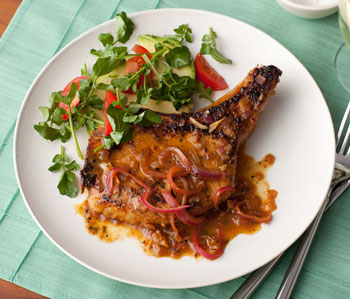
The mustard mellows as it cooks and when blended with cream, the effect is delicious.
Recipe for Mustard Pork Chops
Veal Normande
Veal Cutlets in a sauce of Calvados, cream, and caramelised apples
The apple orchards of Normandy have produced some of Europe's finest apples for over 1,000 years. Also noted for its dairy products, it's little wonder that this creamy dish with an earthy, creamy sauce has become one of the region's finest. Traditionally, Calvados, the exquisite apple brandy produced there is used, but in the U.S. we suggest using Laird's Applejack, which is an excellent substitute for the rather pricey Calvados. Serve this with Wild Rice or as they would in France, with sauteed, home-fried potatoes.
Recipe for Veal Normande (Veau à la Normande)
Trout Amandine
Fillets of Sole Meunière
Bistro Casseroles & Side Dishes
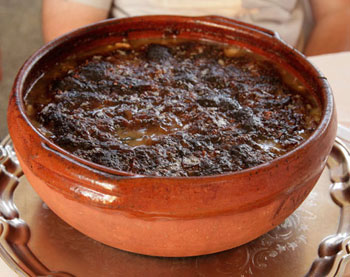
Cassoulet
Cassoulet (pronounced cass-ooh-lay) is a classic French dish from the Languedoc region of southwestern France which is traditionally cooked in an earthenware pot known as a cassole (hence the name). In essence cassoulet is a slowly cooked casserole of beans and meats, such as sausage and duck confit. It is classic hearty peasant food which matches the earthy wines of the region perfectly.
Recipe for Cassoulet
Cabbage Casserole (Gratin au Chou)This is great recipe for a satisfying vegetarian meal featuring shredded cabbage, rice, tomatoes and cheese.
Recipe for Cabbage Casserole (Gratin au Chou)
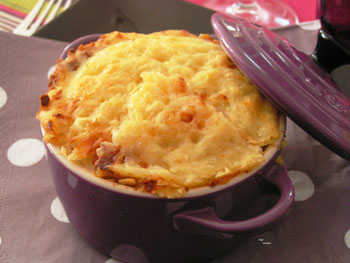
In haute cuisine, hachis Parmentier is a dish made with mashed, baked potato, combined with diced meat and sauce lyonnaise and served in the potato shells.
In general use, a simpler version is the French equivalent of cottage or shepherd's pie, which can be found on bistro menus,. The dish is named after Antoine-Augustin Parmentier, a French pharmacist, nutritionist, and inventor who, in the late 18th century, was instrumental in the promotion of the potato as an edible crop. The word "hachis" means a dish in which the ingredients are chopped or minced, from the same root as the English word "hatchet".
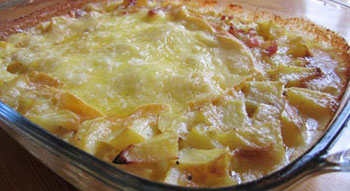
Tartiflette is a hearty layered potato dish featuring Reblochon cheese from the Savoy region of France.
Recipe for Tartiflette
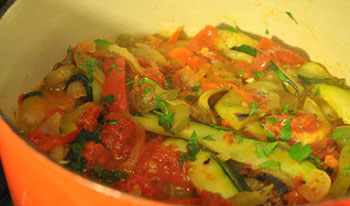
Ratatouille (rat-ə-TOO-ee) is a traditional French Provençal stewed vegetable dish, originating in Nice. The full name of the dish is ratatouille niçoise. Ratatouille is usually served as a side dish, but may also be served as a meal on its own (accompanied by pasta, rice or bread). Tomatoes are a key ingredient, with garlic, onions, zucchini, eggplant, bell peppers, marjoram and basil, or bay leaf and thyme, or a mix of green herbs like herbes de Provence.
Some cooks, including Julia Child, insist on a layering approach to make Ratatouille, where the eggplant and the zucchini are sautéed separately, while the tomatoes, onion, garlic and bell peppers are made into a sauce. The ratatouille is then layered in a casserole – eggplant, zucchini, tomato/pepper mixture – then baked in an oven.
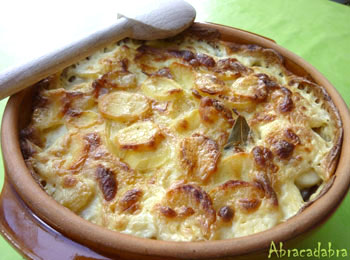
You may have heard this satisfying dish called by its French name, Gratin Dauphinois. Gratin dauphinois is a traditional regional French dish based on potatoes and crème fraîche, from the historic Dauphiné region in south-east France. The dish is typically made with thinly sliced and layered potatoes and cream, cooked in a buttered dish rubbed with garlic. Recipes given by many authorities including Auguste Escoffier and Austin de Croze call for the addition of cheese and eggs to the dish. A good Gratin Dauphinois should be crispy on the top and bottom and have a rich, cheesy taste, even without any cheese added. Herbs are also sometimes added.
The etymology of gratin is from the French language in which the word gratter meaning "to scrape" or "to grate" as of the "scrapings" of bread or cheese, and gratiné, from the transitive verb form of the word for crust or skin.
Recipe for French Scalloped Potatoes
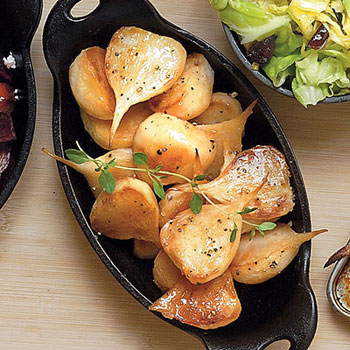
Glazed Turnips
French bistro recipes often feature more humble foods as in this surprisingly tasty side dish of glazed turnips. A popular French technique for vegetables is to cook them with a small amount of fat and a sprinkling of sugar and salt. The result is the barest hint of glaze on the vegetables.
Bistro Desserts
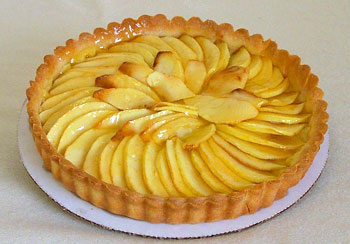
Crème Anglaise (English-style cream) is a light pouring custard used as a dessert cream or sauce. It is a mix of sugar, egg yolks and hot milk, often flavoured with vanilla.
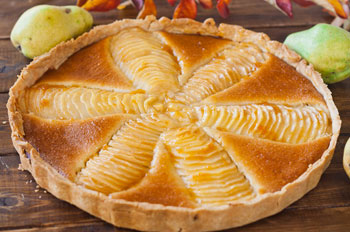

Cream puffs filled with whipped cream or vanilla ice cream and drizzled with chocolate sauce
Recipe for Profiteroles au Chocolat (Cream Puffs with Ice Cream)
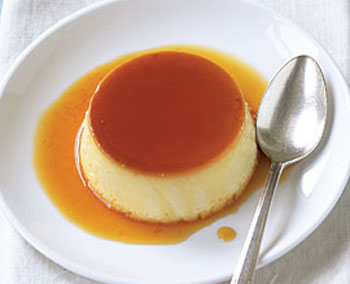
Crème Caramel is a custard dessert with a layer of soft caramel on top, as opposed to crème brûlée, which is pudding with a hard caramel top.
Crème caramel is a variant of plain custard (crème) where sugar syrup cooked to caramel stage is poured into the mold before adding the custard base. It is usually cooked in a bain-marie on a stove top or in the oven in a water bath. It is turned and served with the caramel sauce on top.
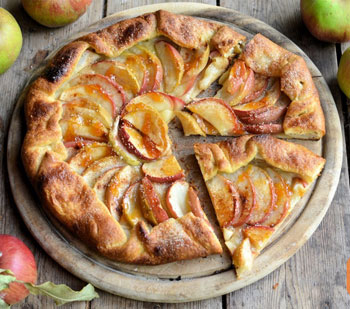
Galette is a term used in French cuisine to designate various types of flat round or freeform crusty cakes or pies.
