Types of Italian Breads
When a great Italian meal is mentioned, one of the first things that comes to mind is Italian bread. These breads are always served with a meal in Italy, whether it is a fine meal or a simple lunch at a café.
Since the beginning of time in Italy, the Italians have sought the wheat and other various ingredients to make their bread to use as not only a primary staple, but a delicacy as well. There are literally hundreds of various breads that come out of Italy, finding the loaf that appeals to you most is a very daunting task. It is important to note that depending on what you intend on dining on, will dictate what type of bread you should be eating as well.
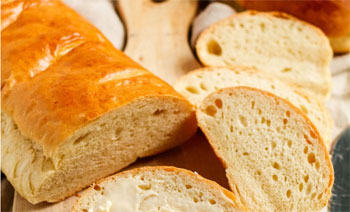
Classic Italian Bread
The Italians typically have their own rigid standards when it comes to what a good family-sized loaf of bread should be. The basic criteria for an Italian bread is that it is unsweetened, yeast-leavened, and baked into a thick oblong loaf with tapered ends. Italian breads are usually served as a supplement to pasta or other main courses. A side dish, if you will. Italians eat bread to absorb the flavors of olive oils or the thick sauces in a rich meal.
When you think of classic Italian bread, a soft, fluffy loaf probably floats to mind. It has the perfect texture for a salami sandwich, but it also tastes fantastic when slathered with butter and enjoyed as a snack. While French bread is long, thin and crusty, the typical Italian loaf is 1-2’ long and 6-10” thick with a fairly thin crust. This is due to the yeast in the bread being allowed to rise to its fullest extent, generally over the course of several hours. The inside of a well-made Italian bread is moist and porous—ideal for absorbing toppings such as olive oil and tomatoes. However, Italian breads of this sort do not store well for extended periods of time.
Italian bread arrived in the United States with the immigrants that arrived in the 18th century. Requiring little more than salt, flour, water and yeast for preparation, it gained popularity quickly. Many variations with seasonal or regional ingredients have been added to Italian bread recipes since it first arrived. Today it is commonly used for deli sandwiches, on the side of soup, and with olive oil for soaking as an appetizer.
Recipe for Italian Bread
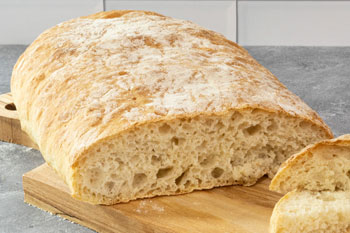
Ciabatta
Pronounced cha-BOT-a, ah Italian wheat loaf with a porous crumb, made with yeast. It is baked in a variety of styles, depending on the region—the crispness of the crust and the density of the crumb will vary. Some are seasoned with marjoram or rosemary, some made with olive oil or milk. The unusual elongated, flat shape gives it its name—ciabatta means carpet slipper—and it can be recognized by the dusting of flour on the top. It is a popular sandwich bread, used for panini. Some artisan bakers make the "carpet slipper" in a ring form.
The name Ciabatta, meaning ‘slipper’, is a rectangular shaped loaf with a distinct flavour, tender crumb structure, open texture and good crust.
The origins of Ciabatta are believed to be in the area of the river Po delta, just south of Venice. In this region wheat has long been a major trading product and it was the Ciabatta, invented by Venetian bakers that caused type 1 wheat flour to gain widespread popularity. The type 1 wheat flour used in Ciabatta is a lower protein flour than those normally used in bread making. This allows for greater absorption of water, which gives the bread a light brown crispy crust and a soft white centre with a typical honeycomb structure.
Today Ciabatta is made either with water or milk and is available in various forms and sizes, making it suitable for serving with a meal or as a snack.
Recipe for Ciabatta
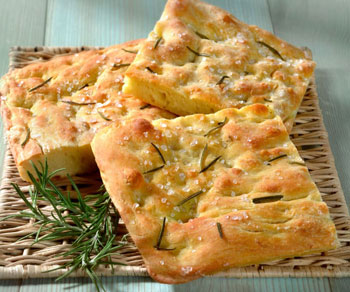
Focaccia
The softness and enhanced taste from the flavour of olive oil is what makes Focaccia bread not just an Italian speciality, but one that is enjoyed around the world. One of the most recognized breads to adorn oils and garlic is the Focaccia bread. This tiny pizza like loaf was one of the first breads to be eaten in Italy, and in fact many other cultures traveled great numbers of miles to actually try this bread that they heard great things about.
The origins of Focaccia are believed to lie in the city of Genova and nearby coast, with the first references dating back to 2nd Century BC. The strictly principled Cato described ‘libum’, a sacrificial Focaccia, which was made by mixing 1lb. of flour, 2 lbs. of soft fresh cheese and an egg. The resulting dough was flattened and baked in the oven under a terracotta lid. Focaccia gradually became a morning refreshment, then an afternoon snack and eventually something to enjoy at anytime.
Today Focaccia is crispy yet soft, brittle and shiny with oil, and is often enhanced by the Focaccia maker with complementary ingredient to add interest and texture.
Recipe for Focaccia
Recipe for Sourdough Focaccia
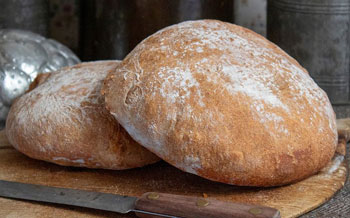
Pan Bigio (Italian Country Bread)
Italian country bread is a type of traditional Italian bread which is known for its very chewy, coarse texture. The texture of this bread makes it ideal for dipping and sandwich making, because it holds moisture very well without becoming soggy. Italian country bread is also referred to as pan bigio, or "gray bread," in a reference to the unrefined flour which is traditionally used to make it. Many Italian bakeries offer this bread, and it can also be made at home.
By tradition, pan bigio is made from minimally processed flour. Typically, this means that the flour is whole wheat, lending a very rich, nutty flavor to the finished bread. Some bakers prefer to use a mixture of lightly processed white flour and whole wheat flour so that the bread is not as heavy, creating a bread with a flecked texture and a slightly more open crumb. Cornmeal may be added as well to make the texture even more coarse.
Italian country bread is made with a biga, a traditional Italian starter which pulls wild yeasts from the air. Breads made with bigas tend to be chewier and they have more complex, savory flavors as a result of the slow fermentation of the wild yeasts involved. Making pan bigio with dried yeast is not recommended, as the bread will tend to have a bland, lackluster flavor which will not be very enjoyable, and the texture will be fundamentally different.
A good loaf of Italian country bread has a thick, chewy crust, a medium crumb, and a chewy texture. The dough includes salt, water, and oil in addition to the flours discussed above, and it is traditionally very wet and sticky. This can make the dough very hard to handle, but it produces a chewier bread; bakers tend to flour their hands heavily when working with the dough to prevent it from sticking.
The flavor of Italian country bread is savory with an earthy note; the strength of the earthy note varies, depending on how much whole wheat flour is used. In the event that the bread is made in a traditional brick oven, the bread will have a thick bottom crust and a slightly smoky flavor; the conditions of a brick oven can be mimicked with a bread cloche and a baking stone, for those who do not have access to a brick oven.
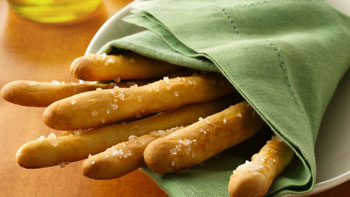
Bread Sticks (grissini)
The bread stick originated in Italy. Bread strips were baked so they became very dry and crisp and could be stored for longer periods. Though it may have originated as a digestif or a snack, today it is often served as part of an antipasto. The archetypical bread sticks, grissini, are plain, slender and long, although there are numerous other shapes, lengths and flavors of bread sticks to be found, including thick, knobby bread sticks the length of bakers’ arms (think of a French ficelle, but a dry bread stick, not a soft bread).
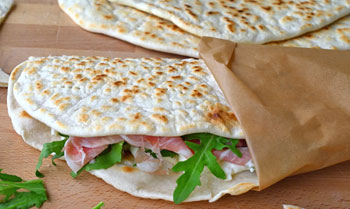
Piadina alla Romagnola
Roman flatbread. Circular and flat like a tortilla, it is used to sandwich foods (grilled sausages and onions, for example), as a snack spread with cheese and with spreads, among other uses.
Piadina [pjaˈdiːna] is typically prepared in the Romagna historical region (Forlì, Cesena, Ravenna and Rimini). It is usually made with white flour, lard or olive oil, salt and water. The dough was traditionally cooked on a terracotta dish (called teggia in Romagnol), although nowadays flat pans or electric griddles are commonly used.
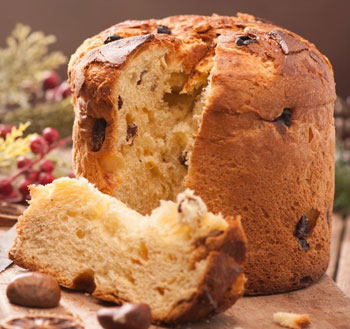
Panettone
Some might argue that panettone is a cake, but it’s actually a traditional Italian Christmas bread. This dry, sweet bread is enriched with sugar, studded with raisins and nuts and puffs up like a souffle when it cooks, towering as high as a double-decker cake.
Recipe for Panettone
