25 Cocktails Everyone Should Know
Whiskey, Bourbon
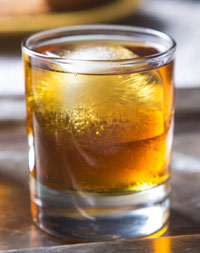
The origins of the word "cocktail" are lost to history, but the first definition we find in print comes from an 1806 newspaper from upstate New York. A cocktail is called "a stimulating liquor, composed of spirits of any kind, sugar, water, and bitters..." Over the course of the 19th century, the cocktail picked up a number of additions and refinements: liqueurs, fortified wines, various bits of garnish, et cetera.
Eventually, some drinkers came to prefer a simpler form of cocktail, the type their grandfathers might have enjoyed, and so they'd ask the bartender to make them an "old-fashioned" cocktail, of booze, sugar muddled into water to form a syrup, and bitters. Accent with a lemon peel. Bartenders said Woodford Reserve, Maker's Mark and Buffalo Trace made the best Old Fashioneds. This drink is still #1 on many lists.
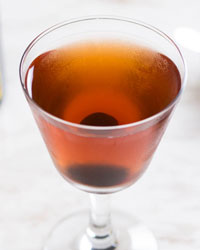
One of the finest and oldest cocktails. The Manhattan was the first cocktail that used vermouth as a modifier. It seems the Manhattan will always be subservient to the king of classics, the Old Fashioned, on lists of the most popular drinks. Rye whiskey or Bourbon, sweet vermouth, Angostura or Peychaud’s Bitters, Maraschino cherry syrup or liqueur, Maraschino cherry garnish.
If there were no other reason to include this drink on this list, I'd still put the Manhattan here for the best reason of all: your grandmother drinks them. Now, I'm pretty flexible on the Old Fashioned and the Martini. Mix an Old Fashion with mezcal or rhum agricole and I'll shake your hand; shake up an ultra-dry martini, and I'll drink it happily. But please, no weak bourbons in my Manhattan. Give me a bourbon with a muscular rye-heavy mashbill, or just give me rye to begin with. Mix it sweet or mix it perfect (half sweet vermouth, half dry), but don't bother with a dry Manhattan, seriously.
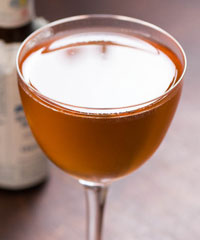
Brooklyn
One of the Manhattan derivatives, Brooklyn will always play little borough to the might of the first born. Instead of sweet vermouth, it requires dry, with the sugary fix coming from maraschino liqueur. Rye provides the pepper and Amer Picon, which is very hard to find in the United States, the bitter. You can use Ramazotti in place of Picon. After a period of near extinction, its revival has timed nicely with the renewal of its namesake borough, which is now arguably (though not emphatically) cooler than Manhattan. Rye or other whiskey, dry vermouth, maraschino liqueur, Amer Picon*, or a few dashes Angostura or orange bitters.
*Amer Picon is a bittersweet French aperitif with a unique orange flavor. The proprietary blend dates back to 1837 and was reformulated in the 1970's into a weaker form, reduced from 39% alc/volume to 21%. Along with orange, Amer Picon is made with quinine, cinchona, and genetian.
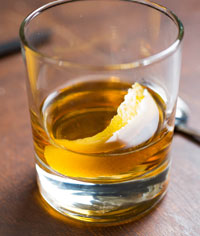
Sazerac
Now for a few New Orleans classics. We'll start with the Sazerac. Nothing beats sipping one while spinning around the Carousel Bar (it has a revolving bar at the center of the room) at the Hotel Monteleone, but making them at home certainly comes close. Purists use cognac as the principal spirit and so did bartenders in the 1850s, until phylloxera ravaged French vineyards and the American Civil War made the sourcing of cognac not the most important thing on Americans' minds. It was replaced by whiskey (rye whiskey, such as Sazerac Rye) and to this day some prefer the double booze hit to be propelled by the grain not the grape. Rimmed with absinthe, a hearty sniff tells you this is not a session beverage. More than half the bars we polled said the Sazerac was among their best sellers. Sugar, Peychaud's Bitters, water, rye whiskey (such as Sazerac Rye), anise-flavored liquor (Herbsaint, Pernod, pastis, or absinthe), and lemon peel.
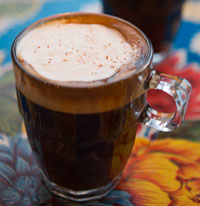
Regrettably, perhaps, we've gotten away from the breakfast/brunch cocktail. If anyone tells you that Irish Coffee is a sweet drink, scald them with your coffee. You only need a little sugar, your Irish, your coffee, and a dollop of lightly whipped cream atop.
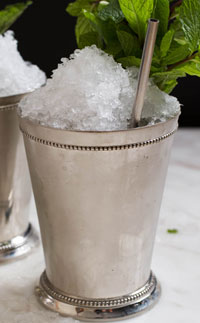
With a formula almost as old as the republic, the mint julep is a product of an era in which things were done much slower. Somewhat labor-intensive to properly make, a good mint julep can't be rushed, and cranking them out by the hundreds using prepared mixes and flavored syrups can only result in sadness. If you want the simplest of drinks to take hours, make the Mint Julep. It's mint, sugar, bourbon, and lots of crushed ice. At the Kentucky Derby 120,000 Mint Juleps are served each year to race-goers. Meanwhile, at The World's 50 Best Bars the Mint Julep is also running well, with about a fifth of bars attesting to its selling power. They like to use Woodford Reserve, Maker's Mark and Four Roses.
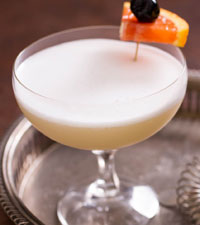
Another simple-to-make cocktail, the Whiskey Sour calls for bourbon or rye, lemon juice, and sugar. It ain't fancy, but that's a big part of its appeal. Because at the end of a long day--scratch that; long week--you don't always feel like challenging your palate, or even thinking about it very much. You just want a nice, easy drink, one that's as loyal and friendly as an old dog. Whiskey, fresh-squeezed lemon juice, sugar, and and optional egg white.
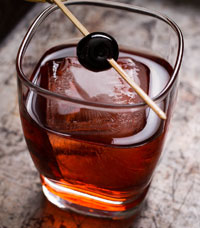
Boulevardier
Consider the Negroni: made with gin, Campari, and sweet vermouth. The Negroni is a cocktail at once sharp and smooth, lean and lush, brusquely bitter and slightly sweet. A cocktail, in other words, with the kind of bright, clean character perfectly suited for a summer day, but robust enough to hold its own at any time of the year.
This isn't a Negroni. It is, however, the Negroni's long-lost autumnal cousin. First noted in print in 1927 in a slender volume called Barflies and Cocktails, and forgotten almost ever since, the Boulevardier takes the same Negroni formula--a good dose of gin brushed up with equal parts Campari and sweet vermouth--and gives it a twist by substituting whiskey for the gin. A simple substitution? Hardly. The bittersweet interplay between Campari and vermouth remains, but the whiskey changes the storyline. Where the Negroni is crisp and lean, the Boulevardier is rich and intriguing. There's a small difference in the preparation, but the result is absolutely stunning.
Campari is an alcoholic liqueur, considered an apéritif, obtained from the infusion of herbs and fruit in alcohol and water. It is a bitter characterised by its dark red colour and has a spicy, bitter taste.
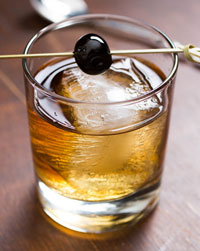
Vieux Carré
Another drink popular in New Orleans. Speaking of the Hotel Monteleone, the Vieux Carré (named using the French term for what's now known as the French Quarter) originated at the hotel in 1938. It's as rich and decadent now as it was back then, and still remarkably evocative of the Big Easy. The cocktail blends rye, cognac, Benedictine, and vermouth, along with both Peychaud's and Angostura bitters.
Brandy
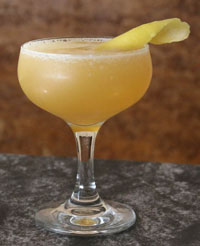
An unlikely cousin to the Margarita, the Sidecar falls into the same Sour family as the tequila classic. In fact, once you know how to make a Margarita by heart, you pretty much know how to make a Sidecar: they're basically the same drink. One uses tequila and lime, whereas the other calls for cognac and lemon, but the template is spirit, orange liqueur, and citrus. What always amazes me, though, is how the character of the base spirit changes the feel of the drink. A Margarita feels like summer to me, drinking al fresco on a bright, warm day. A Sidecar, though, because of the warmth and mellowness of cognac, feels like a drink to sip, if not by a fire, then definitely in a dark bar on a cool fall night. These drinks may have a common pedigree, but they're as individual as feuding sisters. This entrancing mixture of brandy, lemon juice and orange liqueur started making the rounds in the most fashionable watering holes in London and Paris during the 1920s.
This is a time when you want to break out a nice (but not outrageously old or expensive) VSOP cognac, a good Armagnac or an excellent California brandy such as Germain-Robin, and for the sweetener, pretty much only Cointreau has the right mixture of dryness and sweetness to make a Sidecar sing (and as for the lemon, just make sure it's fresh and tasty).
Pisco (Peruvian and Chilean brandy)
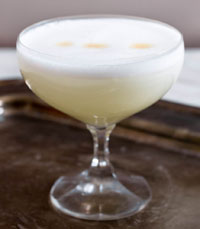
Pisco Sour
If there is agreement between Peruvians and Chileans on anything, it is that the Pisco Sour is the classic cocktail. Consensus will not be reached on the drink's preferred spirit though, the birthplace of which continues to rankle those on both sides of the border. This drink was an early explorer, finding its way to the dock of the San Francisco bay in the 1930s and to New York in the 1960s. The unaged grape brandy makes for a drink that has a character distinct from its sour cousins—it's lightly floral and fresh. The addition of an egg white makes the drink creamy and luscious. Pisco, fresh-squeezed lime juice, simple syrup, egg white, and Angostura or Amargo bitters.
Gin
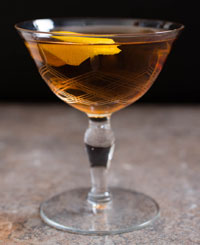
Martinez
Grandfather to the modern martini, the Martinez is a drink of gin (Old Tom, if you can; try Ransom or Hayman's), sweet vermouth, maraschino or curaçao, and bitters. It's a sweeter drink than the typical dry martini, but the flavor is complex and refreshing. Assembling the ingredients requires some outlay of funds, but if you're within spitting distance of a respectable craft-cocktail bar, you should be able to sample one there. The drink is important not just from a historical standpoint, but also as a glimpse of how diverse the world of cocktails can be.
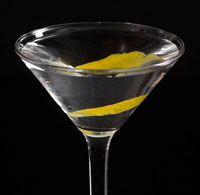
They say you can judge a bar by the way it makes a Dry Martini. This is an unfair test because everyone likes their Martini different. There are those who require a few meagre drops of vermouth, for some it's a ratio of 5:1 gin to vermouth and there are sensible souls who go with 2 or 3:1. The straight laced don't drink Dry Martinis. But, however served, this is a drink that put the roar into the 1920s and probably the manes on lions. It is the staple of any bar and requires a gin that can stand up to the scrutiny. At the W50BB they use Tanqueray, Plymouth and Beefeater most. Dry gin, dry vermouth, 1 dash orange bitters (optional but recommended).
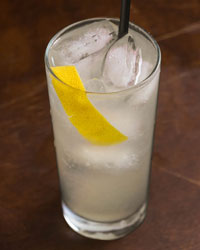
Tom Collins
Essentially alcoholic lemonade, the Tom Collins is probably the most refreshing drink around. Traditionalists reckon Old Tom gin is the one to use here, but most will hit the speed rail gins. Historically, that would have been Old Tom gin, hence the name, but these days London dry is common. Try it with Old Tom if you have it, though. Or sub in the spirit of your choice; just about anything will work in this formula.
The Old Tom version may be the original but this is a drink that has procreated – now the Collins family includes the Pedro Collins (rum), Pepito Collins (tequila), Colonel Collins (bourbon) and Captain Collins (Canadian whisky). Collinses, historically, are a class of cocktails calling for a spirit, simple syrup, lemon juice, and soda water. This drink is so refreshing and so easy to sip that I think anyone who likes to drink should be able to make one.
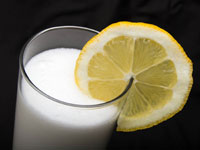
Ramos Gin Fizz
In the ranks of New Orleans-born coolers, the Ramos Fizz (aka Ramos Gin Fizz) is royalty. Created in 1888 by bar owner Henry C. Ramos, the fizz that bears his name takes the already appealing Silver Fizz—a mixture of gin, lemon, sugar and seltzer, with an egg white to add foam and body—and advances it several steps along the decadence line, adding cream, lime juice and a few drops of aromatic orange-flower water (no, not orange juice
Break out your blender for this one. The Ramos Gin Fizz is a complex drink, of gin (naturally), lemon and lime juices, simple syrup, orange flower water, cream, an egg white, and topped off with seltzer. Traditionally, it has the hell shaken out of it, first without ice, so that the ingredients emulsify, and then with ice, so it gets extremely cold and frothy. But Gary Regan, a smarter man than I am, insists that it's perfectly fine to use your blender for this one, so feel free, unless you're trying to tone up your arms.
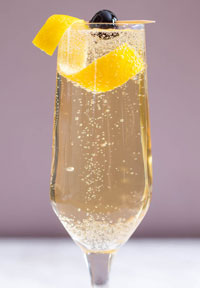
According to Ted Haigh (aka Dr. Cocktail), the French 75 is one of two cocktails named after the French 75-mm field gun, which was commonly used in World War I. "One barman in 1947," reports Haigh, "called it a Tom Collins with champagne instead of club soda. Vive la difference!" In the same way the British, not the French, were the first to make sparkling wine, they also might have been first to make the French 75. No matter, this drink was popularised in Paris in the '20s and most attribute its rise to Harry's American Bar. Today this London dry gin, lemon juice, sugar and champagne drink is still popular, not least among the world's top bars. In three bars we polled, it is the number one classic they serve.
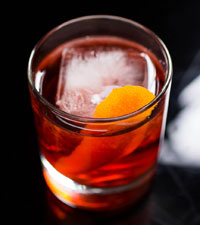
Negroni
The blend of bitter and sweet, the herbal complexity, the refreshing pleasure—you gotta be nuts not to like this. Like the Martini, the Negroni is a drink that's open to tinkering. Start with the classic 1:1:1 ratio and go from there. It's fun. Try blending vermouths, too. Equal parts gin, Campari, and sweet vermouth.
Campari is an alcoholic liqueur, considered an apéritif, obtained from the infusion of herbs and fruit in alcohol and water. It is a bitter characterised by its dark red colour and has a spicy, bitter taste.
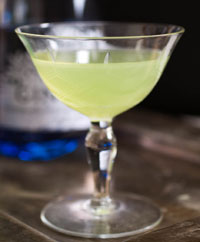
Last Word
What a story this drink has! If this were a story about a forgotten boxer, rediscovered years later by a fight aficionado, Clint Eastwood would have already directed the film by now. The drink arose in Detroit during Prohibition, but fell into neglect for decades until rediscovered by Murray Stenson in Seattle. The Last Word is a complex, herbaceous drink, and like the French 75, it's one that I think would make a gin lover out of almost anyone. Gin, fresh-squeezed lime juice, maraschino liqueur, and green Chartreuse.
Vodka
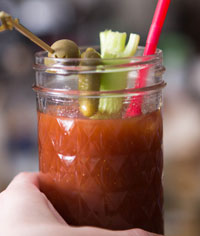
'For when it is too early to drink a Martini' should be this drink's slogan. Not that it needs one. This is a cocktail that is ubiquitously enjoyed at the world's best bars and probably on Mars, too. Somehow it ties a rope between last night's debauchery and today's penance. It can be drunk AM in front of grandma or PM in front of mates, but mostly only one is needed. It's a big drink with ingredients normally found on plates, not in glasses. It is also a classic that will never go out of fashion. Vodka, tomato juice, horseradish, Worcestershire sauce, Tabasco, celery salt, celery sticks, lime wedge for garnish.
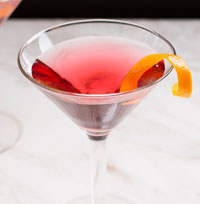
The Cosmopolitan is a cultural touchstone because once upon a time, Dale DeGroff got one into the hands of Madonna at the Rainbow Room and it became the drink to be seen with. Nevertheless, sours (like Sidecars, Margaritas, and Daiquiris) are fundamental cocktails, and the Cosmopolitan is, simply stated, the best Vodka Sour around. Citrus vodka, lime juice, triple sec, and cranberry juice.
Rum
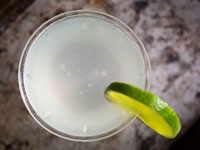
The daiquiri is the most ordered rum drink at The World's 50 Best Bars, yet practically nobody says it right. It's dy-key-ree, not dak-er-ree. In Cuba, they can say it, and there is no better place to empty the glass of this refreshing sour than under the Caribbean's warming sun. An old-school daiquiri is an exercise in purity, as beautiful in its unadorned simplicity as a well-made martini or Manhattan. Of course, "well made" is a big factor here, as well: to fully realize the daiquiri's inherent beauty, be sure to measure your ingredients; free-pouring, while easier and cooler-looking than eyeballing a measuring cup, frequently leaves you with an odd-tasting drink. Light rum, fresh-squeezed lime juice, 1 teaspoon sugar.
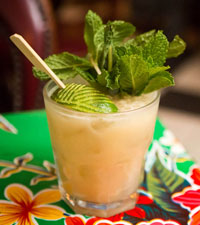
Spawned from the rum-soaked genius mind of "Trader Vic" Bergeron, the mai tai is one of the most regal refreshments in the exotic-drink universe. Originally made with 17-year-old Jamaican rum, imported French orgeat, Dutch curaçao and fresh-squeezed lime juice, the mai tai quickly became a phenomenon; it also quickly became perverted. Hordes of Trader Vic-wannabes took wild stabs at recreating Bergeron's long-secret recipe, and the result is what we all-too-often experience now: a sweet, murky drink filled with assorted fruit juices and syrups, with little resemblance to the original swoon-worthy concoction. Aged rum, freshly squeezed lime juice, orange curaçao, simple syrup, orgeat,* crushed ice, mint sprig for garnish.
*Orgeat is an almond-sugar syrup traditionally made from whole blanched almonds. The nut oil gives the syrup (and cocktails made with it) a richness that can't be duplicated with a cheap syrup made with almond flavoring and sugar. Try to find a high-quality brand, like the one from Small Hand Foods, or make your own.
Planter's Punch
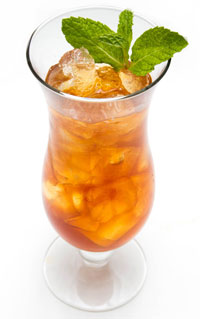
Punch-style drinks have been enjoying a recent renaissance. This one has connections with Planter’s Hotel in Charleston but the recipe is Jamaican. Founder of Myers’ rum, Fred Myers, printed the recipe for the Old Plantation Formula on the back of bottles. A beautiful, and necessary, drink for summer. Dark rum, lime and lemon, grenadine, and simple syrup. Yum. Hell, go crazy and get some umbrellas or fancy straws and be all festive and stuff. Dark Jamaican rum, simple syrup, fresh lime juice, Angostura bitters, mint sprig for garnish.
The Planter's Punch flowed out of the rum-rich Caribbean well over a century ago, and its origins date back centuries. Originally a simple combination of a full-flavored rum with lime juice, sugar, some form of spice and plenty of ice, the Planter's Punch morphed over the decades into elaborate concoctions containing pineapple juice, grenadine, several types of rum and so on, and the drink is the common ancestor of all those tiki drinks and punches that are once again in vogue.
Tequila
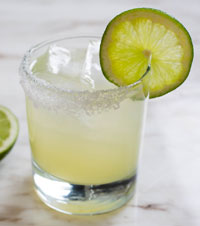
Ask a Mexican to make you a Margarita and they'll most likely make you a pizza. This is an all-American drink that has no kinship to the country which produces tequila, its key ingredient. Magaritas also involve fresh lime juice and triple sec, but many ingenious commercial expeditors have reduced this cocktail to a pre- mixed powder – though not yet ashes. At The World's 50 Best Bars freshly made Margaritas are the number one tequila cocktail. Here they like it to contain Ocho, Don Julio or Tapatio.
Applejack
Jack Rose
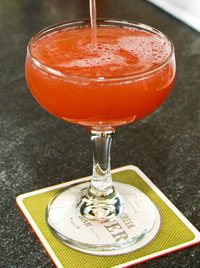
A deceptively simple looking recipe, the Jack Rose calls for applejack, lime juice, and grenadine. The way these flavors blend together is simply delicious. Make the grenadine yourself; it's easy and it's quick. (Although bottled pomegranate juice will do; no need to make ycour own juice.) Take the time and spend the money to track down Laird's Bonded Apple Brandy for this, too. It has a rich, fresh apple flavor that's much more satisfying than the blended applejack Laird's also sells. A potent mix of applejack, grenadine, and lemon juice flavored with a dash of Peychaud's bitters.
