Types of Cheesecake
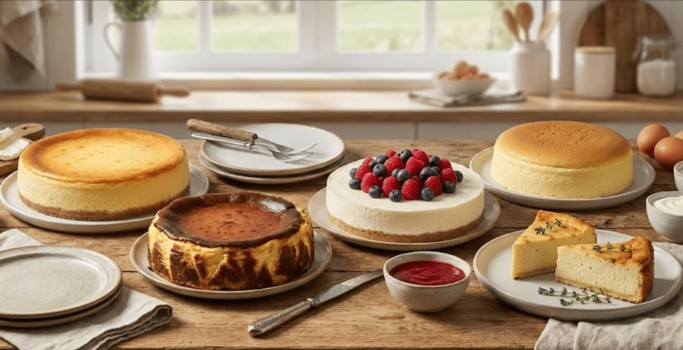
Cheesecakes are one of the most famous desserts that are made from cheese. They’re also made with eggs, sugar, vanilla extract, and heavy cream. Because they’re made from relatively simple ingredients, cheesecakes are really simple to customize. You can swirl different flavors into the cheesecake filling itself to alter the flavor. Or, you can top the baked cheesecake with sauce, berries, or whatever combinations you can dream up. In fact, the combinations are practically endless. There are hundreds of different types of cheesecakes out there, made with practically every flavor under the sun.
Different types of cheesecakes are also made from different types of cheeses, including mascarpone, ricotta, and cream cheese. Changing up the types of cheese slightly changes the flavor and consistency of the cheesecake. Plus, you can even make a cheesecake that requires no time at all in the oven by using a slightly different combination of cheeses.
Key Differences Between Cheesecakes:
New York-style cheesecake was the inspiration for other cheesecakes that later developed throughout the US, such as the Philadelphia-style, the Chicago-style, and the St. Louis-style cheesecake. But there are differences. New York-style cheesecake is dense, rich, and tangy, using sour cream or heavy cream. Philadelphia-style is lighter and smoother, omitting sour cream for a simpler, creamier taste. Chicago-style features a firm, caramelized exterior with a soft, fluffy center due to higher baking temperatures and more cream cheese. St. Louis-style typically includes a "gooey butter" layer atop a denser cheesecake base, often making it sweeter and providing a multi-textural experience.
- Cheese Type: Cream cheese is standard in the U.S., but ricotta (Italian), cottage cheese, or farmer's cheese can be used for different tang and texture.
- Texture Agents: Eggs provide structure in baked cakes, while whipped cream or egg whites create lighter, airy versions. Japanese cheesecake uses whipped egg whites for a lighter, airier texture.
- Flour is not a required ingredient and is omitted in some cheesecakes, such as in the New York-Style. Some recipes use it (or cornstarch) to bind ingredients, prevent cracking, or add density. Flour is often added if the recipe has extra liquid ingredients, while many bakers find it unnecessary for a creamy texture. Flour-free versions rely entirely on eggs as the binder to achieve a creamy, smooth texture.
- Crust: Ranging from graham cracker (classic) and cookie crumbs to shortbread or sponge cake. Adding toasted walnuts, hazelnuts, or almonds to the base provides an earthy aroma. Some cheesecakes have no crust.
- Stabilizers: No-bake cakes rely on refrigeration or gelatin, while baked cakes use eggs and heat to set.
Key Types of Cheesecake Differences:
- New York-Style: Extremely dense, rich, and smooth, using heavy cream or sour cream to achieve a sturdy texture. It is usually baked slowly and has a graham cracker crust.
- Chicago-Style: Firm on the outside but very fluffy and creamy on the inside, often using a shortbread crust.
- Italian-Style: Uses ricotta or mascarpone instead of cream cheese, resulting in a drier and slightly granular, less sweet, and lighter texture.
- Japanese Soufflé: Airy and bouncy, produced by folding whipped egg whites (meringue) into the batter.
- Basque-Style: Baked at high heat, producing a intentionally burnt top and a very creamy, almost molten center.
- Pennsylvania Dutch: Uses a tangy, low-moisture "pot cheese," often baked in a square pan with fruit baked into the bottom.
- No-Bake: Lacks eggs, often set with gelatin, resulting in a lighter, mousse-like texture that is not as sturdy as baked versions.
Toppings:
- Berries: raspberries, blueberries, or currants offer the necessary acidity to cleanse the palate, making them the preferred accompaniment for denser baked recipes.
- Citrus and exotic notes: a subtle lemon zest or a passion fruit topping can transform the experience, providing an aroma that awakens the notes of younger cheeses.
- Roasted seasonal fruit: caramelized figs or pears provide a warm and comforting counterpoint, ideal for enjoying during the winter months.
- Nuts, such as pistachios or toasted hazelnuts, provide a crunchy contrast.
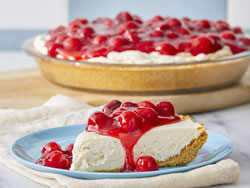
No-Bake Cheesecake
American. If you grew up in the Sixties, you will probably remember this dessert. While Julia Child may have been teaching the ways of French cooking, some women were looking for fast, easy, and delicious. This No Bake Cheesecake was the type of recipe found in women's magazines, community cookbooks, or passed from neighbor to neighbor. Mothers loved it because it could be whipped up in no time, it used common ingredients, and everyone, including children, loved it.
Most classic types of cheesecakes require hours in the oven, but not all styles do. No-bake cheesecake uses less cheese and heavy cream whipped into stiff peaks to create a fluffy, almost mousse-like filling that’s simply irresistible and requires absolutely no baking time at all. There are so many types of no-bake cheesecake recipes to try, Strawberry is the most common one.
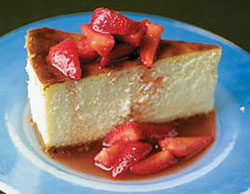
New York-style Cheese Cake (Jewish-style cheesecake)
Cheesecake has been part of New York’s deli culture since the 1930s, when Jewish dairy restaurants and delis first started serving rich, baked cheesecakes made with cream cheese.
What sets New York-style cheesecake apart from its counterparts is its unmistakable density and smoothness. The secret lies in its simple yet perfected recipe, consisting of cream cheese (an industrially produced, spreadable soft cheese was a 19th-century US invention), eggs, sugar, and a touch of vanilla extract. It has no flour added to the batter and is baked in a tall spring form pan. This combination is what gives it its signature taste, silky smooth texture, and extra tangy taste.
The crust of a New York-style cheesecake is typically made from graham cracker crumbs, adding a pleasant contrast of texture and a subtle hint of sweetness. Baked until golden, the crust provides a sturdy foundation for the creamy goodness above.
New York style cheesecakes are baked without a water bath and are unique because the baking starts at a high temperature, that's quickly dropped down, producing a rich interior and brown exterior.
One of the defining features of a New York-style cheesecake is its size. These cakes are often tall and generous, boasting an impressive height that demands attention. This cheesecake goes especially well with a fresh fruit sauce.
Country style cheesecakes are very similar to New York Style cheesecakes but the ingredient list includes buttermilk. The additional moisture helps create a firmer texture and a more acidic flavoring.
*New York Style Cheesecake (Cook's Illustrated recipe)
+Sarah Mace's
Springform Cheese Cake
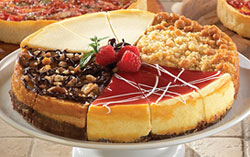
Elis' Sampler: Plain, Turtle,
White Chocolate Raspberry,
& Apple Streusel
Chicago-style Cheesecake
Chicago cheesecake is a relatively recent invention. In the late ’70s, Eli Schulman decided that cheesecake would be the signature dessert for his famous restaurant, Eli’s The Place for Steak, Maureen Schulman, daughter-in-law of Eli, points out that the recipe is quite similar to a Basque cheesecake, simply baked for less time so it doesn’t have the burnt top that Santiago Rivera popularized about a decade later.
In his attempt to perfect his steakhouse’s cheesecake recipe, he found success in adding sour cream to the mix of slow-cultured cream cheese, whole eggs, egg yolks, sugar, and vanilla extract. This led to a unique consistency that was firm on the outside, but soft and creamy on the inside. Besides that, it features a shortbread crust instead of biscuit crumbs for the base. His creation debuted at the inaugural Taste of Chicago in 1980 and eventually became eponymous with the city’s cheesecake style.
The main difference between New York style cheesecake and Chicago style cheesecake is the amount of cream cheese in the recipe. Chicago cheesecake has more cream cheese, [and fewer eggs?] and this results in a firmer exterior but a much softer interior, which is a delicious combination!
Eli's Chicago-Style Cheesecake (pictured above)
Chicago-style Blueberry Cheesecake
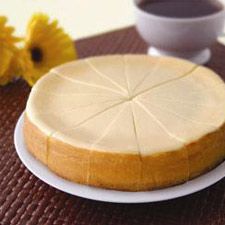
Philadelphia-style Cheesecake
Philadelphia-style cheesecake is reputed to be lighter in texture and creamier than the New York cheesecake. Philadelphia cheesecake has a simpler preparation compared to New York style, which has a smooth, dense texture. New York cheesecake filling usually has sour cream or heavy cream. This makes it creamier with a slightly tangier taste.
Philadelphia Cheesecake is not named after the city of Philadelphia. It actually gets its name because it is made with Philadelphia brand cream cheese as the main ingredient, and does not have fillers, like like sour cream or heavy cream, mixed in.
St. Louis-style Cheesecake
Pennsylvania Dutch-style Cheesecake
Pennsylvania Dutch-style cheesecake gets its taste from a tangy kind of cottage cheese called pot or farmer's cheese. This cheese has larger curds and less water content than regular cottage cheese. The recipe I found (see below) blends buttermilk, vanilla, lemon juice, cottage cheese, and egg yolks in a food processor until smooth and creamy. Egg whites beaten stiff are folded in just before baking. No photo accompanied the recipe.
When baked this cheese cake creates its own space for you to add fruit by sinking in the middle while cooling. Fill with berries or sliced unsweetened peaches to serve. I also read that it is commonly baked in a square pan, and that the taste is more tart than other style cheesecakes, yet retains the well-known creamy texture. Unlike other cheesecakes where the fruit is placed on top, Pennsylvania Dutch style cheesecakes have the fruit baked in at the bottom! The recipe below does not add the fruit on the bottom.
Pennsylvania Dutch Cheesecake
from https://recipeland.com/recipe/v/pennsylvania-dutch-cheesecake-7150
1 pinch salt
4 large egg whites
3 large egg yolks
1 1/2 cups cottage cheese (low-fat 1%)
1/4 cup buttermilk
1 tablespoon fresh lemon juice
1 1/2 teaspoons vanilla extract
Beat salt and egg whites with electric mixer until stiff peaks form.
Set aside. Put all the remaining ingredients in a blender and blend until smooth and creamy.
Pour the cheese mixture into the egg whites.
Gently, but thoroughly, fold together.
Spoon the mixture into a 9 inch nonstick square or round cake pan.
Bake in a preheated 350℉ (180℃) oven for 40 to 50 minutes, until a knife inserted in the center comes out clean.
Chill thoroughly.
The cake sinks in the center as it cools, making a depressing for fruit.
Fill with berries or sliced unsweetened peaches to serve.
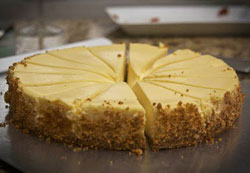
Sour Cream Cheesecake
Sour cream cheesecake is said to have come from the United States some time in the mid 20th century. It is still made with cream cheese but uses sour cream instead of heavy cream in the recipe. It is mostly used for making cheesecakes that are outside of the New York-style. The use of sour cream makes the cheesecake more resilient to freezing and is the method by which most frozen cheesecakes are made.
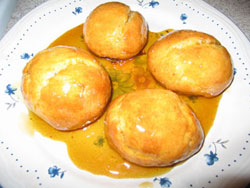
Ancient Roman Libum
Roman-style Cheesecake
Roman-style cheesecake uses honey and a ricotta-like cheese along with flour and is traditionally shaped into loaves. Some recipes use bay leaves as a preservative. It is still baked in certain areas of Rome that kept cooking traditions after the fall of Rome.
Ancient Roman Libum (a cheesecake from Cato)
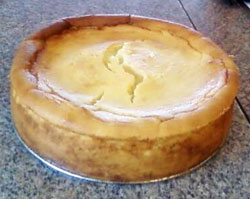
Italian-style Cheesecake (Italian Ricotta cheesecake)
Italian cheesecake dates a long way back to ancient Roman history. Traditionally, it was made from honey, ricotta, and flour, and shaped into bread for baking. Some recipes included bay leaves.
Modern-day Italian cheesecakes use ricotta and/or mascarpone, so it’s more commonly dubbed as Ricotta cheesecake. This is the main difference between a typical New York American cheesecake, which is made with cream cheese, and Italian cheesecake, which is made with ricotta cheese. Ricotta produces a lighter, but drier and slightly granular texture Recipes will combine milk with the ricotta to get a creamier finish. The change in cheese causes this style of cheesecake to have a drier texture compared to other styles.
Italians do not add any fruit topping to their cheesecakes, though they sometimes add small bits of candied citron to the filling.
Another traditional Italian cheesecake is Neapolitan Pastiera, often served at Easter. In almost every regional Italian cookbook, you will find a recipe for "La Pastiera". It's the ultimate traditional holiday dessert of Naples. It's a variation on cheesecake, whose ingredients consist of a mandatory overnight soaking of wheat kernels. Once cooked, the kernels become chewy. With the addition of fresh ricotta, pastry cream, the results are a magnificent moist cake, which is encased in a buttery, lattice-topped pasta frolla - pastry crust. It is a centuries-old dessert that appears in infinite versions, each made according to a closely guarded family recipe, handed down from generation to generation.
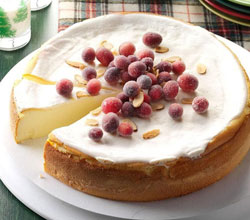
An Italian style cheesecake made with both ricotta and cream cheese in the cake batter. Amaretto is included in the cake batter as well as in a sour cream topping which is added on top and baked during the last 5 minutes.
The garnish is toasted almonds and sugared cranberries. A nice combination for the holidays.
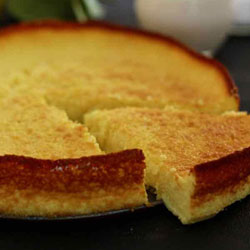
Fiadone
French-style Cheesecakes
In France, there are many different kinds of cheesecake, from the Corsican Fiadone to the white cheesecake from Alsace, where it is called Käsküeche, which means Fromages (Cheeses) or White Cheese Pie.
The Käsküeche cheesecake is a bit different than the popular New York Cheesecake. It a light and not-too-sweet tart made from fromage blanc, beaten eggs and a little lemon. This recipe is traditionally prepared with a pie crust rather than the cookie crumb crust seen on many cheesecakes. The key ingredient in this French cheesecake recipe, fromage blanc, is a popular dairy product in France. It’s texture is similar to cream cheese. If you can't find fromage blanc, you can substitute some brands of quark. Its lightness comes from whipping the egg whites and folding them into the fromage blanc and egg yolk mixture.
Fiadone earns its name from the Italian word for flan, although it’s more of a flourless cake than a custard. It’s also often referred to as the Corsican take on cheesecake—originating from Corsica, the island between France and Italy. Once reserved for holiday seasons or weddings, fiadone can now be enjoyed throughout the year. It’s made using brocciu, a type of whey cheese derived from sheep’s or goat’s milk, as well as a mix of eggs, sugar, lemon zest, and lemon juice. This unique combination gives it a citrusy twist that is sometimes fortified with brandy. It is typically thinner than most cheesecakes, with a crisp, buttery exterior and crumbly texture.
Its preparation involves combining fresh local sheep or goat cheese with sugar, eggs, and a touch of aromatic Corsican liqueur known as "eau-de-vie." The resulting mixture is baked to perfection, creating a velvety texture with a lightly caramelised top, and a subtle blend of sweet and tangy flavours. The Fiadone Cheesecake's appeal lies not only in its taste but also in the cultural significance it holds for the Corsican people. It serves as a culinary emblem of the island's history and traditions, passed down through generations and cherished as a symbol of Corsican identity. The Corsican fiadone closely resembles similar Italian desserts which are predominantly made with ricotta.
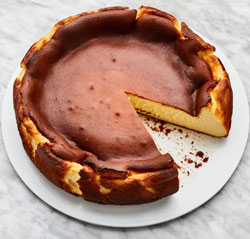
Spain: Basque Burnt Cheesecake
Basque cheesecake (or San Sebastian cheesecake) has the most amazing silky-smooth, custard-like texture with a caramelized top. The signature glossy 'burnt' top (better to call it caramelized) is sure to get mouths watering around the dessert table. Basque Burnt cheesecake is crustless cheesecake and needs a very high oven temperature to achieve the iconic burnt top. Made from a mixture of full-fat cream cheese, eggs, sour cream, sugar and cornflour, it’s baked at a high temperature until set but soft in the middle. The cheesecake rises, but then sinks as it cools, a process that gives it such a distinct dip and cracked exterior, while the ‘burnt’ surface takes on a caramel flavour. But be careful not to overbake it, it will set further as it cools. Invented and popularised by one Santiago Rivera, owner of San Sebastian pintxos café La Viña.
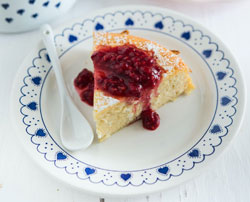
Swedish-style Cheesecake
There are two types of Swedish cheesecake: småländsk ostkaka and hälsingeostkaka from different regions in Sweden. One source traces the written record of ostkaka, meaning “cheese cake” in Swedish, back to 1538, when it supposedly appeared at the bishop of Linköping’s New Year’s Day feast and was seen as a status symbol. Since then, it has been passed on from generation to generation. It’s a traditional dessert in Småland, a southern province located a few hours north of Linköping, served during special celebrations. A variation is also common in Hälsingland in central Sweden. To avoid with other cheesecakes, Swedish cheesecake is usually called ostkaka, its Swedish name.
Småländsk ostkaka, the Småland cheesecake in southern Sweden, usually includes sweet almond, bitter almond, eggs, cream and sugar. Småland cheesecake is often enjoyed warm with traditional berry jam and whipped cream, but can also be eaten with milk or ice cream. It’s a staple at Småland’s Christmas table.
Swedish-style cheesecake differs greatly from other cheese cakes. A Swedish cheesecake is traditionally produced by adding rennet to milk and letting the casein coagulate to form a small curd. It is then baked in an oven and served warm. Since the process of curdling milk is somewhat complicated, alternative recipes intended for home cooking instead use cottage cheese as a base to simulate the texture of the dessert. The recipe also includes a combination of cream, sugar, eggs, almond, and bitter almond. There is also usually flour as part of the recipe for added structure. It is then baked without a crust and is traditionally served warm with whipped cream and jam.
Swedish cheesecake (ostkaka) is not necessarily a cheesecake as you know it. It's made with cottage cheese and almonds, is less sweet than an American cheesecake, but it's equally delicious. As they are less sweet, you'll usually find them topped with fresh fruit or preserves depending on the season. Ostkaka is served at various times of the year and you can change the topping to suit the season. It’s usually served with whipped cream and a fruit jam, such as cloudberry or sour cherry.
Hälsingeostkaka, the cheesecake from Hälsingland, southern Norrland, in central Sweden, contains milk, wheat flour and cottage cheese. It is often flavored with saffron. The Hälsingland cheesecake has a smoother consistency than that of Småland. It is cut into slices and reheated with cream in the oven or in a pan, then traditionally served with blackberry sauce and whipped cream.
Dutch and Belgian (north of France) Cheesecakes
Dutch and Belgian cheesecakes are very similar to each other, often sharing the same, no-bake, quark-based style.
Dutch and Belgian cheesecakes are usually flavored with fruit or melted bittersweet chocolate, are made with quark and are not baked. The Belgian cheesecake also includes a base of Speculoos, traditional spice flavored cookies from northern Europe. One recipe incorporated pastry cream into a fruit covered cheesecake and chocolate mousse in a Belgian chocolate cheesecake.
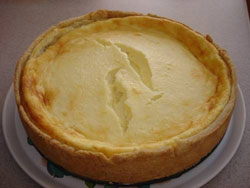
German-style Cheesecake
The history of German cheesecake is murky, as käsekuchen is an example of a European fresh-cheese dessert recipe that developed over the ages. It’s been around since at least the 1600s. German-style cheesecake (Käsekuchen, Quarkkuchen, Matzkuchen; Topfenkuchen in Austria) uses quark cheese. The Käsesahnetorte (cheese cream tart) adds cream and is not baked.
Germany is famous for its unique cheesecake recipes that add a bit of sweet and sour taste, said to “melt in your mouth”. This cheesecake tastes similar to traditional American cheesecake but has a lighter and fluffier texture, is delicately flavored and not overly sweet. It beautifully marries the richness of cream cheese with the delicate notes of fresh lemon zest and the subtle sweetness of vanilla.
The secret to this cheesecake being light and fluffy has to do with the different type of cheese the Germans use: quark, which is a fresh, unripened cheese with a small curd, and thus has a different texture to cream cheese. Downside of trying to make a käsekuchen is that outside of Europe, quark is hard to come by. There are however some handy substitutes: fresh farmer's cheese, blended cottage cheese, or ricotta.
And the other secret? Separating the eggs! The stiffened egg whites get folded into the batter which makes it extra airy and light, unlike traditional American cheesecake. The result is a gorgeous, cloud-like cheesecake.
It’s baked in a dough crust, though shortbread crust is not uncommon. Traditionally, Kasekuchen is baked without a crust, allowing the luscious cheesecake filling to take centre stage. However, modern variations may feature a buttery crust, enhancing the overall experience and adding a delightful crunch.
Usually served dusted with powdered sugar, käsekuchen is a classic German dessert that is commonly enjoyed as an everyday treat alongside coffee or tea.
Another variation, käsekuchen torte, incorporates cream and gelatin to set in lieu of being baked. Berries or other fruit may be added to the filling.
Interesting note: Japanese cheesecake was created by chef Tomotaro Kuzuno, who was nspired by German käsekuchen during a 1969 trip to Berlin,
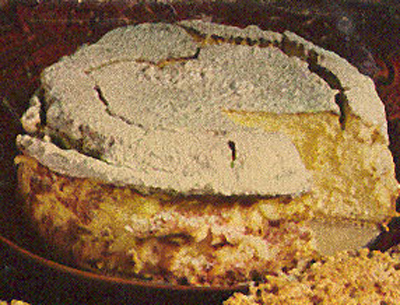
Fluffy Cheesecake
Polish Sernik
The roots of Sernik can be traced back to the mediaeval times when European monks introduced the concept of cheesemaking. Over the centuries, Polish bakers refined this recipe, resulting in a distinct and beloved dessert that has become a staple on many Polish tables, particularly during festive occasions and holidays.
Sernik is known for its creamy, dense, and velvety texture, offering a delightful contrast to its slightly sweetened, crumbly crust. The filling is typically made with farmer's cheese or twaróg, a type of curd or farmers cheese that lends a tangy and slightly salty flavour to the cheesecake. This unique ingredient sets Sernik apart from its counterparts around the world. To enhance its flavour, Sernik can be infused with a variety of additional ingredients, such as vanilla, lemon zest, raisins, or dried fruits. Some variations even incorporate a layer of sweet fruit preserves or a sprinkle of cinnamon on top, adding a burst of flavour and visual appeal.
Fluffy Cheesecake (made with farmer's cheese and little bit of flour). While this cheesecake was not described as a Polish sernik in the magazine article I got the recipe from, I read a description on the Internet about a fluffy Polish cheesecake available at a local bakery that seemed to match the recipe perfectly. I have seen recipes for Sernik that do not seem to match the Fluffy Cheesecake picture.
Bulgarian Cheesecake
The Bulgarian cheesecake often has a base with ground nuts added to the crust mixture. They frequently use a baked New York-style filling. Bulgarian versions often use smetana (a type of sour cream) for the top layer.
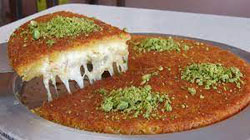
Turkish Cheesecake (Peynirli künefe)
This Turkish cheesecake offers a distinctive combination of textures and flavours. It comprises a layer of unsalted cheese, sometimes enriched with kaymak (Turkish clotted cream), sandwiched between two layers of fine pastry strands called tel kadayıf, which have been coated in melted butter so that they stick together. It’s baked until golden brown, covered with lemony syrup and a sprinkle of pistachios, and served hot, so the cheese between the pastry layers is gooey and stretchy.
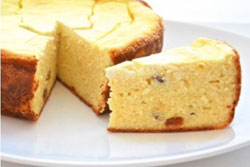
Zapekanka
Russian Cheesecake
The Russian cheesecake, vatrushka, comes in the form of a dough ring and is filled with twaróg, just like sernik. Russian cheesecake has a very different taste and texture from the classic cheesecake varieties you might be used to. It's a baked cheesecake made with farmer's cheese (pressed curds), cream of wheat, eggs, yogurt, and raisins. Furthermore, it has no base. You'll find it commonly served for breakfast or as an afternoon snack and it's really tasty! Raisins or other dried fruit like apricots or candied orange peel bring more sweetness, as it traditionally does not contain a lot of sugar.
The tvorozhnaya zapekanka, on the other hand, is a crust-free baked cheesecake that mixes tvorog (Russian quark), eggs and semolina, and often includes raisins.
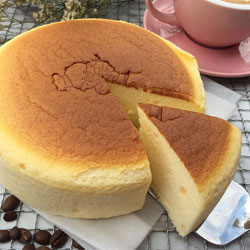
Japanese Cheesecake
Japan has some of the best desserts in the world. Japanese cheesecake is also known as a soufflé-style cheesecake, or sometimes Japanese cotton cheesecake due to its unbelievably light and airy texture. It is cakier than what diners typically see in the United States. Basically, it is a hybrid dessert that sits exactly between a traditional dense cheesecake and a light sponge cake. Whilst there are a few steps to making it and you'll need a water bath, it is 100% worth the effort.
Its origins lie in a trip to Germany in the 1960s, taken by Japanese chef Tomotaro Kuzuno. Having become a fan of cheesecake while in Berlin, he started working on his own version, which was less sweet and far lighter. Its distinctive airy texture is created by separating the eggs and whipping the egg whites to incorporate air into the mixture. It’s then baked in a bain-marie, which helps retain the delicate texture.
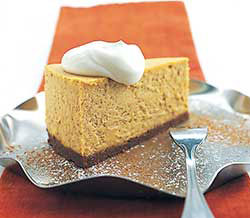
Pumpkin Cheesecake
Cook's Illustrated Test Kitchens came up with this recipe and said, “We wanted a creamy pumpkin cheesecake with a velvety smooth texture that tasted of sweet, earthy pumpkin as well as tangy cream cheese, that struck a harmonious spicy chord, and, of course, that had a crisp, buttery, cookie-crumb crust.”
I made this recipe for Thanksgiving at Candace’s and it was a hit. Candace said she had it for breakfast the next morning.
Pumpkin Cheesecake with Bourbon Topping
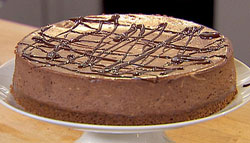
Chocolate Espresso Cheesecake with Ganache
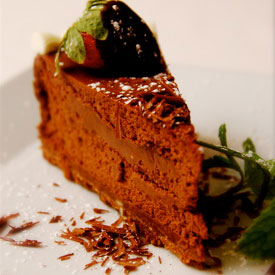
Divine Chocolate Velvet Cheesecake
Divine Chocolate is the world's first farmer-owned Fair Trade chocolate brand, co-owned by the cocoa farmers cooperative Kuapa Kikoo in Ghana. Their stated mission is to improve the livelihood of small scale cocoa farmers in Ghana and increase the benefits farmers receive from the multi-billion dollar chocolate industry.
Clara Coleman, a resident of Colorado, took the grand prize in Divine Chocolate’s recipe contest with this decadent chocolate cheesecake. The rich, creamy chocolate cheesecake begins to melt the second it hits the tongue, then glides down the throat like a stream of satin-like fudge sauce. Mascarpone cheese, a vary rich Italian-style cream cheese, may be the secret ingredient that gives this cake it's extra creamy consistency. It's decadent. It's Divine.
