Cocktail Garnishes
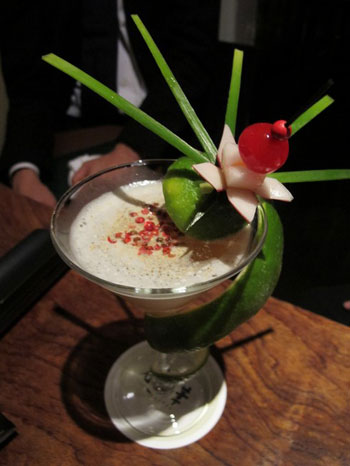
Ishinohana is one of the most progressive bars in Japan.
It's run by bartender Shinobu Ishigaki, who won the
Bacardi Martini world championship in 2005 with this drink,
the Claudia, garnished with a skewer of pineapple leaves,
a radish, a cherry and the curling peel of a whole lime.
The Claudia, is a mix of rum, vermouth, pineapple juice,
and caramel syrup. The drink is named for Italian actress
Claudia Cardinale and was inspired by her role in
Luchino Visconti's The Leopard.
http://ishinohana.com/
Usually a bright piece of fruit, or a briny olive, or a festive umbrella, but sometimes something much more fancy, the cocktail garnish has a solid place in the history of cocktails.
A cocktail garnish is an ornamental item that adds appeal to a cocktail. In case of fruit wedges, slices, or twists, the garnish actually imbues a bit of juice or citrus oil to the drink. A large variety of cocktail garnishes are used. Many rum-based cocktails, especially those with fruit flavors, tend to be decorated with tropical-themed garnishes or slices of fruit. Likewise, an olive or onion in a Martini or Gibson lends a whisper of savory flavor to those drinks. And of course, there's the bright red (or green) cherries common to drinks such as the Manhattan. These add sweetness and color to an otherwise drab-looking brown drink. Other common edible garnishes include gratings of nutmeg or cinnamon, sprigs of mint or other herbs, and the smorgasbord of salty or pickled items (often added to a Bloody Mary).
Not all garnishes, of course, are food items. Umbrellas, plastic animals, fancy straws, and plastic swords are among the incredible inedibles that serve as garnishes and add ambience to the drink. But a true garnish is more than simply ornamentation. It adds an essence to the drink in a number of ways. It contributes to the alchemy that transforms a group of ingredients into a cohesive cocktail.
Whence the Garnish?
As with many other things in the history of cocktails, it's hard to pin down the origins of the garnish. It's possible that the garnish originated with the julep and the cobbler, two similar classes of mixed drinks that arose a couple of hundred years ago. The general plan for these drinks is similar: each calls for crushed or shaved ice, a spirit or wine, and a bit of sugar, with the whole served with a straw. The julep, of course, is garnished nowadays with mint; the cobbler, on the other hand, usually takes a slice of fruit (pineapple or orange), a pile of berries, and sometimes mint.
At any rate, the earliest bartenders manual that hasn't been lost to history is Jerry Thomas's, from 1862. In his book, Thomas instructs bartenders to use a piece of lemon peel in drinks and to even rub the peel around the rim, at times, presumably to leave behind of a bit of the oils. He doesn't comment on the origins of the practice, so we can assume it was in common use at the time when he was writing.
The Cobbler - loaded with fruit & garnished with even more fruit
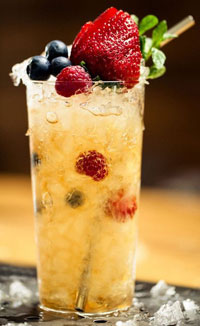
Sherry Cobbler
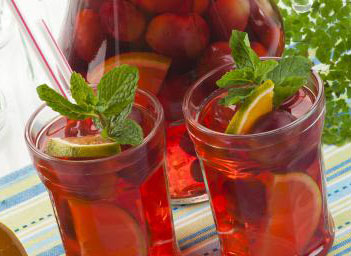
Brandy Cobbler
For much of the 1800s, the sherry cobbler along with the mint julep ranked as our country's most popular beverages—sherry or another fortified wine sweetened with sugar, was shaken with seasonal fresh fruit and crushed ice to muddle the fruit, then poured unstrained into a tall glass, garnished with more fruit and served with a straw. Straws were new at that time, as was ice, which was being shipped out of New England and was for the first time widely available to the general public.
It can't be over-estimated how important ice was. At that time there was no air conditioning, and there are those who thought these drinks were one of the greatest American inventions.
Cobblers are being revived today with new recipes coming out. Raspberry cobblers, plum wine cobblers, Kiwi cobbers, cobblers with brandy, with cucumbers and gin, etc.
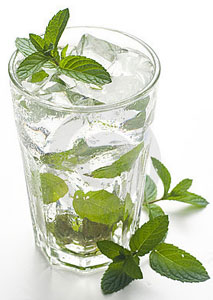
Mojito with muddled minit and mint garnish
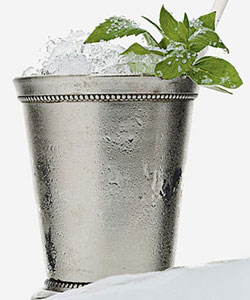
Mint Julep with mint garnish
Mint Sprigs
A fresh sprig of mint placed on top of a drink adds a nice finish, hints as to the flavor of the drink, and the green color adds to the "cool" feel.
Mint juleps were also the rage in the 19th century. One recipe reads: Muddle mint in the bottom of a glass along with sugar. Add brandy and some peach brandy, then fill tumbler with ice. Stir until condensation forms on the outside of the glass. Rub the lip of the tumbler with a slice of fresh pineapple, and drink it as a cobbler (meaning with a straw). Juleps are traditionally served in a metal tumbler which kept the drink cooler.
Another drink, extremely popular today, that uses a lot of mint is the Mojito. It's a Cuban highball made with white rum, sugar, lime juice, sparkling water, and mint.
Citrus Spirals & Twists
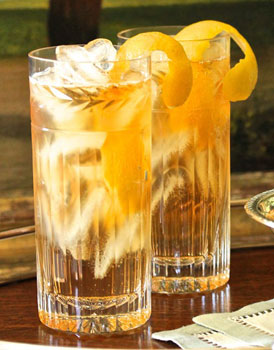
Horse's Neck with Orange Spiral
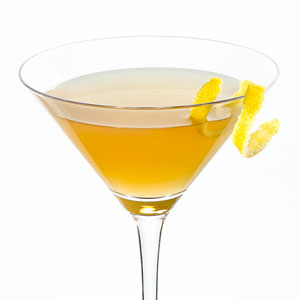
Cocktail with a Lemon Twist
One of the easiest, most common garnishes for cocktails is the lemon, lime, or orange twist. In these cases, the flavor of the spiral or twist is central to the drink's flavor, yet by using it in a decorative way, the drink looks interesting and inviting.
Spiral:
In the 19th century, the drink called the Horse's Neck, was made with the skin of a whole lemon or orange cut in a continuous spiral which was swirled inside the glass with one end hanging over the edge. The Horse's Neck was a non-alcoholic drink called a Cooler, but there were many alcoholic drinks made in the same way. The Remsen Cooler, one of the earliest Coolers, is one case in point. There are many old paintings and drawings of punches that were made similarly with the the skin of a citrus fruit hanging over the side of the punch bowl. It's not clear where this tradition came from.
Twists:
No matter what type of twist you use, the basic idea remains the same. A twist is a tool for expressing citrus oil into a drink. Squeeze the peel over the top of the cocktail, rub the colored side (not the white pith) around the rim of the glass, and drop the peel into the glass. Twists are commonly added to martinis, glasses of vermouth or champagne, and many other drinks where citrus oil would add a nice flavor accent.
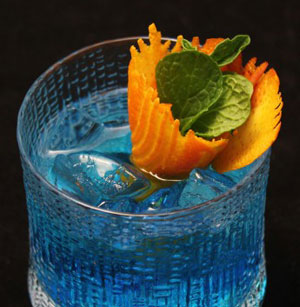
Orange Peel Flower with mint leaves
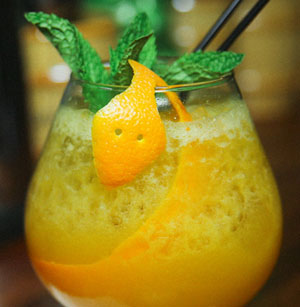
Snake Orange Peel used for tiki cocktal
ADVANCED METHODS
Fancy Twists
Your imagination is the limit for making fancy citrus peel twists. For drink competitions, contenders come up with all kinds of garnishes. Of course, these would take more time to make, but would be fun to do for a special occasion.
Flamed Twist
With a little added heat, a twist can become even more flavorful and complex. The principle behind a flamed twist is the same as any twist, really. You're squeezing oil out of the peel and onto the surface of the cocktail. In this case, though, you're squeezing it through a flame, which lightly caramelizes the oil and subtly enhances its flavor.
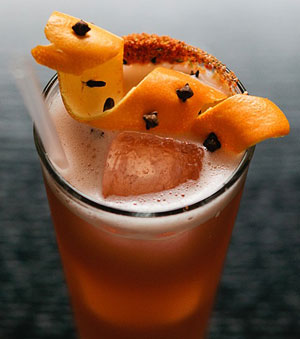
Orange twist with cloves - nice for any spiced
drink including hot drinks like mulled cider.
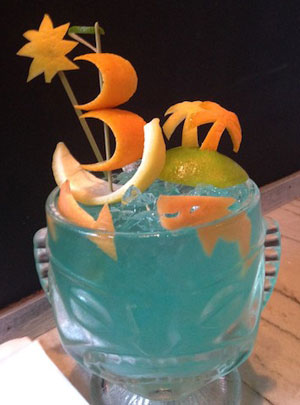
An extreme garnish that makes you feel like you
are in the Carribean. Almost too pretty to drink.
Technique: Cut a strip of citrus peel at least an inch in diameter. Don't worry too much about getting some of the pith. A thicker piece of peel is easier to squeeze over a lit match, but don't release the oils yet. Using thumb and forefinger, gently hold the peel by its edges (colored side out), taking care not to bend it. Hold a lit match about 2" underneath. Now flex the peel to release the oils towards the flame and into the drink. Finally, drop the peel into the cocktail.
Wedges and Wheels
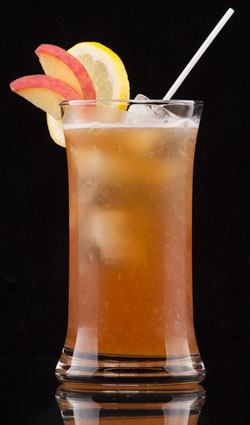
Gingered Peach Tea with
Peach Wedges and Orange Wheel
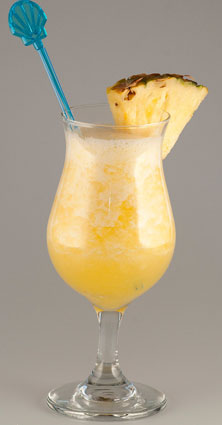
Frozen Pineapple Daiquiri with Pineapple Wedge
One of the easiest and most used garnishes. Used in Margaritas, Gin and Tonics, Bloody Marys, and countless other fresh-tasting classics, citrus wedges are usually served perched on the rim of a glass, and can be optionally squeezed and dropped into the drink once it's served.
Slice a small notch partway through the center of each wedge or wheel to fit the glass's rim.
While citrus is the most common fruit used, other fruits such as apples, peaches, pineapple, kiwi, strawberries, star fruit, fresh cherries, even melon are used.
Today you will see cucumbers, slices of jalapeno peppers and other vegetables treated in the same way. Jalapeno peppers are popular for Bloody Marys and because cucumbers are so refreshing, you see them used more and more in drinks with a cucumber wheel perched on the side..
Olives, Pickled Onions & Other Pickles
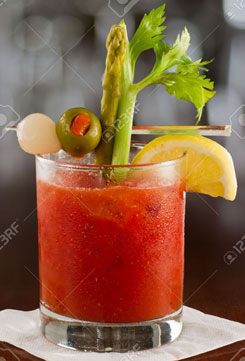
Bloody Mary with Pickled Asparagus
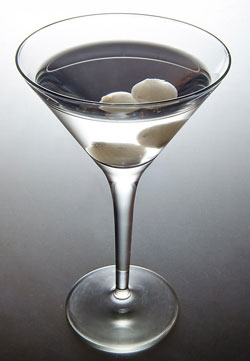
Gibson with Pickled Onion
Olives and onions are classic bar staples used to add a savory, salty quality to a drink. The olive is a classic garnish for gin and vodka martinis. The green olives (stuffed with a wide variety of fillings from pimentos and almonds to garlic and blue cheese) has a long and fuzzy history—no one's sure how it came to be an integral garnish—but it's remained a favorite for martini drinkers, along with its brackish brine.
Naturally sweet and slightly crunchy, cocktail onions are the signature garnish of the Gibson cocktail. And while you'll mostly find them pickled at bars, you could opt to use frozen pearl onions (like Hemingway did) to impart a more mellow flavor and keep your drink extra cold.
Olives and pickled onions can be either simply dropped into the drink or skewered before placing in the drink. Sometimes a little of the pickle brine is poured into the drink to enhance the flavor. If added to a martini, the drink is then called a dirty martini.
Today, drinks, especially Bloody Marys, are garnished with pickled asparagus, cucumber pickles, pickled hot peppers, pickled carrots, dilly beans - I suppose anything goes as long as the flavor accent works.
Maraschino Cherries
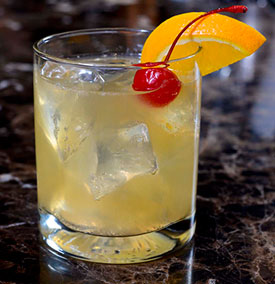
Whiskey Sour with Cherry and Orange Wedge
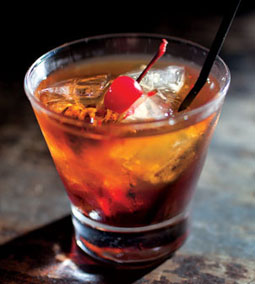
Manhattan with Maraschino Cherry
The use of maraschino cherries in cocktails dates to the 1800s. Originally, the maraschino cherry wasn't the neon red thing you see in jars in the grocery store. Maraschino cherries, initially, were simply marasca cherries from Croatia, preserved whole in maraschino liqueur. But with Prohibition, production of maraschino cherries was revised to eliminate the alcohol and we ended up with the maraschino cherries of today. I understand there are manufacturers now making maraschino cherries the old way, but these can be expensive.
Whiskey Sours and Manhattans are two traditional drinks that are garnished with cherries.
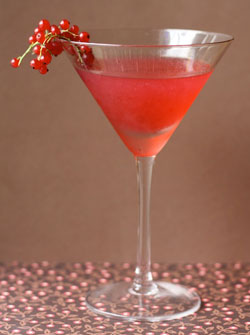
Cosmopolitan garnished with currant sprig
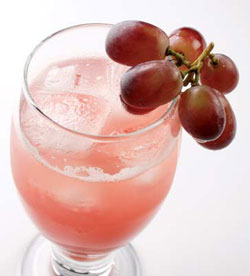
Wine Cooler with Sprig of Grapes
Sprigs of Grapes or Currants
Sprigs of grapes or currants humg over the side of the cocktail glass can give a drink a warmth associated with fall and winter. I can easily see Holiday drinks garnished with currants - red berries are a common holiday decoration - and a sprig of grapes on a glass of fortified wine would be lovely sitting next to a fire.
On the other hand, a sprig of cold grapes garnishing a wine spritzer in the summer can add another refreshing experience to the drink. Eating cold grapes in the summer can be very refreshing.
Grated Nutmeg, Chocolate, Celery Salt, etc.
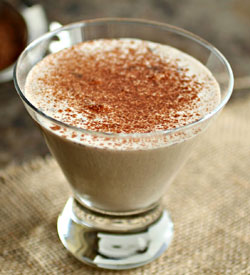
Chocolate Martini with grated Chocolate Garnish
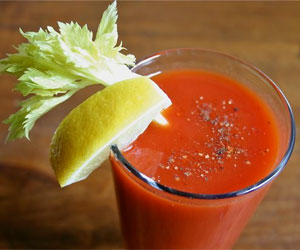
Bloody Mary with Pepper Garnish
Grated nutmeg garnishes go back to the 18th century when gentlemen would grate a little nutmeg on top of their toddies. Today, nutmeg is still popular on drinks such as Eggnog and Brandy Alexanders. Chocolate martinis are often seen with a grating of chocolate on top, and celery salt or salt and pepper finishes off a Bloody Mary.
Again, anything goes here. Finely crushed candy canes for a holiday drink,
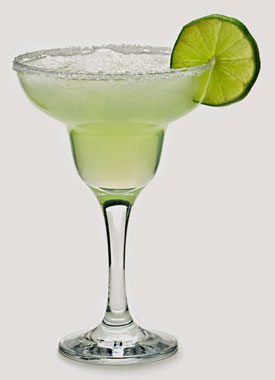
Margarita rimmed with salt
Glass Rim Dipped in Salt, Sugar, Chocolate & Other Garnishes
Also see How to Rim a Cocktail Glass
If you're tired of the twist, you can also liven up your cocktail presentation by rimming the lip of your serving glass. The most familiar item to rim a glass with is probably the salt you find on a margarita, but you can use the same principle with sugar (perhaps flavored, such as cinnamom or vanilla sugar), salt and pepper, cocoa powder or nibs, grated chocolate, chili powder, dried or fresh herbs, or wherever your imagination takes you. Be sure the ingredient you use on the rim accents the drink.
To do this you need a liquid of some sort that will make the ingredient you want on the rim to adhere to. Choose a liquid that parallels or matches an ingredient in the drink. Lime or orange work perfectly in a margarita, for example, because both flavors are present in the cocktail. Turn the glass upside down and dip it in a saucer with the liquid (or you could use a lime wedge, for instance, and rub it on the rim to wet it), then in a saucer containing the ingredient you want on the rim. Some like to roll the outside edge of the glass in the dry ingredient so it doesn't get into the inside of the glass and thus the drink. With a margarita, for instance, it can make the margarita too salty.
Salt is traditionally used for margaritas, salt and pepper, celery salt, or chili powder is used for Bloody Marys, grated chocolate or sugar for chocolate martinis, and finely crushed peppermint candy for holiday cocktails. Again, wherever your imagination takes you.
Herbs
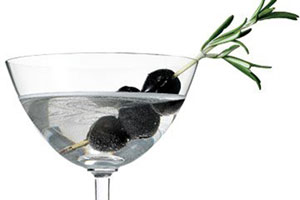
Rosemary Olive Martini
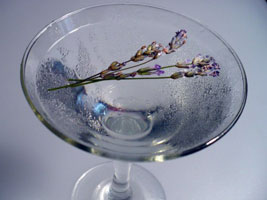
Cocktail with Lavendar Garnish
The julep's muddled mint was one of earliest green garnishes, but today herbs like basil, rosemary, thyme, lavendar, and cilantro have found their way into refreshing and inventive drinks.
The botanical ingredients add a wealth of aroma and a subtle flavor, but the key is handling them with a light touch. You don't want the herbs to over-power the drink. Add only herb garnishes that have already been used as a flavoring in the drink, or that you want to add to the drink.
Flowers
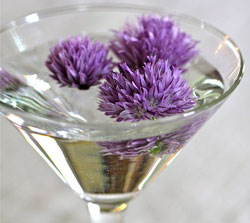
Chive flowers can be added to drinks
such as the Gibson to add a "oniony" flavor.
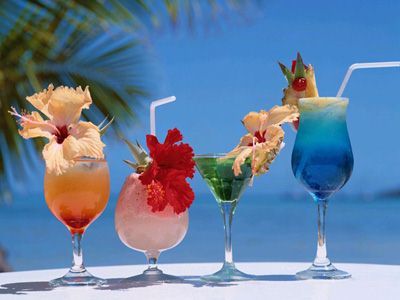
Edible flowers are especially popular for tiki drinks. They add to the Carribean feel. Because some flowers can be poisoness, be sure to use flowers that are editable.
Stenciled Garnish
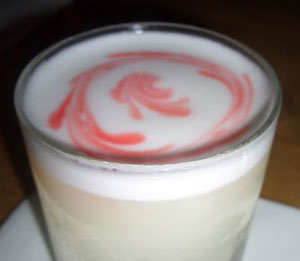
Tequila Mockingbird cocktail design made by adding
10 drops of Peychaud's Bitters and drawing designs
using a toothpick or thin straw.
Stenciled Garnishes & Swirled Designs
Designs can be drawn on the top of a cocktail by adding a contrasting liquid, such as bitters or chocolate syrup, on top of the cocktail, then making swirls with a toothpick or thin straw.
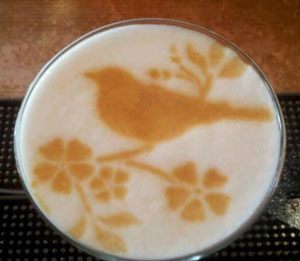
Stenciled garnishes are made by placing the stencil as close to the top of your cocktail as possible and either spraying the design on (you can buy bitters in a spray can) through the stencil, or just sprinkling some sort of powder, such as cocoa or powdered chocolate on the drink.
These techniques work best with a foamy drink.
Stir Sticks & Straws
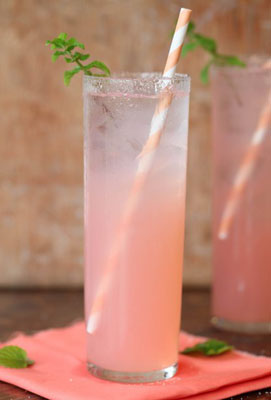
Vodka and Pink Lemonade with Matching Straw
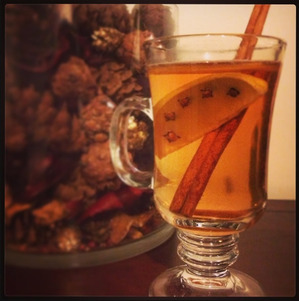
Hot Rum with Cinnamon Stick and Clove Studded Orange
Straws were first added in the 1800s to mint juleps, that are packed with shaved ice, and cobblers, that are made with a lot of fruit. The straw allowed the drinker to get to the liquid at the bottom of the drink under all that ice and fruit. Other drinks that are commonly garnished with a straw are tall icy drinks, such as the Collins, and tropical drinks. Besides being a useful drinking aid, straws can add color to a drink.
Stir sticks are standard in many drinks, especially in highballs where a shot of liquor is poured over ice and topped off with soda water or other fizzy soft drink. The bartender doesn't usually stir these drinks, leaving it up to the customer. Plastic, fancy or not, is what is usually used, but there is a world of other items that can be utilized.
Cinnamon sticks in hot drinks such as mulled wine or cider, candy canes in spiked (or not) hot chocolates, beef jerky sticks and celery sticks in Bloody Marys, skewers of fresh fruit, etc. These add further flavor to the drink.
Cocktail Umbrellas and Monkeys
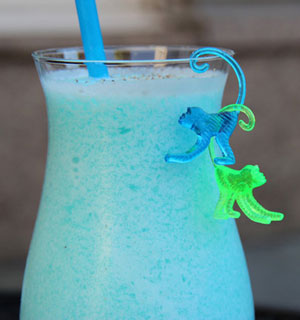
Plastic Cocktail Monkeys
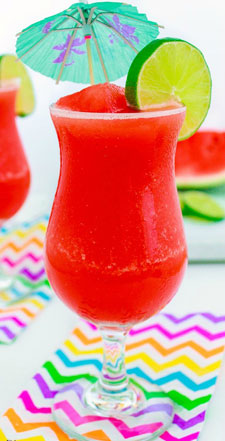
Frozen Watermelon Margarita with Umbrella
The cocktail umbrella is believed to have arrived on the bar scene as early as 1932 courtesy of Victor Bergeron of Trader Vic's in San Francisco although it is, by Vic's own admission, a presentation picked up from Don the Beachcomber (now closed). Upon introduction, umbrellas were considered very exotic as were most things from the Pacific Rim.
And don't forget about those little plastic monkey garnishes. These were popular in the 1960s and many people have fond memories of them, along with plastic mermaids and plastic giraffes. So cute! They are still available for sale at places that sell tiki items or at party stores.
Other Garnish Ideas
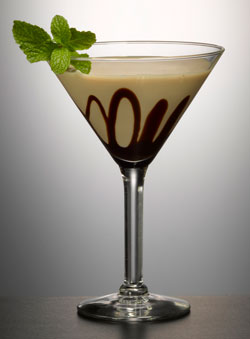
Dessert Drink:
Bailey's with Chocolate Swirl
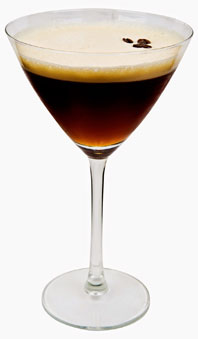
Coffee Martini with Espresso Coffee Beans
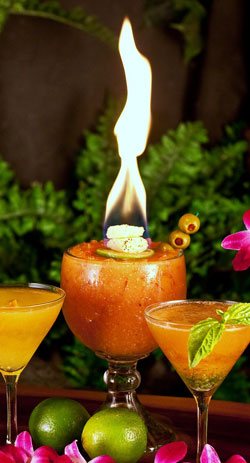
Tiki Drink with Flame
Holiday Garnishes
These garnishes use a mix of the ideas listed above.
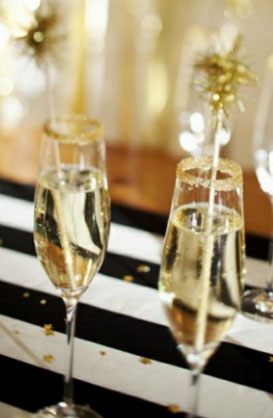
New Year's Eve
Champagne Flutes decorated wtih Gold Cocktail
Rimming Sugar & Cocktail Sparkler Stir Sticks
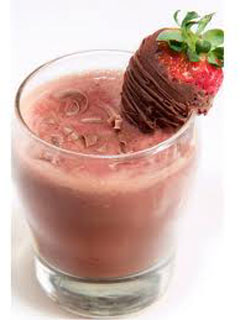
Valentine's Day:
Chocolate Covered Strawberry Garnish
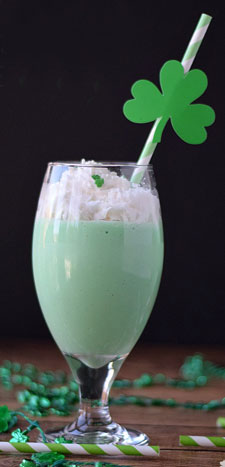
St. Patty's Day
Shamrock Straws & Green Colored Drinks
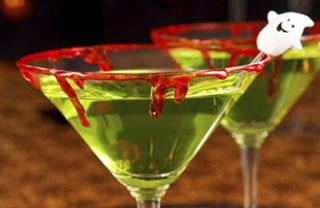
Halloween Drink with Fake Blood
To make: Mix corn syrup with red food colouring.
To decorate glass, dip the edge of the rim of each
glass in the syrup and stand them upright.
The syrup will trickle down the sides of the glass.
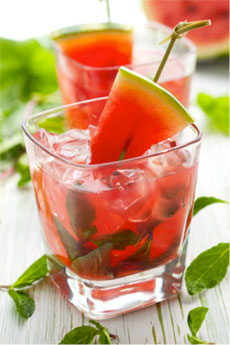
Summery Watermelon Garnish
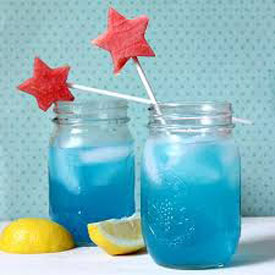
4th of July - Red, White & Blue
Blue Cocktail with Watermelon Stars
Cut with a Cookie Cutter
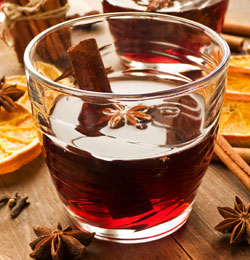
Mulled Wine with Spices
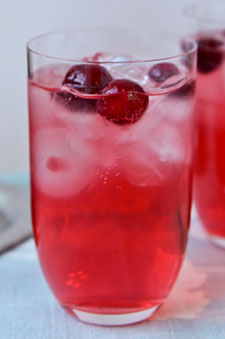
Thanksgiving Cocktail
Vodka, cranberry juice, sparking wine
and cranberry garnish
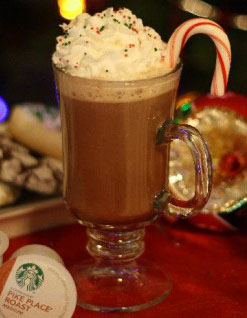
Christmas Hot Coffee Cocktail with
Candy Cane, Whipped Cream & Sprinkles
Unusual Garnishes - Seafood
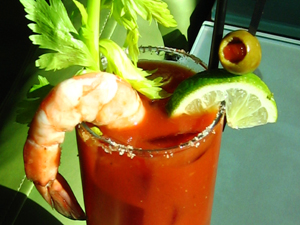
Bloody Mary with Shrimp Garnish
It's popular to garnish Bloody Marys with shrimp. In fact, Bloody Marys are now being garnished with hamburgers, pizzas, and roasted chicken. A little something more to help with that hangover, I guess. The most interesting idea seems to be the shrimp garnish. Shrimp cocktail sauce has much the same ingredients in it as a Bloody Mary.
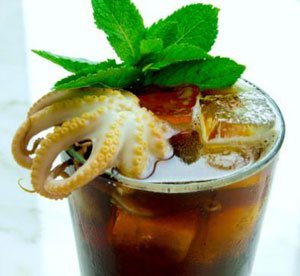
Smoked Baby Octopus Garnish
Dream of the Fisherman's Wife at Fork and Juniper in the Hyatt Midtown.
Only drinkers in the know can order this incredible nod to the provocative 1814 Japanese art piece that shares its name. Prepare to receive an off-menu rum-and-beer cocktail with a damn octopus on the rim just for uttering the words "Dream of the Fisherman's Wife" at Fork and Juniper in the Hyatt Midtown. Anyway, consider going in tomorrow night for their first weekly Burger Night (expect a DJ and a toppings bar). And while everyone else is busy ordering things that are on the menu, you'll be flagging down Chris. He's the Top Flr vet who created the thing. A few moments later, heads will start turning. Conversations will start stopping. Not because there's rum, chocolate stout, Branca Menta and two kinds of bitters in your drink. But because there's also an entire smoked baby octopus on the rim of your drink. And yes, you're meant to eat it.
