Cake and Frosting/Topping Combinations
There are many types of cakes and many ways to top or frost a cake. The type of cake, in part, determines the type of topping or frosting would be a good choice. For instance, a cake baked in cast iron skillets almost calls for a sugary fruit topping that will seap down into the cake when flipped over. These cakes led to our Upside Down Cakes we make today. And chocolate lovers may like to see a chocolate frosting on an angel food cske, but fresh fruit and whipped cream accents and celebrates the lightness of the cake. Take a pound cake. Pound cakes are much more dense than layer or sheet cakes. A buttercream or cooked frosting would be too heavy and dense for a pound cake, but go very well with layer and sheet cakes. A light dusting of sugar or a glaze is a better choice for pound cakes.
Flavors are another area to get creative. Chocolate cakes almost demand a chocolate ganache or chocolate frosting, but chocolate frosting also goes very well on a vanilla or yellow cake. Classic combinations are red velvet cake with cream cheese frosting, peanut butter cake with chocolate ganache, and chocolate cake with vanilla buttercream. More creative combinations: Pink champagne cake layered with pink champagne buttercream and the classic German Chocolate Cake w/ Coconut-Pecan Topping.
Another thing to think about is the time of year you are making the cake. A simple rule is heavier cakes, such as chocolate cakes or spices cakes, in the colder months/climates and airy, light cakes, such as angel food, during the warmer months/climates.
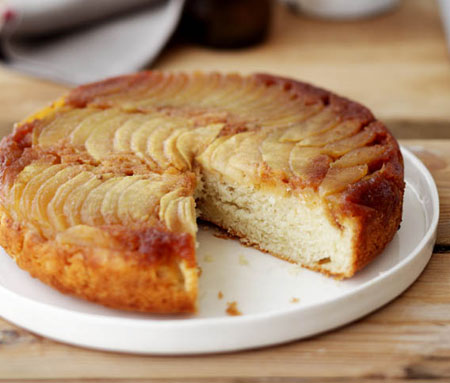
Apple Upside-down Cake with Calvados Flavored Glaze
Upside Down Cakes
The idea of cooking a cake upside down, is an old technique that started centuries ago when cakes were cooked in cast iron skillets. The classic version of this butter-style cake is traditionally made with pineapple but can be made with many varieties of fruits, including plums, peaches, blueberries, or pears. The toppings are spread on the bottom of the pan, often with butter and sugar, and then topped with cake batter. After cooking, the cake is flipped over onto a plate - a natural way to show the pretty fruit and let the sugar glaze run into the cake as well.
Pineapple Upside-Down Cake
Rhubarb Upside-down Cake
Apple Walnut Upside-Down
Cake w/ Calvados Caramel Sauce
Warm Pear & Walnut
Cake w/ Lemon Custard Sauce
Peach Upside-down Gingercake
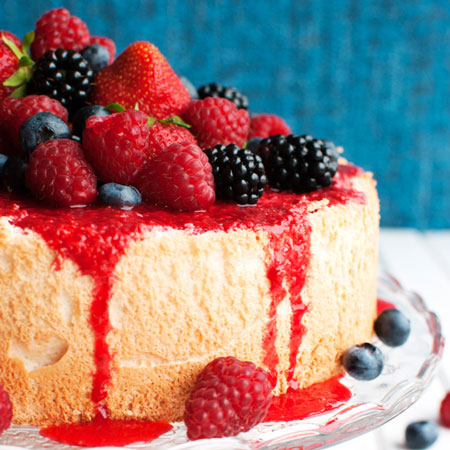
Angel Food Cake with Raspberry Sauce and Fresh Berries
Fresh Fruit/Fresh Fruit Sauce
Fresh Fruit and Fruit Sauces go exceptionally well with several types of cakes, especially those that are light and airy due to the number of eggs used in the batter. Top these cakes with sliced fresh fruit or a fresh fruit sauce, such as Macerated Strawberries, Fresh Raspberry Sauce or Maine Blueberry Sauce and a little whipped cream, if desired.
Foam cakes have little to no fat, and usually have a larger proportion of egg. This gives them their lighter, airy texture (think angel food and sponge cake). These cakes are not going to hold up well against heavy frosting, so it's best to give them a light glaze, a dollop of whipped cream, or fresh fruit topping. The cakes can also be frosted with light, delicate frostings or jam; Victoria sponge, a classic version, is made by sandwiching jam and whipped cream between layers of cake.
Flourless cakes can be baked or unbaked, and are made without flour. Flourless cakes, including cheesecakes, flourless chocolate cakes, as well as mousse cakes, are typically molded in a dessert ring or springform pan then are either baked or simply chilled before unmolding. They generally have a creamy or silky texture; it’s because they are comprised of just egg foams (usually whole eggs and/or egg yolks) with lots of added fat, from sources such as butter, cream cheese, cream or sour cream. These ingredients are mixed with the minimal incorporation of air to prevent the cake from puffing in the oven and collapsing from the lack of structure from wheat flour and tenderizing fat. For easy removal, flourless cakes are often made in a springform pan, though some can also be made in regular round layer cake pans.
Sponge Cake
A sponge cake is a cake which is made with flour, sugar, and eggs, but no shortening. As a result, the cake is distinctly light and fluffy when it is prepared well. These cakes are also very porous, marked with distinctive holes that make them look rather a lot like sponges. In addition to being served on its own, sponge cake is used as the base for many desserts, since it is a very sturdy, durable cake. The airy texture of sponge cake absorbs liquid, which is why it serves as the base for desserts like tres leches cake and trifle. Its absorbency makes it ideal for desserts that call for cake soaked in syrup or alcohol, since the cake will soak up the flavor without falling apart.
Angel Food Cake (white sponge cake)
The lightest of the light, angel food cake is made with egg whites alone and no yolks. The whites are whipped with sugar until very firm before the flour is gently folded in, resulting in a snowy-white, airy, and delicate cake that marries beautifully with fruit. Most angel food cakes have a spongy, chewy quality derived from their relatively high sugar content and the absence of egg yolks. Baked in ungreased two-piece tube pans, angel food cakes are cooled by being inverted, since this type of cake would collapse if cooled right-side-up in the pan or if removed from the pan while still warm.
Chiffon Cake
Chiffon cake is a cross between a sponge and oil cake. The addition of oil gives it a richness similar to a shortened cake, and whipped egg whites and baking powder make it light and airy.
Cheesecake & Other Flourless Cakes
Cakes made without flour, such as cheesecakes (a type of custard), flourless cakes and mousse cakes tend to have a creamy, silky texture as well as a rich flavor when you take a bite. This is because, instead of flour, the recipe has egg foams made of whole eggs or just the yolks, lots of added fats from sources like butter, cream, sour cream, or cream cheese. These cakes can be served on their own, yet fresh fruit or a fruit sauce often complements the cake. You will see raspberry mousse cakes topped with raspberries and chocolate curls.
While cheesecakes can be served on their own, they go well with a number of toppings (some people like caramel and chocolate sauces, for instance) fresh fruit is the perfect complement to the creamy, richness of the cake and accents its tangy flavor. Cheesecakes are served cold - they must be refrigerated - and in the summer, cheesecake with fresh fruit is the ideal dessert. Fresh fruit also adds a decorative element to your otherwise plain cheesecake.
Flourless Cake - Chocolate Torte
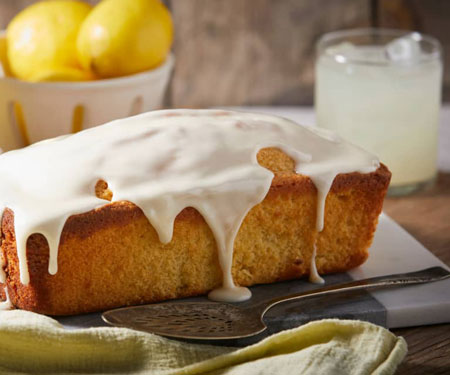
Lemon Pound Cake with Vanilla Glaze
Confectioner’s Sugar Dusting, Icings & Glazes
Another simple cake topping is a confectioner’s sugar dusting (as used on sugar doughnuts), an icing, or a glaze. Confectioner’s sugar is popular, but do no count out a granulated sugar or cinnamon sugar dusting as in the Apple Cider Donut Cake listed below.
Icings and Glazes come in many different flavors: vanilla, lemon, raspberry, chocolate, coffee, etc.
A basic cake icing is the perfect icing for a tube cake, Bundt cake, or coffee cake, and so versatile that you can even drizzle it over muffins, cinnamon rolls, or quick bread. It is delicious and easy to make, calling for just confectioners' (or powdered) sugar, butter, and milk. The glaze hardens when it sets, creating a beautiful, sweet decoration that you'll use often in your baking.
Cakes that are usually baked in Bundt pans are butter and pound cake because they are sturdy, necessary when baking them in intricately decorated pans.
Icings:
Mom's Vanilla Icing (Confectioner's Decorating Icing) (variations: almond, citrus, cognac or rum)
Water Icing (glacé icing)
Simple Sugar Glaze (made with corn syrup)
Basic Fruit Glaze (jam or fruit preserve)
Thin Chocolate Icing
Chocolate Glaze
Ganache
Cakes:
Pound Cake - can be baked in a loaf or Bundt pan and drizzled with a glaze
Lemon Pound Cake w/ Lemon Glaze
Apple Cider Donut Cake - dusting of cinnamon sugar
Baba au Rhum - brushed with rum syrup and apricot preserves
Gingerbread with Lemon Sauce - while the lemon sauce does not use confectioner’s sugar, it is a sugary sauce and used in the same way
Boston Cream Pie - drizzled with chocolate icing
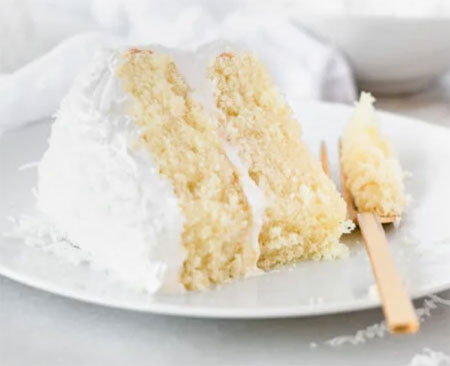
Coconut Cake with Seven-minute Frosting
Cooked Frostings
Seven-Minute Frosting (Fluffy White Icing, Italian Meringue Boiled Frosting) is the classic cooked frosting and is a pure white and marshmallowy. It is made by gradually pouring a hot sugar syrup over stiffly beaten egg whites. The eggs are beaten constantly until the mixture is smooth and satiny, similar to the way an Italian meringue is made. Some boiled frosting recipes are a little sticky and set up fairly quickly so they need to be spread as soon as the frosting is made, while others will remain workable without having to worry about it setting up. Substituting light brown sugar for granulated sugar makes sea-foam frosting, an old-fashioned recipe that deserves a revival. It has a meringue-type consistency, with a caramel flavor.
Ermine frosting (also called roux frosting or boiled milk frosting) is made by cooking flour and sugar with milk to make a sweet paste. This paste is then whipped into softened butter until light and fluffy. Vanilla and salt is added for flavoring. This frosting does not have eggs in it so it’s a fantastic alternative to Swiss Meringue Buttercream if you want a light frosting but can’t have eggs. The frosting is super smooth and creamy. A nice light vanilla flavor and no hint of a flour taste. Many websites claim a cooked frosting is the original frosting used for Devil's Food Cake, Red Devil's Cake, and Red Velvet Cake.
Frostings:
Ermine Frosting
Seven-Minute Frosting (Fluffy White Icing, Italian Meringue Boiled Frosting)
Cakes:
Coconut Cake - with Seven-Minute Frosting
Devil's Food Cake - traditional frosting is Seven-Minute Frosting
Red Velvet Cake - traditionally frosted with Ermine Frosting, but often frosted with Cream Cheese Frosting today
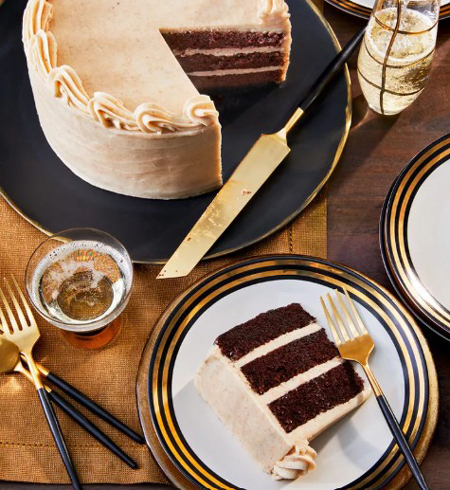
Buttercream Frosting
Buttercreams seem to be the most used frostings for cakes and can be made in just about any flavor you are looking for. You can get very creative with pairing cakes with different flavored buttercreams. Peanut butter or mint buttercreams with chocolate cake, raspberry or lemon buttercreams with lemon cske, caramel buttercream on banana cake, to name just a few. The choice should accent the cake filling, which may be different flavored.
American Buttercream is a sweet and fluffy frosting made by creaming butter and sugar. Other common ingredients include milk (to create the perfect texture) and a flavoring. Though vanilla is the most popular buttercream flavor, it's also commonly found in chocolate or fruit-flavored varieties. It is the butter that gives buttercreams a prominent buttery flavor, a creamy texture, and relatively good stability.
True Buttercreams, European buttercreams as opposed to American buttercream, are frostings that require creating an emulsion, typically requiring more steps and time. This type of preparation creates buttercreams with a smooth and creamy texture and no graininess due to the dissolved sugars. While these buttercreams require more effort and ingredients, they deliver melt-in-your-mouth textures and ultra-smooth, professional decorating results.
You can spread buttercream on cakes as well as using piping for a more decorative look.
Devil's Food Cake - frosted with a Chocolate Buttercream Frosting by many today
American Chocolate Layer Cake
w/ Chocolate Frosting - to make the frosting, a sugar syrup is beat into beaten egg whites, then a chocolate-cream mixture, whipped with butter, is folded in
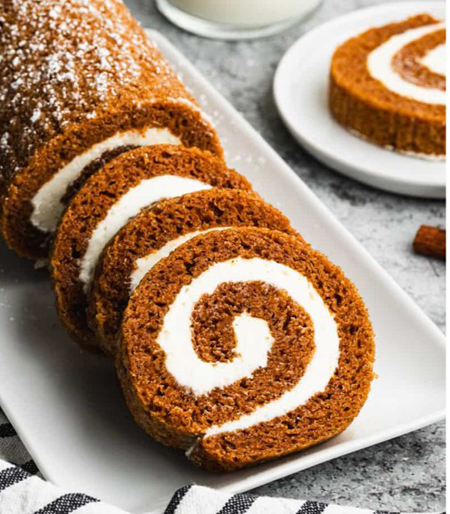
Pumpkin Roll with Cream Cheese Frosting
Cream Cheese Frosting
Cream Cheese Frosting is a type of American buttercream frosting where most of the butter has been replaced with cream cheese. It has a tangier flavor and can be used to spread on and decorate cakes in the same way as an American buttercream. It is often used on Carrot cake and other cakes using spices popular in the fall.
Hummingbird Cake is a classic Southern oil cake flavored with bananas, pineapple, pecans, and warm spices, and topped with a tangy cream cheese frosting. Created in Jamaica and originally called "Doctor Bird Cake," this confection made its way Stateside sometime in the 1960s.
Frostings:
Cream Cheese Frosting
Chocolate Cream Cheese Frosting
White Chocolate Frosting
Mascarpone Frosting - uses mascarpone in place of cream cheese
Cakes:
Carrot Cake - Cream Cheese Frosting became popular in the 1960s
Tropical Carrot Cake
Red Velvet Cake - traditionally frosted with Ermine Frosting, a cooked frosting, but often frosted with Cream Cheese Frosting today
Pumpkin Roll
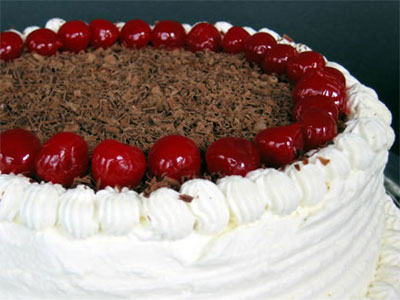
Whipped Cream Frosting
This frosting is basically a very sturdy whipped cream, often called stabilized whipped cream. Think of a thicker, fluffier version of soft whipped cream. Even though it's thick, it's still pretty light and airy. This whipped frosting pipes beautifully on cakes and cupcakes!
Whipped Cream Frosting is often used on a Strawberry Shortcake Cake. Strawberry Shortcake and whipped cream are a classic combination. It is also traditional on a Classic Black Forest Cake. The cherries on this cake go well with whipped cream,
Black Forest Cake w/ Kirsch and Cherry Filling & Whipped Cream Frosting w/ Chocolate Shavings: Black Forest Cake is a chocolate layer cake, with added layers of whipped cream and Kirsch-soaked morello cherries. The cake is then decorated with more whipped cream, morello or maraschino cherries, and chocolate curls or shavings. The cake layers are also soaked in a Kirsch syrup (although brandy or rum can be used).
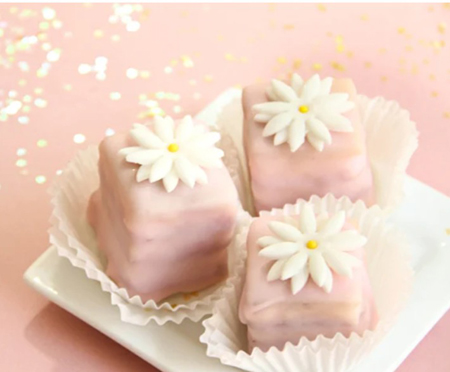
Petit Fours dipped in Poured Fondant
Daisies are made with a cutter and Rolled Fondant
Fondant Icing
Fondant can refer to one of two types of sugar-based pastes used in preparing and decorating cakes, pastries, and confections. Poured fondant and can be used for making candies and as an icing. Rolled fondant produces sheets that can be used for cake decorating, giving a smooth look.
Poured Fondant Icing: Poured fondant, or fondant icing, is a sweet, creamy paste that can be used as a filling or icing for pastries such as éclairs and Napoleons. Poured fondant can be made from simply combining sugar, shortening, and water. Do note that using a high ratio of shortening imparts extra creaminess into the fondant icing. Some poured fondant recipes also call for corn syrup or glucose.
Rolled fondant is almost like a very sweet dough. Like poured fondant, rolled fondant is made from powdered sugar, corn syrup, and water. However, to make rolled fondant, you must also add glycerin, shortening, and some sort of gelatin. Rolled fondant is placed on cakes in a sheet giving the cake a very smooth and professional appearance. Rolled fondant can also be molded or cut to form cake decorations like flowers, leaves, animal, actually anything.
Pink Champagne Cake - many have a poured fondant finish.
Ganache
Black Magic Cake w/ Chocolate Ganache Filling & Frosting
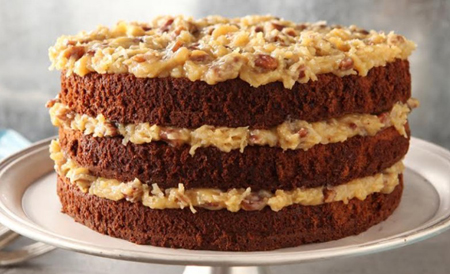
Coconut Pecan Topping on German Chocolate Cake
Coconut-Pecan Topping
German Chocolate Cake w/ Coconut-Pecan Topping
Distinctive with its decadent topping of coconut and pecans, German Chocolate Cake became popular in the 1950’s, and continues to be a favorite today. Made with Baker's German's Sweet Chocolate and buttermilk, this cake is delicious to eat plain, topped with a chocolate frosting, or topped with sweetened whipped cream. However, add the classic coconut-pecan topping and this cake comes alive with a traditional flavor.
