Indian Cuisine
 History and Influences
As a land that has experienced extensive immigration and intermingling through many millennia, India's cuisine has benefited from numerous food influences. The diverse climate in the region, ranging from deep tropical to alpine, has also considerably helped broaden the set of ingredients readily available to the many schools of cookery in India. One strong influence over Indian foods is the longstanding vegetarianism within sections of India's Hindu, Buddhist and Jain communities. People who follow a strict vegetarian diet make up 20–42% of the population in India, while less than 30% are regular meat-eaters.
Around 7000 BC, sesame, eggplant, and humped cattle had been domesticated in the Indus Valley. By 3000 BC, turmeric, cardamom, black pepper and mustard were harvested in India. Many recipes first emerged during the initial Vedic period, when India was still heavily forested and agriculture was complemented with game hunting and forest produce. In Vedic times, a normal diet consisted of fruit, vegetables, meat, grain, dairy products and honey. Over time, some segments of the population embraced vegetarianism, due to ancient Hindu philosophy of ahimsa. This practice gained more popularity following the advent of Buddhism and a cooperative climate where a variety of fruits, vegetables, and grains could easily be grown throughout the year. A food classification system that categorized any item as saatvic, raajsic or taamsic developed in Ayurveda. Each was deemed to have a powerful effect on the body and the mind.
Later, invasions from Central Asia, Arabia, the Mughal empire, and Persia, and others had a deep and fundamental effect on Indian cooking. Influence from traders such as the Arab and Portuguese diversified subcontinental tastes and meals.
Islamic rule introduced rich gravies, pilafs and non-vegetarian fare such as kebabs, resulting in Mughlai cuisine (Mughal in origin) in the north, as well as such fruits as apricots, melons, peaches, and plums. The Mughals were great patrons of cooking. Lavish dishes were prepared during the reigns of Jahangir and Shah Jahan. The Nizams of Hyderabad state meanwhile developed and perfected their own style of cooking with the most notable dish being the Biryani. The Muslim tradition is most evident in the cooking of meats. Mughlai food, kebabs, rich Kormas (curries) and nargisi koftas (meat-balls), pulao (a.k.a. pilaf in Central Asia), the biryani (a layered rice and meat preparation), rogan josh, and preparations from the clay oven or tandoor like tandoori rotis and tandoori chicken are all important contributions made by the Muslim settlers in India. Paneer (pressed fresh curd cheese) is used for preparing vegetarian dishes to suit vegetarian dietary requirements.
During this period the Portuguese and British introduced foods from the New World such as potatoes, tomatoes, squash, and chilies as well as cooking techniques like baking. As with other cuisines, Indian cuisine has absorbed the new-world vegetables as staples. The British gave India its love of tea and put the European twist into some dishes. Anglo-Indian cuisine was the delicious result. The Portuguese left its mark on parts of India in the form of dishes like the world-renowned Vindaloo and Xacuti.
Common Culinary Threads in Indian Cuisine
Although Indian cuisine is highly regionally specific, there are certain common threads that unite the different culinary practices. Indian cuisine throughout the nation is highly dependent on curries, which are gravy-like sauce or stew-like dishes with meat, vegetables, or cheese, although the particular spice mixtures, degree of liquidity, and ingredients are determined by regional preference. Indian cuisine in general is also very dependent on rice, although Southern Indian regions use rice more heavily than other areas. All regional cuisines are reliant on “pulses” or legumes. Indian cuisine uses perhaps a greater variety of pulses than any other world cuisine: red lentils (masoor), Bengal gram (chana), pigeon peas or yellow gram (toor), black gram (urad), and green gram (mung) are used whole, split, or ground into flour in a diverse number of Indian dishes. Dal, or split or whole legumes, add creaminess to dishes that don’t use dairy, and protein to vegetarian diets.
Perhaps the most defining characteristic of Indian cuisine is its diverse use of spices. Indian spice mixes often use upwards of five different spices, sometimes combining ten or more. Chili pepper, black mustard seed, cumin, tumeric, fenugreek, ginger, garlic, cardamom, cloves, coriander, cinnamon, nutmeg, saffron, rose petal essence, and asafoetida powder (a spice that has an overly strong scent when raw but imparts a delightful flavor akin to sautéed onions and garlic when cooked) are all used frequently in various combinations. Garam masala is a popular spice mix, cardamom, cinnamon, and clove, with the additional spices varying according to region and personal recipe. Mint, coriander, and fenugreek leaves offer their pungent, herby flavors to dishes throughout India.
Elements
Staples: The staples of Indian cuisine are rice, atta (whole wheat flour), and a variety of pulses (dried legumes), the most important of which are masoor (most often red lentil), chana (bengal gram), toor (pigeon pea or yellow gram), urad (black gram) and mung (green gram). Pulses may be used whole, dehusked, for example dhuli moong or dhuli urad, or split. Pulses are used extensively in the form of dal (split). Some of the pulses like chana and "Mung" are also processed into flour (besan).
Oils: Most Indian curries are cooked in vegetable oil. In North and West India, groundnut oil has traditionally been most popular for cooking, while in Eastern India, mustard oil is more commonly used. In South India, coconut oil and Gingelly Oil is common. In recent decades, sunflower oil and soybean oil have gained popularity all over India. Hydrogenated vegetable oil, known as Vanaspati ghee, is also a popular cooking medium that replaces Desi ghee, clarified butter (the milk solids have been removed).
Herbs & Spices: The most important/frequently used spices in Indian cuisine are chilli pepper, black mustard seed (rai), cumin (jeera), turmeric (haldi, manjal), fenugreek (methi), asafoetida (hing, perungayam), ginger (adrak, inji), coriander, and garlic (lassan, poondu). Popular spice mixes are garam masala which is usually a powder of five or more dried spices, commonly including cardamom, cinnamon, and clove. Each region, and sometimes each individual chef, has a distinctive blend of Garam Masala. Goda Masala is a popular spice mix in Maharashtra. Some leaves are commonly used like tejpat (cassia leaf), coriander leaf, fenugreek leaf and mint leaf. The common use of curry leaves is typical of all South Indian cuisine. In sweet dishes, cardamom, nutmeg, saffron, and rose petal essence are used. The term "curry" is usually understood to mean "gravy" in India, rather than "spices." The term Desi Diet indicates a Diet followed by Indians.
Administrative Divisions or States of India
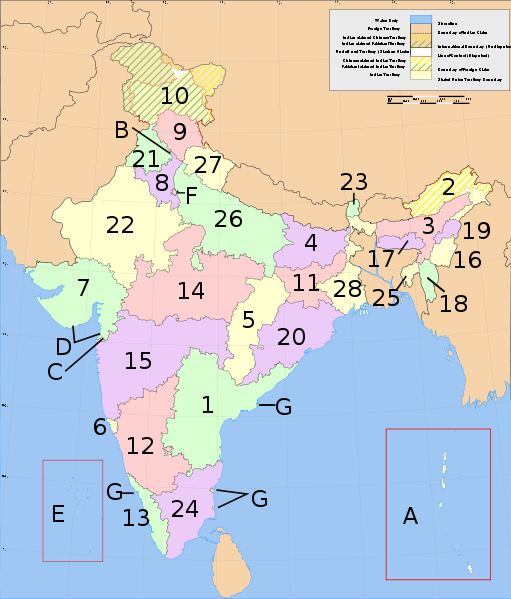 |
F. National Capital Territory of Delhi (N) |
| North Chandigarh (u.t.) Delhi (u.t.) South Lakshadweep (u.t.) Pondicherry (u.t.) East Andaman and Nicobar Islands (u.t.) West Dadra and Nagar Haveli (u.t.) Daman and Diu (u.t.) |
Regional Cuisines
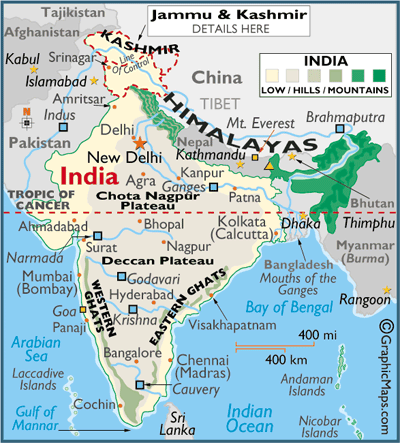
As far as food is concerned, India can very roughly be divided into four regions. Each region has several states in it and each state its own unique food. In North India chillies, saffron, milk, yoghurt, cottage cheese and ghee (clarified butter) are hot favorites while in the South, folks love pepper, tamarind and coconut and will often even cook in coconut oil. Those in the East love all things mustard and fish while the extremely cosmopolitan West Indians have so adopted western ingredients that their style can quite easily be called fusion.
North Indian Cuisine (Punjab, Kashmir, Uttar Pradesh and Delhi)
Geographical and cultural influence on the region’s cuisine: North India has extreme climates – summers are hot and winters are cold. There is an abundance of fresh seasonal fruit and vegetable to be had. Its geographical position with relation to the rest of the sub-continent means that this region of the country has had strong Central Asian influences both in its culture and its food. Mughlai and Kashmiri cultural styles of cooking are not just prevalent, they are also popular.
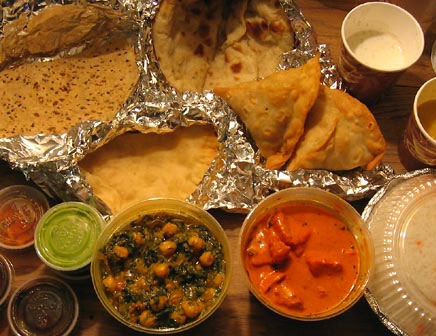
Northern Indian Cuisine: Perhaps the most well-known and prevalent culinary style found outside of India, Northern Indian cuisine reflects a strong Mughal influence. It is characterized by a high use of dairy: milk, paneer (an Indian mild cheese), ghee (clarified butter), and yogurt are all used regularly in Northern dishes. Samosas, fried pastries stuffed with potatoes and occasionally meat, are a distinctive Northern snack. Clay ovens known as tandoors are popular in the North, giving dishes like Tandoori Chicken and Naan bread their distinctive charcoal flavor. A significant number of Northern dishes make regular appearances on Indian menus. Dal or Paneer Makhani are popular vegetarian dishes, consisting of dal or paneer, pressed fresh cheese, cooked in a creamy sauce of tomatoes, onions, mango powder, and garam masala. Saag Paneer and Palak Paneer are two similar dishes made with spinach, cream, and paneer, differing slightly in consistency and spices. Korma, another menu staple from Northern India, is a creamy curry of coconut milk or yogurt, cumin, coriander, and small amounts of cashews or almonds. It can be served with different meats, usually chicken or lamb, but sometimes beef, as well as with paneer for a vegetarian dish.
Style of food: North Indian curries usually have thick, moderately spicy and creamy gravies. The use of dried fruits and nuts is fairly common even in everyday foods. Dairy products like milk, cream, cottage cheese, ghee (clarified butter) and yoghurt play an important role in the cooking of both savory and sweet dishes. Gravies (curries) are typically dairy-based. Thanks to the fact that such a rich variety of fruit and vegetable is available at all times of the year, the region produces a dazzling array of vegetarian dishes.
North Indian cooking features the use of the "tawa" (griddle) for baking flat breads like roti and paratha, and the "tandoor" (a large and cylindrical charcoal-fired oven) for baking breads such as naan, and kulcha. Main courses like tandoori chicken also cook in the tandoor. Other breads like puri and bhatoora, which are deep fried in oil, are also common. Goat and lamb meats are favored ingredients of many northern Indian recipes.
The samosa is a popular North Indian snack, and now commonly found in other parts of India, Central Asia, North America, and the Middle East. A common variety is filled with boiled, fried, or mashed potato (see Aloo Samosas). Other fillings include minced meat, cheese (paneer), mushroom (khumbi), and chick pea.
Some common North Indian foods such as the various kebabs and most of the meat dishes originated with the Mughal incursions into the country. Considering their shared historic and cultural heritage, Pakistani cuisine and North Indian cuisine are very similar. See Indian Kebabs.
Staple foods: The staple food crop of northern region of India is wheat and North Indians prefer Indian breads over rice if the rich variety of breads is anything to go by. This region is home to the tandoori roti and naans (breads made in a clay tandoor oven), stuffed parathas (flaky Indian bread with different kinds of vegetarian and non-vegetarian fillings) baked on a tawa and kulchas (bread made from fermented dough). Other staple foods include a variety of lentils and vegetables. A typical traditional north Indian diet would consist of Roti or Parathas (Plain Parathas) served with dal, which is a watery preparation of pulses. Rice is still used and made into elaborate biryanis and pulaos (pilafs).
Popular snacks, side-dishes and drinks include mirchi bada, buknu, bhujiya, chaat, kachori, imarti, several types of pickles (known as achar), murabba, sharbat, aam panna and aam papad. Popular sweets are known as mithai (means sweetmeat in Hindi), such as gulab jamun, jalebi, peda, petha, rewadi, gajak, bal mithai, singori, kulfi, falooda, khaja, ras malai, gulkand, and several varieties of laddu, barfi and halwa.
Cooking oils commonly used: Vegetable oils like sunflower and canola. Mustard oil is rarely used and only in some states of the region. Ghee is normally reserved for special occasion cooking.
Important spices and ingredients: coriander, cumin, dry red chillies, turmeric, chilli powder, cardamom, cinnamon, cloves, garam masala, aniseed/fennel, etc.
Popular meat dishes:
Butter Chicken (Murg Makhani)
Chicken Tikka - marinated in spices and grilled on skewers
Tandoori Chicken - marinated in an Indian spice yogurt sauce and grilled
Dahi Gosht - lamb in yoghurt-based curry
Popular fish dishes:
Fish Amritsari
Malai Prawn - creamy prawn curry
Popular Dal & Rice Dishes:
Biryani - layered rice and meat that is baked in an earthen pot called Handi - see Mughlai Biryani
Pulaos (rice pilafs)
Chole - chickpea curry
Baati · Baingan Bartha · Barfi · Bhatura · Chana masala · Chole bhature · Churma · Dal Makhani · Haleem · Kachori · Kadai · Kadhi · Keema · Kulcha · Korma · Kulfi · Makki di roti · Mirchi Bada · Nihari · Pakora · Pasanda · Raita · Rajma · Rogan josh · Rumali Roti · Sarson Da Saag · Shahi paneer · Shami Kebab
Popular vegetarian dishes:
Mutter/Mattar Paneer - a curry made with paneer (pressed fresh cheese) cut into blocks and peas
Palak Paneer - a curry made with paneer (pressed fresh cheese) cut into blocks and spinach
Aloo Gobi - dry vegetable dish made with potatoes (aloo), cauliflower (gobi) and Indian spices
Popular northern breads:
Chapati (unleavened flatbread baked on a tawa)
Naan (leavened flatbread baked in a tandoor)
Poori (deep-fried bread)
Plain Parathas (flaky flatbread fried on a tawa)
Lachcha Parathas (layered parathas)
Aaloo Paratha (potato flatbread)
Popular northern desserts and sweets:
Jalebi
Motichoor laddoo (sweet)
Popular northern snacks:
Samosas - snack with a pastry case with different kinds of fillings - see Aloo Samosas with potato filling
Chaat (hot-sweet-sour snacks made with potato, chick peas and tangy chutneys - Tikki Ki Chaat)
Northern India Dhabas (truck-stop) food:
Tandoori Chicken - marinated in an Indian spice yogurt sauce and grilled
Butter Chicken (Murg Makhani)
Tadka Daal - yellow split pea dal
Kaali Daal - black lentil dal
Chicken Curry
Anda Curry - egg curry
Aaloo Mutter - potatoes and peas
Aaloo Paratha - potato flatbread
Naan - leavened flatbread
Lassi - yoghurt drinks, for instance, Mango Lassi
A typical North-Indian meal would consist of chapatis or rotis (unleavened bread baked on a griddle) or parathas (unleavened bread fried on a griddle), rice and an assortment of accessories like dals, fried vegetables, curries, curd (yogurt), chutney, and pickles. For dessert one could choose from the wide array of sweetmeats from Bengal in east India like rasagulla, sandesh, rasamalai and gulab-jamuns. North Indian desserts are very similar in taste as they are derived from a milk pudding or rice base and are usually soaked in syrup. Kheer, a form of rice pudding, shahi tukra or bread pudding, and kulfi, a nutty ice-cream, are other common northern desserts.
Eastern Indian Cuisine (Bengali)
Geographical and cultural influence on the region’s cuisine: Home to beaches and mountains and Cherrapunji (the city with the highest rainfall in the world), Eastern India grows a lot of rice! Green vegetables and fruit are also abundant and so are the foods cooked using them. People though, are a balanced mix of vegetarian and non-vegetarian. The geographical location of this region means its food bears the strong influence of Chinese and Mongolian cuisine.
Eastern Indian Cuisine: Eastern Indian cuisine is primarily known for its desserts. These desserts are not only favored by other regions in India, but are frequently found at Indian restaurants, their light sweetness making an excellent finale to a meal. Rasgulla is a popular sweet treat consisting of semolina and cheese curd/yogurt (chenna) balls that are boiled in a light sugar syrup. Eastern dishes favor mustard seeds, poppy seeds, and mustard oil, giving dishes a light pungency. Rice and fish also feature prominently in Eastern cuisine. Overall, Eastern dishes are more lightly spiced than those from other regions.
Style of food: Simple is the key word for food of this region in India. Preparation is not elaborate and neither are most of the ingredients. Steaming and frying are popular methods of cooking. In coastal regions fish is the non-vegetarian food of choice while further inland, pork wins the popularity contest.
Fish and shellfish are commonly consumed in the eastern part of India. The popular vegetable dishes of Orissa are Dalma and Santula. The cuisine of Bangladesh is very similar to eastern Indian cuisine, particularly that of West Bengal; the most popular vegetable dish of Bengal is Sukto. Deep fried, shallow fried and mashed vegetables are also very popular. As in southern India, rice is the staple grain. A regular meal consists of lentils, a non-vegetarian side dish usually made of fish and a few other secondary side dishes made of vegetables.
Traditional cuisines of Orissa, Bengal, and Assam are delicately spiced. General ingredients used in Oriya, Bengali, and Assamese curries are mustard seeds, cumin seeds, nigella, green chillies, cumin paste and the spice mix panch phoron or panch phutana. Mustard paste, curd (yogurt), nuts, poppy seed paste and cashew paste are preferably cooked in mustard oil. Curries are classified into bata (paste), bhaja (fries), chochchoree (less spicy vapourized curries) and jhol (thin spicy curries).These are eaten with plain boiled rice or ghonto (spiced rice). Traditional breakfasts includes pantabhat or pakhaal, as well as cereals such as puffed rice or pressed rice, in milk, often with fruits.
East Indian cuisine is famous for its desserts. Some of India’s most popular and world-renowned sweets come from here and many of the sweet dishes now popular in Northern India initially originated in the Bengal and Orissa regions. East Indian sweets include rasagolla, chumchum, sandesh, rasabali, chhena poda, chhena gaja, chhena jalebi and kheeri. Apart from sweets, East India cuisine offers delights of posta (poppy seeds).
Staple foods: Rice and some more rice!
Cooking oils commonly used: Mustard oil is very popular and used for both deep frying and cooking. Other vegetable oils are also used. Ghee is used for cooking special occasion foods.
Important spices and ingredients: Mustard seeds and paste, chillies (both green and red), Paanch Phoran (a mix of five spices – white cumin seeds, onion seeds, mustard seeds, fennel seeds and fenugreek seeds). Yoghurt, coconut, maize and gram flour are also common ingredients. Milk and dairy products play a huge role in the preparation of sweets in Eastern India.
Popular dishes: Some very popular dishes are Momos (steamed, meat- or vegetable-filled wontons), Macherjhol (fish curry), Thukpa (a clear soup), Tomato Achaar (tomato pickle), Machcher Jhol (fish curry), Jhaal-Muri (a spicy snack made with puffed rice and mustard oil), Sandesh, Rasgolla....
Beguni · Bhuna Khicuhri · Cham cham · Charchari · Chhena · Dahi Machha · Jalfrezi · Kati roll · Luchi · Machha Jhola · Mishti Doi · Pakhaal · Pantua · Pithe · Rasgulla · Ras malai · Santula
South Indian Cuisine (Andhra, Malabari, and Chettinad)
Geographical and cultural influence on the region’s cuisine: South India has hot, humid climate and all its states are coastal. Rainfall is abundant and so is the supply of fresh fruit, vegetables and rice. Andhra Pradesh produces fiery Andhra cuisine which is largely vegetarian yet has a huge range of seafood in the its coastal areas. Tamil Nadu has Chettinad cuisine, perhaps the most fiery of all Indian food. This style too is largely vegetarian.
From Kerala comes Malabari cooking, with its repertoire of tasty seafood dishes. Hyderabad (capital of Andhra Pradesh) is home of the Nizams (rulers of Hyderabad) and regal Nizami food rich and flavorful with tastes ranging from spicy to sour to sweet. Hyderabadi food is full of nuts, dried fruits and exotic, expensive spices like Saffron.
Southern Indian Cuisine: Southern Indian cuisine is not typically found on many Indian restaurant menus and differs greatly from other regions. Its “curries” contrast differently in their textures and can typically be categorized according to the drier consistency, or those favoring a more soupy or stew-like presentation. Poriyals, dry curries consisting of a variety of vegetables and spices, accompany rice dishes. Sambars, rasams, and kootus, three common stew-like dishes, each differ in their primary ingredients and degrees of liquidity. Sambars are essentially tamarind flavored pea and vegetable stews that are more watery than curries from other regions, but are thicker than rasams. Rasams are more similar to soups in their consistency, and are composed primarily of tomato, tamarind, and a myriad of spices. Kootus are more similar to curries found in other regions, but, rather than being creamy like the dairy-based curries of the North, kootus get their consistency from boiled lentils.
Aside from curry-style dishes, Southern Indian cuisine is known for its tasty fried or griddle-cooked snacks. Dosas consist of a large crepe-like rice pancake that is usually filled with vegetables, chutneys, or masala curries. Utthapams are similar to dosas, but are thicker with the “filling” sprinkled on top like a pizza. Idlis and vadas are fried delicacies similar to savory doughnuts that are served as accompaniments to sambars and rasams. Apart from restaurants that specifically serve Southern Indian cuisine, the only South Indian food that is frequently found in Indian restaurants are pappadams (recipe for potato pappadams), a fried crispy rice cracker usually spiced with black peppercorns.
Style of food: By and large, South Indian cuisine is perhaps the hottest of all Indian food. Meals are centered around rice or rice-based dishes. Rice is combined with Sambaar (a soup-like lentil dish tempered with whole spices and chillies) and rasam (a hot-sour soup like lentil dish, also called saaru and rasa), dry and curried vegetables and meat dishes and a host of coconut-based chutneys and poppadums (deep-fried crispy lentil pancakes - Potato Pappadums). South Indians are great lovers of filter coffee.
Here you find a variety of pickles and the liberal use of coconut and particularly coconut oil and curry leaves. Curries called Kozhambu are also popular and are typically vegetable stews cooked with spices, tamarind and other ingredients. The dosa, poori, idli, vada, bonda and bajji (Potato Bhaji) are typical South Indian favorites. These are generally consumed as part of breakfast. Other popular dishes include Kesaribath, Upma, Pulao, Puliyodharai and Thengai Sadham. Hyderabadi biryani, a popular type of biryani, reflects the diversity of south Indian cuisine. South Indian cuisine obtains its distinct flavours by the use of tamarind, coconuts, lentils, rice and a variety of vegetables. Udupi cuisine is one of the popular cuisines of South India.
Andhra, Chettinad, Tamil, Hyderabadi, Mangalorean, and Kerala cuisines each have distinct tastes and methods of cooking . In fact each of the South Indian states has a different way of preparing sambar; a connoisseur of South Indian food will very easily tell the difference between sambar from Kerala, sambar from Tamil cuisine, Sambar from Karnataka and pappu chaaru in Andhra cuisine.
A typical south Indian meal would consist of rice, the staple of the meal, served with piping hot sambhar (vegetable gravy with pulses), rasam (soup like preparation), a curd (yogurt) preparation called pachadi, and pickles, along with at least two different varieties of vegetables prepared in two different styles - dry and curried. A light crisp item called "pappadam" for occasional crunching in between is also served (see Potato Pappadums). South Indian food is less greasy and oily as compared to north Indian cuisine as most items are steamed or shallow fried. South Indians are known to use generous amounts of home made spices that make the food really tasty. Most non-vegetarian dishes have fish as the main ingredient and other forms of seafood.
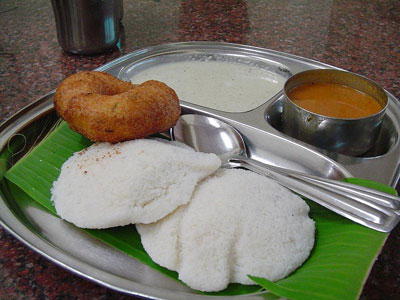 |
| The South Indian staple breakfast item of idli (steamed rice bread), sambar (red curry), and vada (donut-shaped fried bread) served on a banana leaf. Note the stainless steel plates and cups characteristic of south Indian dining tables. The white chutney is coconut chutney, a staple in Southern Indian kitchens. |
Coconut is an important ingredient in all South Indian food.
The South Indian dosa (fermented rice pancakes), idli (steamed rice cakes) and vada, fried doughnut like items made of made of fermented rice and dal that are not sweet, are now popular throughout the country. The popular dishes from Kerala are appams (a rice pancake) and thick stews. Desserts from the south include the Mysore pak and the creamy payasum.
Staple foods: No South Indian meal is complete without rice in some form or other – either boiled rice or Idlis (steamed cakes made from rice batter), Dosas or Uttapams (pancakes made from a batter of rice and lentil flour). Daals (lentils) are also a part of most meals.
Cooking oils commonly used: Coconut oil is most commonly used for cooking and frying. Vegetable oils like sunflower and canola are also used and ghee is poured over rice during daily meals or on special occasion dishes.
Important spices and ingredients: Curry leaves, mustard, Asafetida, pepper and peppercorns, tamarind, chillies and fenugreek seeds.
Popular dishes: Some popular dishes include the Hyderabadi Biriyani, Ghee Rice with meat curry, seafood (prawns, mussels, mackerel) and paper thin Pathiris from Malabar area, Sambaar (lentil soup or stew served with Idlis and Dosas), Uttapams, Rasam, Payasam... Coconut Chutney, Fish Curry (made with tamarind), Chettinad chicken, Mutton Ishtew, Kerala Beef Fry, Curd Rice (yogurt rice), Tomato Rice, Bisi Bele Baath (rice with lentils), South Indian Kadhi, Stir-fried Potato (filling for Dosas), Gunpowder Chutney, Curd (Yogurt) Chilly
Appam · Aviyal · Baghara baingan · Bonda · Chicken 65 · Chakna · Dahi chutney · Dopiaza · Double ka meetha · Fish molee · Hyderabadi biryani · Hyderabadi haleem · Idiappam · Injipuli · Kaalan · Kanji · Kerala porotta · Koottu · Kozhukatta · Lukhmi · Mirchi ka salan · Murukku · Mysore Pak · Pachadi · Paniyaram · Parotta · Pongal · Poriyal · Pulihora · Puttu · Sheer korma · Sevai
A Restaurant Menu Choices:
Wada Sambhar - Lentil dumpling in a sambhar (lentil stew).
Idli-Sambar - Steamed rice and lentil cakes accompanied with coconut curry and sambhar (lentil stew)
Dosa - Crepes made with rice and lentils served with coconut chutney and sambhar (lentil stew).
Utthapam - Rice and lentil pancake topped with onions, peppers, and coriander. Served with coconut chutney and sambhar (lentil stew).
Madras Curry - Tomato and coconut curry flavored with mustard seeds, chilies and turmeric.
Chettinad Chicken - A medley of South Indian spices, curry leaves, fennel, black pepper and tamarind make this curry exquisite.
Popular southern breads:
Idlis - steamed rice cakes
Dosas - crepe made from rice and black lentils
Uttappams - "pancake" made from Idli batter
Popular southern snacks:
Masala Dosa - dosa stuffed with batata bhaji, a potato curry
Vadas - deep-fried
West Indian Cuisine (Gujarati, Maharashtrian and Goan)
Geographical and cultural influence on the region’s cuisine: Western India has three major food groups: Gujarati, Maharashtrian and Goan.
Gujarat and Rajasthan to the north have hot, dry climates so the relatively smaller variety of vegetables available are preserved as pickles and chutneys. Culturally these states are predominantly Hindu and vegetarian. Many Gujarati dishes have a hint of sweetness due to use of sugar or brown sugar and are distinctively sweet, salty, and spicy at the same time.
Maharashtrian cuisine has mainly two sections defined by the geographical sections. Parts of cosmopolitan Maharashtra are coastal and parts arid, and the food varies accordingly. The coastal regions, geographically similar to Goa, depend more on rice, coconut, and fresh fish and seafood. The hilly regions of the Western Ghats and Deccan plateau regions use groundnut in place of coconut and depend more on jowar (sorghum) and bajra (millet) as staples.
Goa with its lush green coastline has an abundance of fresh fish and seafood. Goan cuisine is influenced by the Portuguese colonization of Goa. Local dishes like Vindaloo and Xacuti testify to the fact that it was a Portuguese colony until the 1960s.
? Saraswat cuisine forms an important part of coastal Konkani Indian cuisine.
Western Indian Cuisine: Western Indian cuisine is distinguished by the geographic and historical particulars of its three main regions: Maharashtra, Gujarat, and Goa. Maharashtra’s coastal location is responsible for its fish and coconut milk-dominant cuisine. Gujarati cuisine is mostly vegetarian and has an underlying sweetness to many of its dishes due to Chinese influence. Since the dry climate of this region produces smaller vegetables, this region is well known for its chutneys, which are popular Indian condiments that use cooked, fresh, or pickled vegetables and fruits with sweet, sour, or spicy flavors. Goa acted as a major trade port and colony for Portugal, resulting in a distinctive and unique blend of Indian and Portuguese culinary elements. Goan cuisine uses pork and beef with greater frequency than other regional cuisines in India. Vinegar is also a characteristic ingredient of Goan cuisine, another result of Portuguese influence. The prevalence of coconut milk, coconut paste, and fish in Goan cuisine results from its coastal location. Vindaloo is a traditional Goan dish that is an Indian restaurant mainstay, its name deriving from Vinho de Alho, a Portuguese marinade consisting primarily of garlic, wine, vinegar, and chilies.
Style of food: This region probably has the most diverse styles of food in India and has a wide range of dishes to offer.
Rajasthani food is spicy and largely vegetarian but includes many delicious meat dishes like Laal Maas (red meat curry). The Rajasthani cuisine uses less vegetables than other regions because of the desert like conditions, but they have a wide variety of spicy chutneys and pickles.
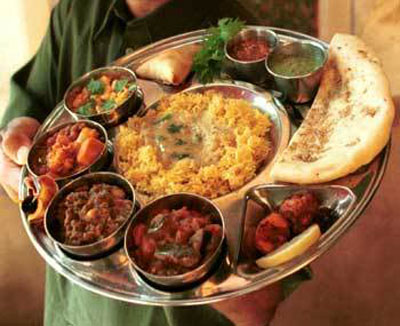 Gujarat’s cuisine is know for its slight sweet touch (at least a pinch of sugar is added to most dishes!) and is traditionally entirely vegetarian. Thaali (a large plate - see picture to the left) is the Gujarati style of eating and a meal can consist of as many as 10 different vegetable dishes, rice, chapati (Indian flatbread) and sweets! The Gujaratis love a snack and cook a huge variety of them. These are collectively known as Farsan.
The people of Maharashtra prepare a dish called "puran poli" that is famous throughout the country. Most of the items are steamed and roasted. In Maharashtra, coastal areas are famous for Malvani cuisine (fresh coconut-based hot and sour curries with fish and seafood) while the interiors have the more frugal, Vidharba cuisine which uses a lot of dry coconut.
Goan food is rich, piquant and strongly flavored by coconut, red chillies and vinegar.
Staple foods: In Gujarat and Rajasthan corn, lentils and gram flour, dry red chillies, buttermilk, yoghurt, sugar and nuts; in Maharashtra, fish, rice, coconut and peanuts and in Goa fish, pork and rice.
Cooking oils commonly used: Vegetable oils like sunflower, canola and peanut oil and ghee.
Important spices and ingredients: Dry red chillies, sugar, sesame seeds, coconut, nuts, vinegar, fish, pork….
Popular meat dishes:
Pork Vindaloo - Goan hotly spiced marinated pork dish
Chicken Xacuti
Bardoli Ki Khichdi
Fish Curry
Bhelpuri
Thepla
Daal-Baati-Choorma
Laal Maas
Ghewar
Akuri · Bhakri · Bombil fry · Chivda · Chouriço · Dahi vada · Dhansak · Dhokla (dal with noodles) · Khatkhate · Khichdi · Kombdi vade · Kuswar · Misal · Pav bhaji · Patoleo · Patra ni machhi · Sabudana Khichadi · Sanna · Shrikhand · Sorpotel · Thalipeeth · Vada pav · Veg Kolhapuri - Beans Foogath
