Pasta Shapes & Serving Sizes
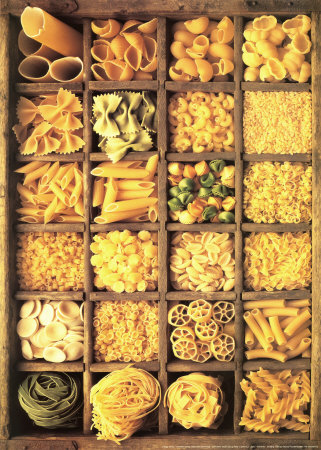
There are two basic kinds of commercial pasta:
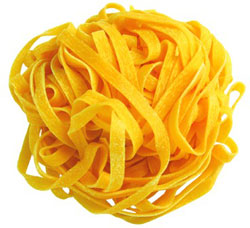
- Pasta all'uovo, egg pasta such as tagliatelle, fettuccine, and whatnot (these are the same tagliatelle one makes at home, but made with semolina), and:
- Pasta di semola di grano duro, made with semolina, water and a touch of salt.
The former are flat and of varying width, while the latter comes in all sorts of shapes, from spaghetti to penne to cart wheels.
Egg pasta goes well with hearty fare, for example meat-based sauces or rich tomato sauces. Lasagne made with egg pasta are also superb.
Because of the variety of shapes it comes in, pasta di semola di grano duro is more versatile. When making delicious pasta dishes, be sure to choose a pasta shape and sauce that complement each other.
Thin, delicate pastas like angel hair or thin spaghetti, should be served with light, thin sauces, sauces that are cream- or oil-based. Oil and cream will coat the pasta noodles without overpowering them.
Thicker pasta shapes, like fettuccine, work well with heavier sauces. Pasta shapes with holes or ridges like mostaccioli or radiatore, are perfect for chunkier sauces, in part because they trap the sauce. They also work well in baked dishes, because they have considerable body and can withstand being heated through a second time.
Other shorter flat pastas, for example farfalle (butterflies or bow ties), work nicely with cream sauces because the sauce tends to stick to their surfaces.
The amount of cooked pasta you get from dry depends on which shape you're cooking, but you'll get a pretty close idea from the information below from the National Pasta Association website (ilovepasta.org):
- Small to medium pasta shapes (Elbow Macaroni, Medium Shells, Rotini, Twists, Spirals, Wagon Wheels, Bow Ties, Mostaccioli, Penne, Radiatore, Rigatoni)
8 oz. uncooked (dry) = 2 cups uncooked (dry) = 4 cups cooked = 4 servings - Long pasta shapes (Spaghetti, Angel Hair, Linguine, Vermicelli, Fettuccine)
8 oz. uncooked or 1 1/2 inch diameter bunch = 4 cups cooked = 4 servings - Egg Noodles 8 oz. uncooked = 2 1/2 cups cooked
- Typically 1 cup of cooked pasta = 200 calories
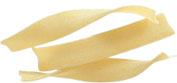
Wide Egg Noodles
|
From "Nudel," German meaning paste with egg. Go beyond the traditional Stroganoff and use Egg Noodles to create soups, salads and casseroles. Or, top with any sauce and serve hot. Serving size: Faith's Beef Stroganoff |
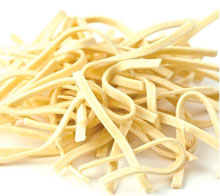
Kluski Noodles
|
Kluski is a generic Polish name for all kinds of dumplings without a filling, though at times the word also refers to all varieties of noodles as well. Kluski is an egg noodle, which adds to the homemade feel of the dish they are used in. It is also rolled out fairly thick, tending to make it more dense and chewy than other commercial egg noodles, which are sometimes pressed to be very thin before being cut. The narrow width makes kluski pasta useful in pasta dishes, soups, casseroles, and a range of other dishes. Homemade Kluski Noodles Serving size: 2 oz. (8 servings in a 1 # box) = 1/2 cup uncooked/dry = 1 cup cooked |
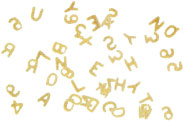
Alphabets |
This favorite kids' shape is usually used in soups for a fun meal anytime. Have a child that’s too picky to eat their veggies? Pair alphabet pasta with some vegetables or soup to win them over. Serving size: |
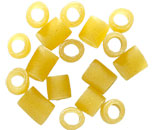
Ditali |
Ditali ("Little Thimbles") - The word ditali comes from 'dita', which means fingers in Italian. So ditali are things that can fit around a finger. This versatile shape can be used as the base of any dish. Bake it, stir it into soups, or create great salads and stir-fry dishes. Serving size: |
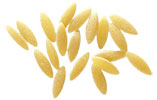
Orzo |
This small pasta is thought to look like grain (orzo means barley), so is often used as an alternative to rice. This small, grain shaped pasta can be topped with any sauce, added to soups, or baked as a casserole. Perfect as a side dish as well as a main course. Serving size: |
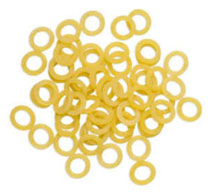
Anellini
|
Small rings of pasta. It can be used in various soups and is also a complement to the fresh vegetables in a number of salads. Its smaller version, Anellini, can also be used in its place. |
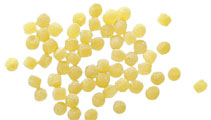
Acini di Pepe
|
Italian for "peppercorns", they look like tiny beads. Acini di pepe work well in soups or cold salads. Also sometimes referred to as pastina (Italian for "tiny dough"); however, some pasta makers distinguish pastina as smaller than acini di pepe. Serving size: |
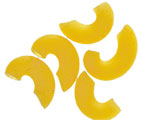
Macaroni
|
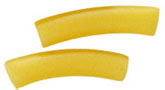
("Dumpling") - A short, curved type of macaroni (spelt ‘maccheroni’ in Italian), often served with cheese in America (Macaroni and Cheese). A highly versatile shape that can be topped with any sauce, baked, or put in soups, salads and stir-fry dishes. Serving size: 2 oz. (8 servings in a 1 # box) = 1/2 cup uncooked/dry = 1 cup cooked Mom's Macaroni Salad (variation w/ tuna fish) |
Conchiglie (Shells)
|
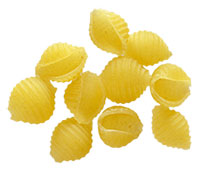
A popular shell-shaped small pasta, literally translated as ‘conch shells’ (and pronounced ‘con-kee-lee-ay’). The shell is good for catching dribbly sauce, so conchiglie are often served with delicious cream or sumptuous tomato sauces. Shells make a great addition to soups or as the base of a wonderful salad. For a fun twist on a time-honored tradition, try remaking your favorite Macaroni and Cheese using Shells. Serving size: Mom's Macaroni Salad (variation w/ tuna fish) |
Orecchiette
|
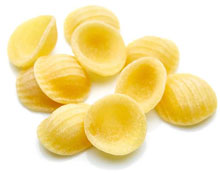
A typical Puglian pasta, orecchiette (pronounced o-rek-kyet-teh) were named for their shape, which resembles little ears. Made only from semolina, water and salt, their rough surface holds onto sauces and allows them to be prepared in a variety of ways. Now there is a commercial version of this pasta. The most popular traditional recipe combines orecchiette with cime di rapa (broccoli rabe), a typical vegetable in southern Italy consisting of slender stems and small florets, which are boiled and then sautéed with garlic, oil, anchovies and chili pepper. |
Wagon Wheels, Ruote/Rotelle |
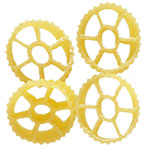
Ruote [roo-O-tay] ("Wheels") - Wagon Wheels make interesting salads, casseroles and stir-fry dishes. Add to soups, or simply top with sauce and enjoy. Serving size: |
Fusilli/Rotini
|
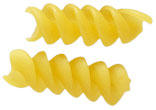
("Spirals" or "Twists") Fusilli is the Italian word for ‘little spindles’. Fusilli are more tightly curled than cavatappi and great for catching cream and vegetable sauces, as well as using in pasta salads. Fusilli's twisted shape holds bits of meat, vegetables and cheese, so it works well with any sauce, or you can use it to create cold summer salads. Fusilli also bakes well in casseroles. A longer version of fusilli also exists called ‘fusilli napoletani’ (from the Southern Italian city of Naples). Serving size: |
Cavatappi
|
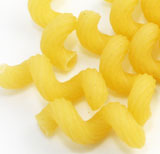
Cavatappi is an Italian word created by compounding 'cava tappi' which literally means 'tap extractor', that is, a corkscrew. Cavatappi usually has rigati (lines or grooves on the outside surface of pasta). These come from Southern Italy originally and are an adaptable shape suited to many types of sauce. Its slender, spiral shape makes it suitable for serving with sauces, in salads, and in casseroles. Serving size: |
Gemelli
|
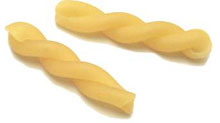
Gemelli, which truly is a different type of pasta (without any real variations of its own), translates as ‘twins’ - so called because this type of pasta is made by twisting two short strands of pasta around each other. Serving size: |
Radiatore
|
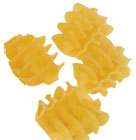
Literally translates as ‘radiators’, so radiatore are small squares of pasta (not stuffed) that display ridges ‘radiating’ outwards. Radiatore are often used in similar dishes as rotelle or fusilli, since the shape works well with thicker sauces. Serving size: |
Penne Lisce (Maltagliati)
|
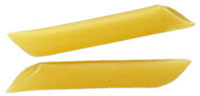
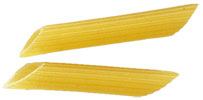
One of the most popular pasta types around, penne means ‘quills’ and refers to straight tubes of pasta cut diagonally at the ends (to resemble the end of a quill, like a quill pen). One classic penne dish is ‘penne all’Arrabbiata’ – which features an ‘angry’ spicy tomato sauce. Maltagliati refers to freshly made penne (rather than dried penne from a packet), whilst penne zita is a wider penne version. Serving size: |
Penne Rigate
|
Penne Rigate is penne that has rigati, lines or grooves on the outside surface of pasta. The penne noodle is very similar to rigatoni, as the tube-shaped noodle marries beautifully with hearty sauces. But penne noodles are much better for baked cheese dishes. The small tubes of the noodles hang onto the melted cheese. Serving size: |
Ziti
|
("Bridegrooms") - A medium-sized, tubular pasta shape, Ziti is perfect for chunky sauces and meat dishes. It also makes wonderful salads, baked dishes and stir-fry meals. A medium sized thin tube pasta (like a hose), sometimes featuring ridges. Traditionally served at weddings in the Campania region of Italy. Serving size: 2 oz., about 2/3 cup dry (8 servings in a 1 # box) |
Rigatoni
|
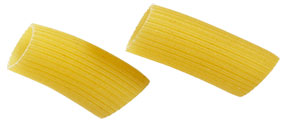
A very popular type of pasta in the south of Italy, rigatoni are large, ridged, and sometimes slightly curved tubes of pasta with square ends (unlike diagonally cut penne). A great small pasta for catching sauce, rigatoni are therefore often served with tomato and meat sauces. The small ridges on rigatoni also help the noodle to grip onto more sauce, giving you lots of flavor with each bite. Serving size: 2 oz., about 3/4 cup dry (8 servings in a 1 # box)
|
Farfalle (Butterflies)
|
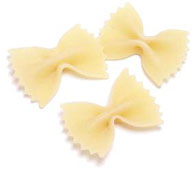
Italian for ‘butterflies’ (commonly known as "bow-tie pasta), farfalle are small rectangle-shaped pieces of pasta that have been pinched together in the middle. Thick enough for any sauce, or make into a salad or soup. Farfalle dates back to the 1500s. It originated in Lombardia and Emilia-Romagna in Northern Italy. Serving size: |
Campanelle/Gigli
|
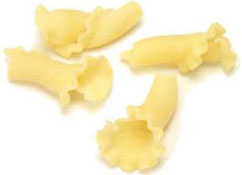
Campanelle, literally translated as ‘bellblowers,’ resembles a small cone with a ruffled edge. It is also sometimes referred to as gigli or riccioli. A great pasta for catching dribbly pasta sauces. It is intended to be served with a thick sauce, or in a casserole. These shapes can also be a treat in a cold pasta salad. Serving size: |
Paccheri
|
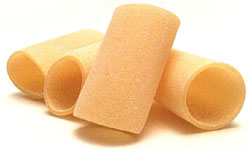
Pronunciation: PAC-uh-ree Paccheri are large hollow tube shaped pasta. Paccheri dishes are often hearty and may be served with a thick bolognese, or meat sauce. Many dishes made with paccheri tend to be highly garlic flavored. Pasteri shapes may be stuffed with sausage and garlic and topped with a red wine sauce, or a garlic flavored white wine sauce may top paccheri stuffed with porcini mushrooms. Another popular way to serve paccheri is with eggplant and dry ricotta cheese, and Paccheri Scampi is a well-known shrimp and paccheri pasta dish, but lobster or even octopus pieces may fill paccheri. Variations of sea bass with paccheri are popular on many Italian restaurant menus. Paccheri pasta is not always filled. For instance, paccheri may be served as a first course, or primi piatti, with vegetables such as zucchini, cabbage or squash and topped with Parmigiano-Reggiano cheese. Serving size: |
Pappardelle
|
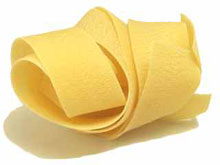
Pronunciation: pa-par-DAY-lay Pappardelle is a wide egg noodle from Tuscany. The name derives from the verb "pappare," to gobble up. These are flat ribbons of pasta, sold either dried or fresh. The fresh types are two to three centimetres (¾-1 inch) wide and may have fluted edges. Dried egg pappardelle have straight sides. This traditional pasta, a cousin to the smaller tagliatelle, was traditionally paired with wild boar and rich hare ragus. The pasta shape is so popular that in Italy there are towns that have festivals honoring it. Serving size: Homemade Pappardelle |
Angel Hair, Capellini
|
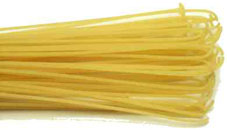
Capelli d’angelo – literally translated as ‘hairs of the angels’ - is the very thinnest type of pasta, comprising long, very fine strands (‘hairs’) of pasta. Because of its delicacy this type of pasta suits similarly delicate sauces (such as light tomato sauces and broths). This pasta’s thinness also means it cooks really quickly - in just a couple of minutes. Capelli d’angelo is usually served as a ‘primo piatto’ (first course), rather than a main. CAPELLINI Translated as ‘fine hairs’, capellini are – like angel hair – thin, long strands of round pasta, only slightly thicker. As with angel hair, delicate pasta sauces suit capellini best. Serving size: Capellini w/ Marinara Sauce & Meat Balls - I almost like capellini better than the spaghetti pasta usually used for this dish |
Spaghetti
|
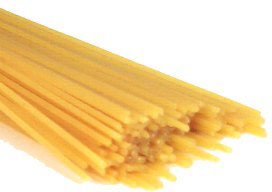
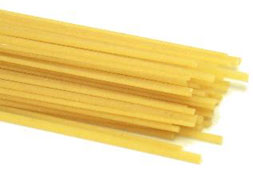
Spago means twine, spaghetto means little twine, spaghetti is plural. America's favorite shape, Spaghetti is the perfect choice for nearly any sauce. One of the oldest known pasta shapes, spaghetti refers to long, thin, round strands of pasta. Larger versions are called spaghettoni, and smaller ones spaghettini. Serving size: 2 oz. (8 servings in a 1 # box) = 1 cup cooked per serving Spaghetti w/ Marinara Sauce & Meat Balls
|
Vermicelli
|
A round type of strand pasta literally translated as ‘little worms,’ which is thinner than spaghetti yet thicker than the super-fine angel hair. Serving size: |
Linguine
|
Another pasta originating from Liguria, linguine refers to long slightly flat strips of pasta about 1/8" wide (fettuccine is about 1/4" wide). Sometimes called flat spaghetti, linguine (also referred to as linguini) is Italian for ‘little tongues’. In Liguria, linguine are also called ‘trenette’ (trenette al pesto being a staple meal of this region). Traditionally, linguine is used with “white” clam sauces, pesto, and delicate oil-based sauces. Serving size: Chicken Parmesan (w/ linguine) |
Fettuccine
|
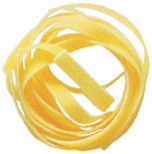
Derived from the old Italian word ‘fettucce’ (string), fettuccine refers to flat pasta sheets cut into ribbon-like strands. Fettuccine is a little wider and flatter than linguine, and therefore better for catching tomato, cream and meat sauces. Popular in Rome, it is traditionally made fresh (either at home or commercially), but dried versions also exist on the market. They are eaten with sugo d'umido (beef ragù) and ragù di pollo (chicken ragù). A popular fettuccine dish in North America is Fettuccine Alfredo. Spinach fettuccine is a variation. Serving size: |
Tagliatelle |
Tagliatelle is a traditional pasta from the Emilia-Romagna and Marches regions of Italy. Individual pieces of tagliatelle are long, flat ribbons that are similar in shape to fettuccine and are typically about 0.65 cm to 1 cm (0.25 to 0.375 inches) wide. A glass case in the Bologna Chamber of Commerce holds a solid gold replica of a piece of tagliatelle, demonstrating the correct dimensions of 1 millimetre by 6 millimetres. Tagliatelle can be served with a variety of sauces, though the classic is a meat sauce or Bolognese sauce (Bologna is the capital of Emilia-Romagna). Since tagliatelle are generally made as fresh pasta, the texture is porous and rough, making it ideal for thick sauces, generally made with beef, veal, or pork, and occasionally with rabbit, as well as several other less rich (and more vegetarian) options; such as briciole e noci (with breadcrumbs and nuts), uovo e formaggio (with eggs and cheese - a less rich carbonara), or simply pomodoro e basilico (with tomatoes and basil). Bolognese Sauce (tomato meat sauce w/ cream & wine) |
Bucatini (or Perciatelli)
|
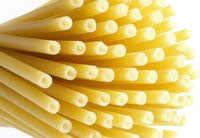
This pasta name comes from ‘buco’, which means hole in Italian, because bucatini is like a hollow version of spaghetti (almost like a thin drinking straw). Perciatelli is a wider version of bucatini. Although primarily associated with Roman cooking, the area of origin for bucatini is Lazio, Naples, and Liguria. It is served with buttery sauces, pancetta or guanciale, vegetables, cheese, eggs, and anchovies or sardines, or it can be baked in casseroles or stirfried in dishes. Serving size: 2 oz. (8 servings in a 1 # box) Bolognese Sauce (tomato meat sauce w/ cream & wine) |
Lasagne
|
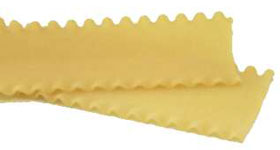
From "lasanum," Latin for pot. Lasagna is one sheet of flat pasta, whereas lasagne refers to several such sheets. Originating from the Emilia Romagna region of North Italy, lasagna can be cooked with minced beef (the most popular version), vegetables, and many more ingredients. Lasagna sheets can also be spread with a filling then rolled up and baked with a sauce. Serving size: Lasagnas w/ Tomato Sauce (& variations) |
Manicotti
|
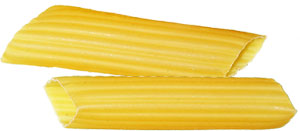
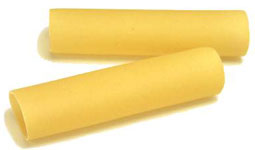
Manicotti (mah-nih-CUT-tee) means little muffs or sleeves and is a large tubular pasta usually stuffed with ricotta cheese and served topped with tomato sauce. The large, tube-shaped noodles are about four inches long, and one inch in diameter. One of the oldest forms of pasta, in ancient times the dough was cut into large rectangles, filled with flavorful stuffings, then rolled and baked in the oven (what today is known as cannelloni - see below). Today, pre-shaped tubes are boiled, then stuffed with a meat, cheese or seafood mixture, covered with a sauce and baked. You can also stuff these and freeze for a later time. Serving size: 2 or 3 filled manicotti - 1/2# box contains 14 manicotti Ground Meat Filling (w/ Marinara Sauce) Seafood Pastas Crab & Ricotta Cannelloni (can use jumbo shells in place of cannelloni) |
Cannelloni
|
Cannelloni (cah-neh-LOE-nee), literally ‘large reeds,’ are pasta tubes stuffed with meat and are ancient in origin. In the past, the pasta was made from water, wheat and salt. It was cut into rectangles, rolled around a filling and baked. Traditionally cannelloni were topped with a meat ragu, made with vegetables, tomatoes and ground meat. Pictured to the left are store-bought cannelloni shells similar to manicotti. Serving size: 2 or 3 filled and rolled cannelloni Cannelloni w/ Two Sauces (homemade cannelloni noodles w/ spinach & beef filling and cream and tomato-wine sauces) Seafood Pastas Salmon Cannelloni w/ Lemon Cream Sauce (made w/ crespelle, Italian crepes) |
Conchiglioni (Jumbo Shells)
|
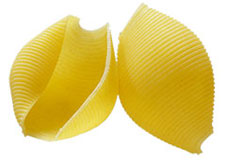
Used for stuffing with your favorite mixtures of cheese, meat and vegetables. Once stuffed they are covered with a sauce and baked. Marinara and Cheese/Cream sauces are traditional and popular. Serving size: 3 or 4 filled shells How to Make Stuffed Jumbo Shells Ground Meat Filling (w/ Marinara Sauce) Seafood Pastas Crab & Ricotta Cannelloni (can use jumbo shells in place of cannelloni) |