Types of Cheeses
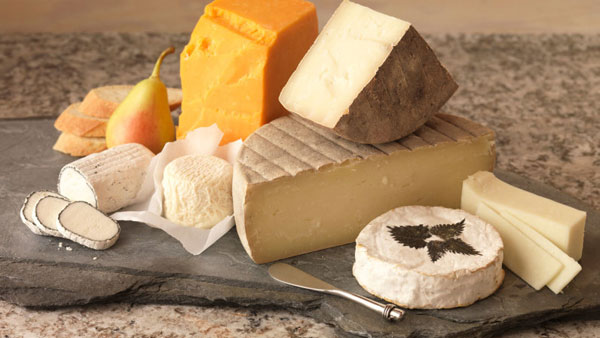
Some different cheeses
To begin with, cheese can be broken down into two very broad categories — fresh and ripened. Within these basic categories, however, are a multitude of subdivisions, usually classified according to the texture of the cheese and how it was made. Naturally, many of these categories overlap because a cheese can have an entirely different character when young than it does when aged.
Fresh Unripened Cheese
Most cheese begins as milk (usually cow's, goat's or sheep's) that is allowed to thicken (sometimes with the addition of rennin or special bacteria) until it separates into a liquid (WHEY) and semisolids (CURD). The whey is drained off and the curds are either allowed to drain or pressed into different shapes, depending on the variety. At this stage it is called fresh (or unripened) cheese. Among the most popular fresh cheeses on the market today are COTTAGE CHEESE, CREAM CHEESE, POT CHEESE and RICOTTA.
Ripened or Aged Cheese
In order to become a ripened (or aged) cheese, the drained curds are cured by a variety of processes including being subjected to heat, bacteria, soaking and so on. The curds are also sometimes flavored with salt, spices or herbs and some, like many cheddars, are colored with a natural dye. After curing, natural cheese begins a ripening process during which it's stored, usually uncovered, at a controlled temperature and humidity until the desired texture and character is obtained. It can be covered with wax or other protective coating before or after this ripening process.
Ripened cheeses are further classified according to texture.
- Soft-ripened (or surface-ripened) cheeses are neither cooked nor pressed. They are, however, subjected to various bacteria (either by spraying or dipping), which ripens the cheese from the outside in. Such cheeses develop a rind that is either powdery white (as in BRIE) or golden orange (like PONT L'ÉVÊQUE). The consistency of soft-ripened cheese can range from semisoft to creamy and spreadable.
- Semisoft cheeses are pressed but can be either cooked or uncooked. Their texture is sliceable but soft. Among the more popular semisoft cheeses are GOUDA, MONTEREY JACK and TILSIT.
- Semifirm cheeses such as CHEDDAR, EDAM and JARLSBERG are firm but not usually crumbly. They have been cooked and pressed but not aged as long as those in the firm-cheese category.
- Hard cheeses are cooked, pressed and aged for long periods (usually at least 2 years) until hard and dry, and are generally used for grating. Among the more well known of this genre are PARMESAN and PECORINO.
Other Categories
Some cheeses are further categorized by process. Blue-veined cheeses, for example, are inoculated or sprayed with spores of the molds Penicillium roqueforti or penicillium glaucum . Some of these cheeses are punctured with holes to ensure that the mold will penetrate during the aging period. The result of these painstaking efforts are cheeses with veins or pockets of flavorful blue or green mold.
Another special-process category is pasta filata ("spun paste"), Italy's famous stretched-curd cheeses. They're made using a special technique whereby the curd is given a hot whey bath, then kneaded and stretched to the desired pliable consistency. Among the pasta filata cheeses are MOZZARELLA, PROVOLONE and CACIOCAVALLO.
Whey cheeses are another special category. Instead of beginning with milk, they're made from the whey drained from the making of other cheeses. The whey is reheated (usually with rennin) until it coagulates. Probably the best known of this cheese type are GJETOST and Italian RICOTTA.
Because there is more than one way to categorize cheeses, you will find the same cheese listed in more than one category. Categories used below are from "The Cheese Book," by Richard Widcome. Chartwell Books (Seacaucus, NJ), 1978.
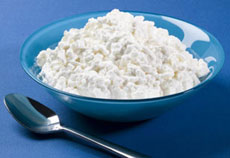 |
Fresh cheese can be made from cow's, goat's or sheep's milk. Although all fresh cheese is pasteurized, there is still a very short shelf life, as it is highly perishable. Fresh cheeses are not ripened or aged, and have a soft texture and mild, creamy taste. Examples include cottage cheese, Neufchâtel (the model for American-style cream cheese), and fresh goat's milk chèvre. Such cheeses are soft and spreadable, with a mild taste. Traditional pasta filata cheeses such as Mozzarella also fall into the fresh cheese category. Other firm fresh cheeses include paneer and queso fresco. |
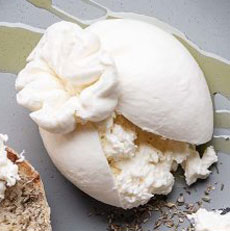 |
Pasta filata, “spun paste” in Italian, is a cheese type also known as stretched-curd, pulled-curd, and plastic-curd cheese. It usually comes from water buffalo milk, cow milk and goat milk individually or mixed. This kind of cheese have in common the process called filatura (melting and stretching). The curds are steeped for some hours in a bath of very hot whey, or salted water up to 95°C. This results in curd “plasticizing” that gives the finished cheese its characteristic fibrous structure, along with melting and stretching properties. The discovery that heating the curd with hot water results in making it stretchable dates back to the Middle Age. The soft curd mass is kneaded into balls or blocks, cooled and placed in brine for a very short time. In the case of mozzarella or fior di latte, the process is now essentially complete. For other cheese such as Provolone, Caciocavallo Silano, Pallone di Gravina and Scamorza, further processing is needed: ageing and in some cases longer brining and/or smoking. |
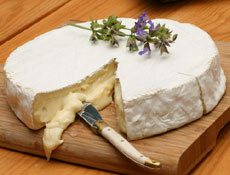 |
Soft-ripened cheeses are uncooked, unpressed cheese, which, as a result, are creamy or even runny when fully ripe. Soft-ripened cheeses are those which begin firm and rather chalky in texture but are aged from the exterior inwards by exposing them to mold. The mold may be a velvety bloom of Penicillium candida or P. camemberti that forms a flexible white crust and contributes to the smooth, runny, or gooey textures and more intense flavors of these aged cheeses. Brie and Camembert, the most famous of these cheeses, are made by allowing white mold to grow on the outside of a soft cheese for a few days or weeks. The rind is edible. All cheeses in this category have a high moisture content. Mild when young, they usually develop a fuller, more mature flavor as they age. |
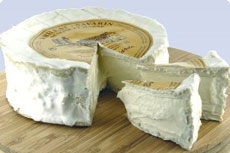 |
These are terms that describe the butterfat content of a cheese. Cream is added to the milk to create the richest, most buttery group of cheeses. Double and Triple crèmes are a type of bloomy rind cheese and also are aged about two weeks. Double cream cheeses are soft cheeses of cows' milk enriched with cream so that their fat content is 60%. In order to qualify as a triple-créme, the cheeses must have more than 72% butterfat content, which provides the smooth texture. As with other cheeses that have short aging periods, the flavors are mild and the aromas are subtle. Examples of Triple Cremes include Brillat-Savarin, Explorateur and St. André. This group of cheeses pairs well with Champagne and other sparkling wines. Examples: Boursault, Brillat-Savarin and Excelsior |
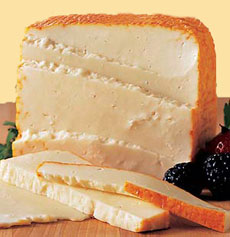 |
Bland and Buttery Cheeses (Semi-Soft Cheeses) Semi-soft cheeses and the sub-group, Monastery cheeses, are high in moisture, have a smooth, creamy texture and virtually no rind. Semi-soft cheese contains more than 45% water, while semi-hard cheeses contain 30% to 45%. A cheese can start as semi-soft, then move to semi-hard via aging, which evaporates the moisture. These cheeses may have an artificial waxy coating to preserve flavor. Many cheesemakers add additional ingredients to their cheese, such as jalapeños or pesto, to give an extra kick to an otherwise mild cheese. Some well-known varieties include Havarti, Munster, Gouda, Edam, Fontina, Butterkäse and Port Salut. |
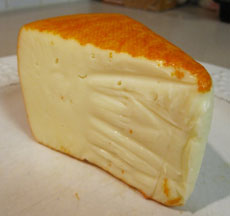 |
Monastery Cheeses (Semi-Soft Cheeses) Certain cheeses were originally developed by monks and are known as monastery or trappist cheeses. The majority are of the washed rind variety. Port Salut, Saint Paulin, Esrom and Havarti are examples, as well as several mountain cheeses including Beaumont and Reblochon. The majority of monastery cheeses are of the washed rind variety. Washed-rind cheeses are soft in character and ripen inwards like those with white molds; however, they are treated differently. Washed rind cheeses are periodically cured in a solution of saltwater brine and other mold-bearing agents that may include beer, wine, brandy, and spices. |
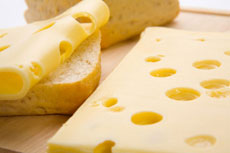 |
Most Swiss cheeses have a distinctive appearance, as the blocks of the cheese are riddled with holes known as “eyes,” caused by expansion of gas within the cheese curd during the ripening period. Swiss cheese has a nutty, piquant, but not very sharp, taste. Swiss cheese without eyes is known as “blind.” Some well-known varieties include Jarlsberg, Emmental and Gruyère. |
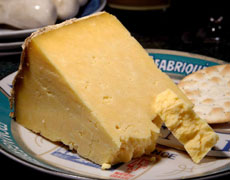 |
Harder cheeses have a lower moisture content than softer cheeses. They are generally packed into molds under more pressure and aged for a longer time. Cheeses that are semi-hard to hard include the familiar cheddar, originating in the Cheddar Gorge of England but now used as a generic term for this style of cheese, of which varieties are imitated worldwide and are marketed by the length of time they have been aged. Cheddar is one of a family of semi-hard or hard cheeses (including Cheshire and Gloucester) whose curd is cut, gently heated, piled, and stirred before being pressed into forms. Colby and Monterey Jack are similar but milder cheeses; their curd is rinsed before it is pressed, washing away some acidity and calcium. A similar curd-washing takes place when making the Dutch cheeses Edam and Gouda. Cheddar, Colby, Longhorn, Cheshire, Gloucester |
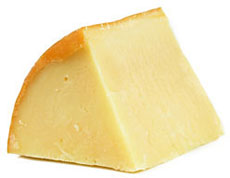 |
Aged for 12 months or more, hard cheeses are wonderful grating cheeses that add tanginess to any meal. Made in both farmstead and artisan varieties, you can taste the history and expertise used to create most hard cheeses. Parmesan, Pecorino Romano, Asiago, Dry Jack, Manchego, Aged Cheddar |
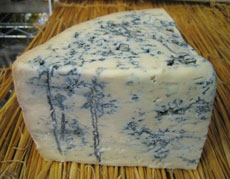 |
Blue cheese is created by inoculating a cheese with Penicillium roqueforti or Penicillium glaucum. This is done while the cheese is still in the form of loosely pressed curds, and may be further enhanced by piercing a ripening block of cheese with skewers in an atmosphere in which the mold is prevalent. The mold grows within the cheese as it ages. These cheeses have distinct blue veins which gives them their name, and, often, assertive flavors. The molds may range from pale green to dark blue, and may be accompanied by white and crusty brown molds.Their texture can be soft or firm. Some of the most renowned cheeses are of this type, each with its own distinctive color, flavor, texture and smell. They include Roquefort, Gorgonzola, and Stilton. |
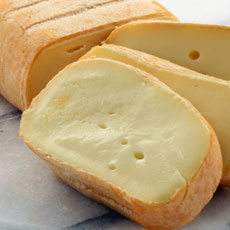 |
Washed-rind cheeses, also known as “stinky” cheeses, are popular with connoisseurs for their depth of flavor and character. Popular examples include Limburger, Livarot, Munster (not Meunster, which is different), Pont L’Eveque and Taleggio. |
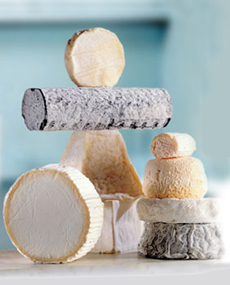 |
Goat's Milk Cheeses (Chevres) Chèvre is the French word for both goat and goat cheese. Goats were tamed around 10,000 B.C. and goat’s milk cheese began to be made in the Mediterranean. The Romans ate small goat’s cheeses soaked in olive oil, which were part of army rations. Goat cheese is known for both its fresh and aged cheeses. Some cheeses are briefly aged (4 to 6 weeks), developing rinds and flavors that have length and complexity. Examples of goat cheeses are classic Loire styles such as Selles sur Cher, Ste. Maure, Chevrot and new American classics like Humboldt Fog. Goat cheese is so white because goat’s milk contains no beta-carotene, unlike cow's milk. |
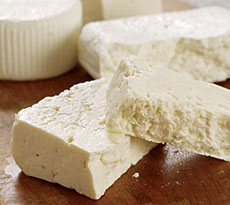 |
Sheep's or ewe's (the female sheep) milk cheese is a cheese more typically found in mountainous areas where cow rearing is difficult or impossible. It has a slightly sweet taste and is high in calcium and zinc. Sheep cheese can fall into many different categories, such as fresh, soft, veined and pressed, so the selection is incredibly varied. The more traditional sheep cheeses hail from Spain and Portugal (dry mountain regions), but also from Greece where Feta is wildly popular. |
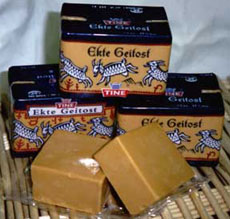 |
Whey cheese is cheese made from whey instead of milk. Whey is the clear, yellowish liquid byproduct of cheesemaking, or of straining other cultured dairy products like yogurt and milk kefir. The usual method of making whey cheese consists of merely cooking whey until it separates again. The temperature levels for making whey cheese are around 200°F, or just under boiling. Whey is made up of water, albuminous protein, minerals, and trace milk sugars. The temperatures used in the milk cheese recipe are usually not high enough to fully separate the albuminous proteins out of the whey, but a secondary, higher-temperature cook will yield even more cheese solids. Whey can be cooked over a direct heat source and does not require indirect or water-bath heating methods. The original ricotta is made of whey with the addition of a small amount of milk, but more recently ricotta has been made of whole milk as well. Whole milk ricotta is primarily popular in the USA, where whey ricotta is known by the name ricottone. Another whey cheese is Gjetost, a whey cheese from Scandinavia. |
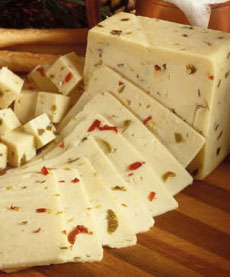 |
Boursin, Hot-pepper cheese, Leyden (cumin seed), wine flavored cheese are just a few of the traditional cheeses made by adding extra flavors. Many companies make flavored cheeses, from herbed to hot jalapeño varieties. It's common to find cheeses like pepper jack, herbed chèvre and horseradish or cranberry Cheddar in supermarkets. With artisanal cheese on the rise, we are finding many different and inventive varieties of flavored cheeses, from mushroom, to bacon and spicy chicken wing. |
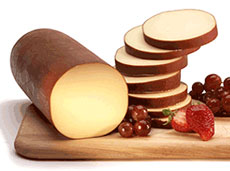 |
Cheeses can be placed in a smoker to add a layer of smoked flavor. Examples include Gouda, Idiazabal, a handmade, unpasteurized sheep's milk cheese from the Spanish Pyrenees; and Rauchkäse, a smoked cheese from Bavaria. Any cheese can be smoked—from a fresh cheese like mozzarella, a Cheddar or a blue cheese. |
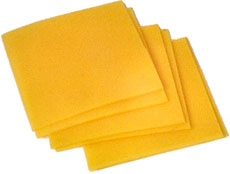 |
These are cheese by-products made from a combination of natural cheese and added ingredients, such as stabilizers, emulsifiers and flavor enhancers. The objective is not to create artisan cheese, but a consistent and shelf-stable product for mass market consumption. It is sold packaged and either pre-sliced or unsliced, in a number of varieties. Cheeses in this category include American cheese, processed cheese spreads and “cheese flavored” spreads. Velveeta, a popular product for nachos, doesn’t even have enough cheese by-product to quality as a processed cheese: It is a “cheese food.” |
